
EN10219 S355JR Steel Container Consolidation Wholesale Supplier
Matching heat numbers on Mill Test Certificates is not enough to clear customs.
Successful container consolidation for multi-category steel orders requires rigorous pre-shipment verification of dimensional tolerances and physical thickness checks against EN10219 standards, rather than relying solely on paperwork alignment. This process prevents port detention and ensures that mixed loads of RHS, SHS, and beams meet both structural safety requirements and logistical stability metrics.
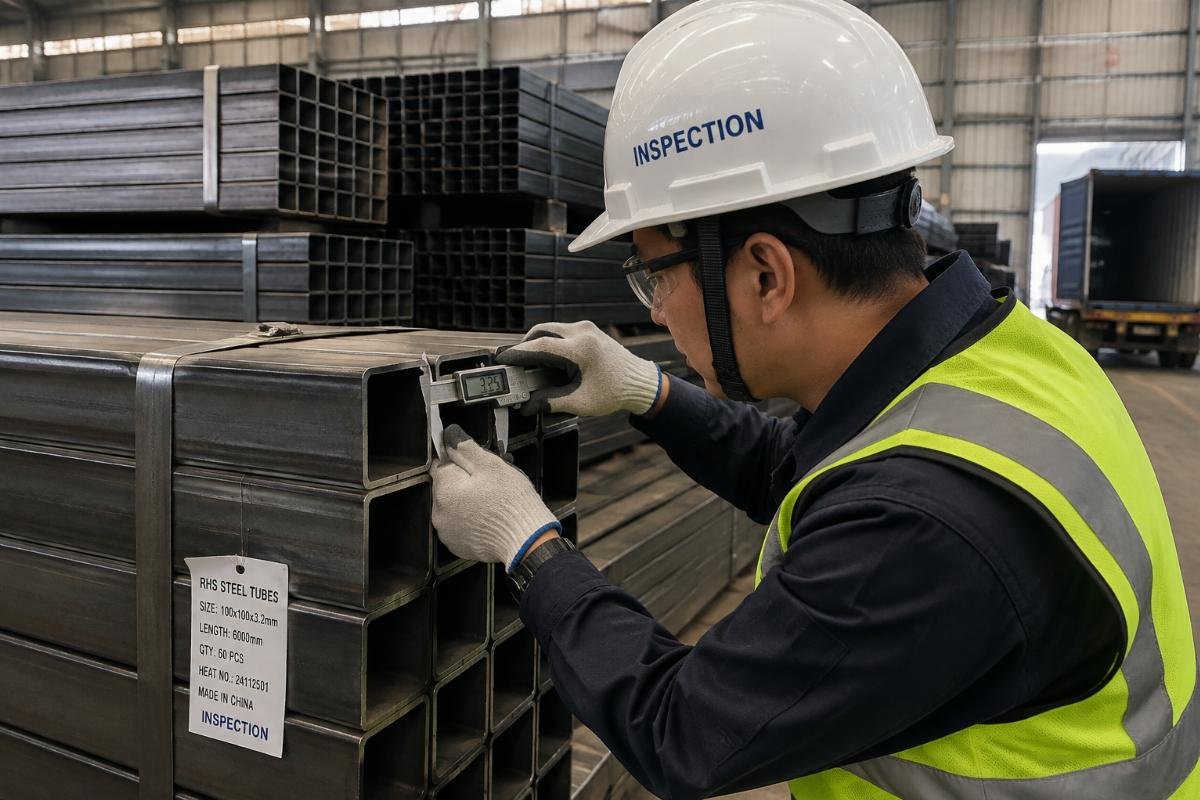
I still remember the silence in my inbox after a shipment arrived in Gdansk. A Polish distributor had consolidated three different specifications of Rectangular Hollow Sections (RHS) and Square Hollow Sections (SHS) into a single forty-foot container to optimize freight costs. He needed S355JR certification strictly compliant with EN10219. At the time, I was transitioning from quality control to sales and assumed that matching the heat numbers on the certificates with the markings on the steel was sufficient. I did not verify the wall thickness of every single pipe against the negative tolerance limits. When the local inspection agency measured two of the rectangular pipes, the wall thickness negative deviation exceeded 0.3mm. The entire batch was detained at the yard. The buyer sent emails with multiple exclamation marks, asking how to explain this to his client. That incident changed my approach permanently. Now, before any mixed container leaves the factory, I personally use digital thickness gauges to verify every item, cross-referencing the heat numbers, steel grades, and EN10219 clauses with the physical products. This hands-on verification has become the backbone of how we handle complex container consolidation steel orders.
This experience highlights a critical gap in international steel trading. Many buyers assume that full containers automatically save money and reduce risk. However, improper weight distribution and unchecked tolerances in mixed loads can lead to port rejections or safety fines that far outweigh the freight savings. Below, we break down the specific risks and verification protocols necessary for safe consolidation.
What Are the Key Risks in Consolidating Multi-Category Steel?
Mixed loads significantly increase complexity in quality control and documentation, raising the risk of port detention if dimensional tolerances fail to meet strict European or international standards.
When you combine different structural steel products such as pipes, beams, and plates in one container, you are not just stacking metal; you are merging different production batches, tolerance standards, and handling requirements. The primary risk is not damage during transit, but rejection upon arrival due to non-compliance. Customs authorities and third-party inspectors in regions like the European Union and the Middle East are increasingly stringent about EN10219 compliance for structural hollow sections. [NEED_CITE: common reasons for customs detention of structural steel imports]
A frequent issue arises from the assumption that “standard” sizes are uniform across manufacturers. They are not. A 100x100mm SHS from one mill may have a different wall thickness tolerance profile than another. If a buyer consolidates these without verifying the actual physical dimensions against the declared certificate, the entire consignment can be flagged. For instance, a Southeast Asian fabricator once ordered small-batch mixed specs for a warehouse project. The unit price was attractive due to MOQ flexibility, but the inspection time per ton increased because each specification required individual verification. Without a systematic check, minor deviations in one category can cast doubt on the entire container consolidation steel orders process, leading to delays that disrupt construction schedules.
Another risk is documentation mismatch. In a mixed container, the packing list must accurately reflect every item, its weight, and its corresponding certificate. If the Mill Test Certificate (MTC) for the H-beams does not clearly distinguish between different heat numbers within the same bundle, customs officials may reject the documentation as incomplete. This is not merely an administrative error; it is a compliance failure that can result in the seizure of goods.
How to Verify EN10219 Compliance for Mixed Loads?
逐项核对炉批号与实物壁厚,确保S355JR等钢级证书与每根管材对应,杜绝“证物不符”。
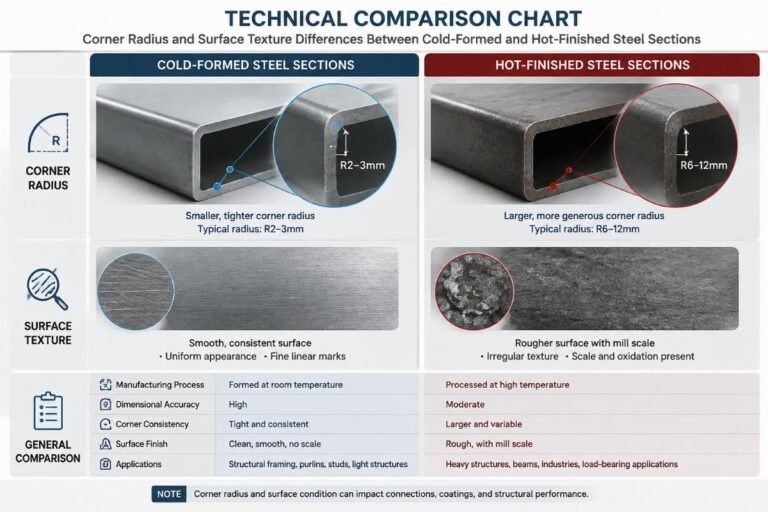
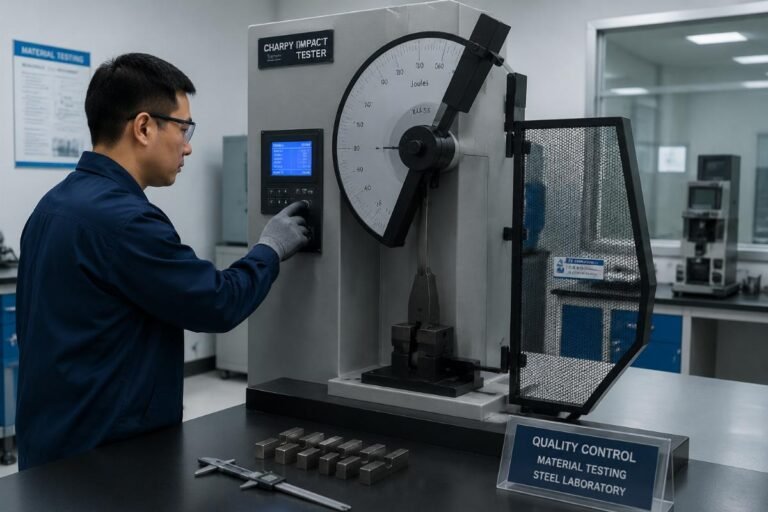
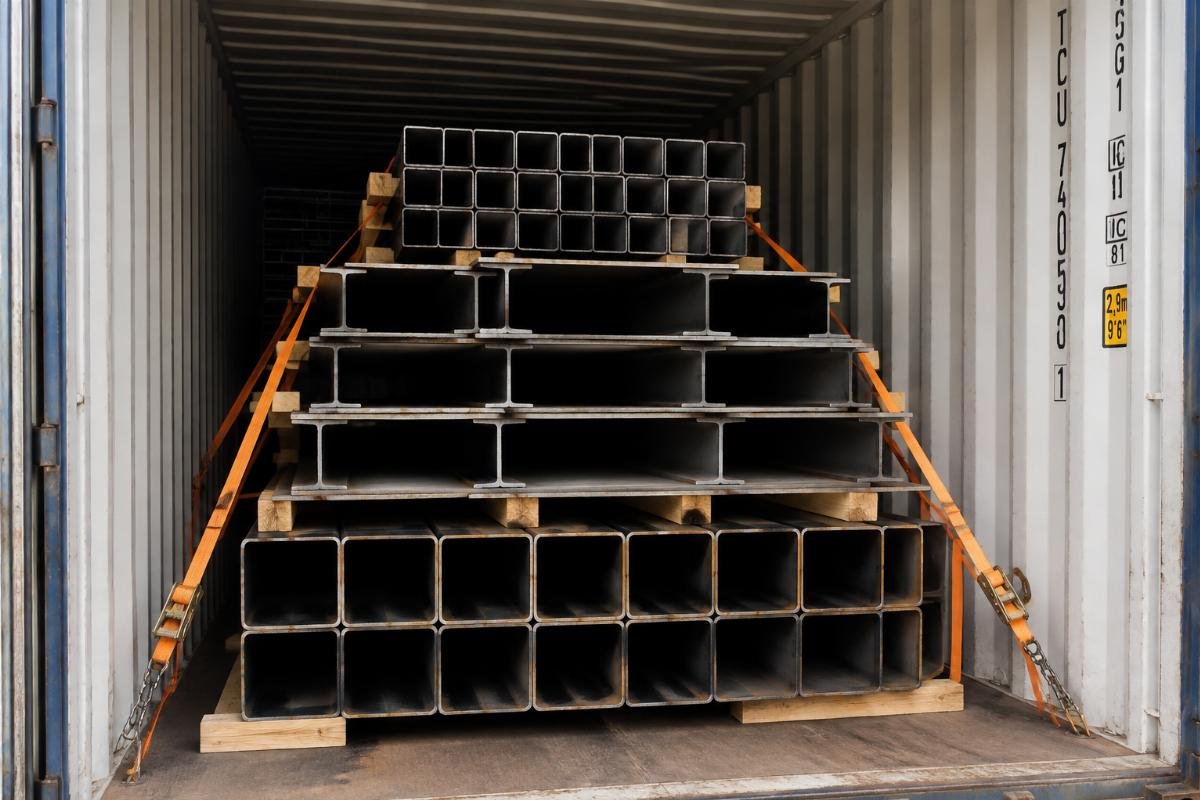
Verifying EN10219 compliance goes beyond checking the paper certificate. It requires a physical audit of the product. The standard specifies strict tolerances for external dimensions, wall thickness, and straightness. For S355JR steel, which is commonly used in structural applications, the yield strength and impact resistance are critical, but the dimensional accuracy is what often triggers inspections.
The first step is to use digital thickness gauges to measure the wall thickness at multiple points along the length of the RHS and SHS sections. EN10219 allows for certain negative deviations, but these are limited. Exceeding these limits, even by a fraction of a millimeter, can compromise the structural integrity of the final assembly. [NEED_CITE: EN10219 tolerance limits for wall thickness] In my experience, most disputes arise because buyers rely on the average thickness stated in the MTC rather than verifying the minimum thickness at the weakest point of the pipe.
Second, cross-reference the heat numbers on the physical steel markings with the MTC. Each bundle should have a unique identifier that links it directly to the test results. In a mixed container, this becomes challenging because different products may come from different production lines. At Xin Jiyuan, our in-house laboratory verification process ensures that every piece of steel, whether it is a beam or a tube, is traced back to its specific production batch. This reduces the burden on the buyer to perform extensive inspections upon arrival.
Third, check the surface condition and marking clarity. EN10219 requires clear identification of the manufacturer, standard, grade, and dimensions. If the markings are faded or illegible due to poor handling or inadequate protection, the product may be deemed non-compliant regardless of its physical properties. This is particularly important for container consolidation steel orders where items are stacked tightly, increasing the risk of abrasion.
| Verification Step | Tool/Method | Critical Check Point |
|---|---|---|
| Dimensional Accuracy | Digital Calipers / Thickness Gauge | Wall thickness negative deviation vs EN10219 limits |
| Material Traceability | Visual Inspection / MTC Cross-reference | Heat number match between physical mark and certificate |
| Surface Integrity | Visual Inspection | Clarity of stamped markings and absence of excessive rust |
| Certification Validity | Document Review | Presence of EN10219 clause and S355JR grade confirmation |
What Is the Optimal Loading Strategy for Heavy and Light Sections?
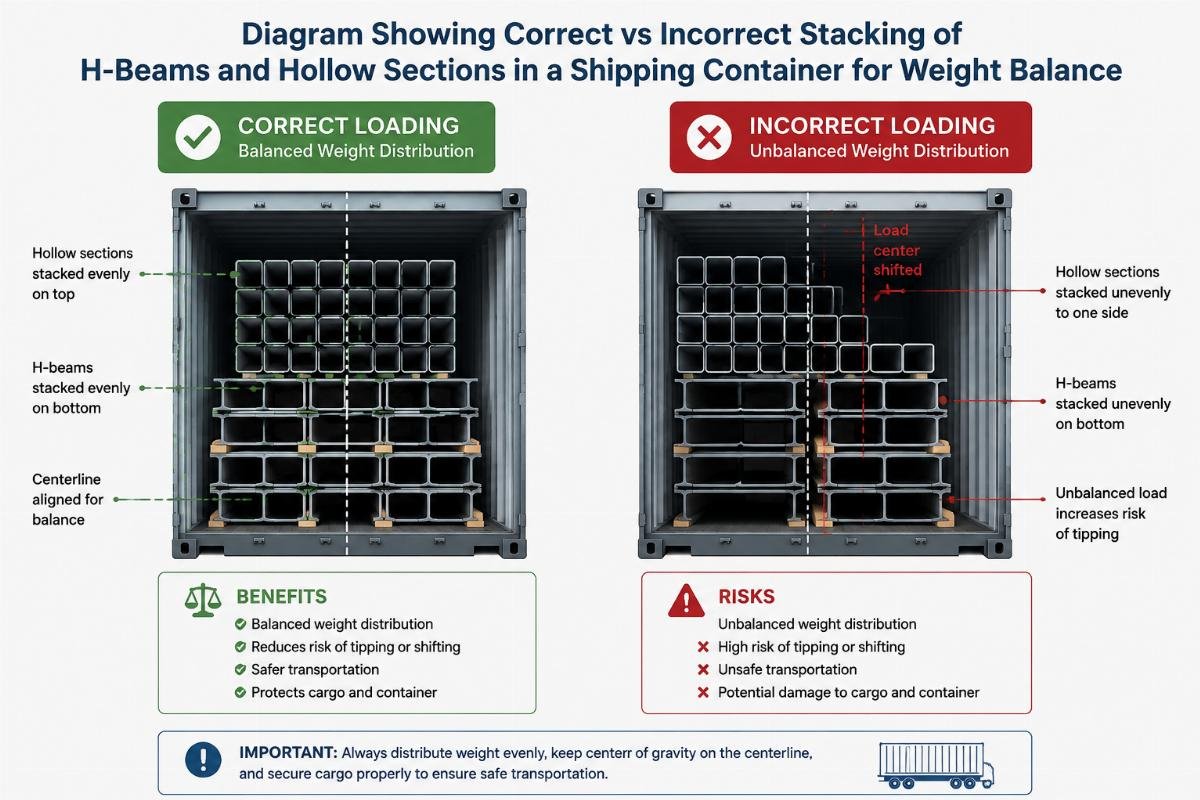
Balance weight distribution by placing heavy beams at the bottom and securing hollow sections to prevent shifting and deformation during transit.
Many traders assume that filling a container to its maximum weight capacity is the most efficient strategy. However, improper weight distribution of heavy beams and light pipes can lead to port rejection or safety fines. [NEED_CITE: guidelines for safe stowage of heavy steel products in containers] The center of gravity must be low and centered to prevent the container from tipping during crane operations or ship movement.
For a mixed load containing H-beams and RHS/SHS, the heavy beams should always be placed at the bottom of the container. They provide a stable base and distribute the weight evenly across the container floor. Hollow sections, being lighter and more prone to deformation, should be stacked on top. However, they must be secured properly to prevent shifting. Use wooden dunnage or steel strapping to lock the layers together.
A Middle East contractor once combined H-beams with flanges in a single shipment. The initial loading plan placed the beams on one side and the flanges on the other, creating an uneven weight distribution. This led to difficulties during unloading and raised safety concerns at the port. By optimizing the weight ratio and ensuring symmetrical loading, we avoided these issues. The key is to calculate the weight per square meter of the container floor and ensure it does not exceed the local port’s limits.
Furthermore, hollow sections are vulnerable to crushing if heavy items are placed directly on top of them without adequate protection. Using protective padding or separating layers with wooden planks can prevent deformation. This attention to detail is crucial for maintaining the quality of container consolidation steel orders, especially when dealing with thin-walled sections that are sensitive to pressure.
Which Documents Are Essential for Smooth Customs Clearance?
A complete set including Certificate of Origin, Mill Test Certificates, packing list, and third-party inspection reports is non-negotiable for multi-item consignments.
Documentation errors are the most common cause of delays in international steel trade. For mixed containers, the paperwork must be meticulously organized to reflect the diversity of the cargo. A single missing document can halt the entire clearance process.
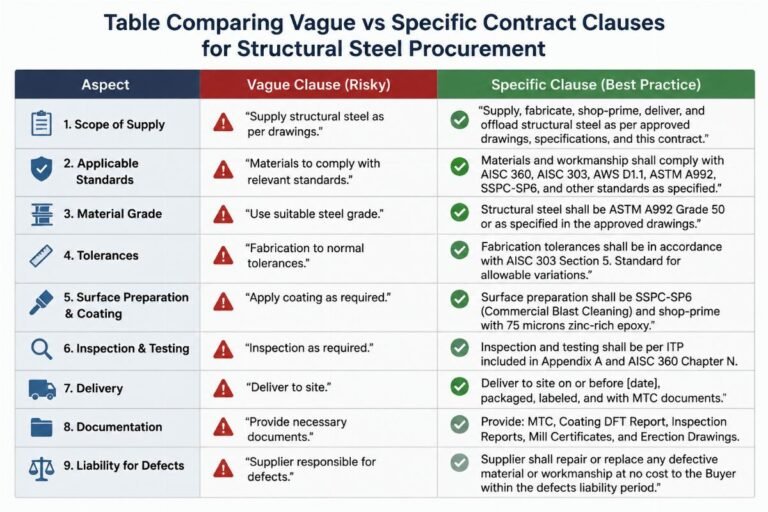
The Mill Test Certificate (MTC) is the most critical document. It must clearly state the chemical composition and mechanical properties of each batch of steel. For EN10219 compliance, the MTC must reference the specific standard and grade (e.g., S355JR). If the container contains multiple grades or standards, each must have its own corresponding MTC. Combining them into a single ambiguous document is a recipe for rejection.
The Packing List must detail every item in the container, including dimensions, weight, and package count. For container consolidation steel orders, this list can become lengthy and complex. It is essential to group items logically and provide clear references to the corresponding MTCs. Any discrepancy between the packing list and the physical cargo can lead to customs inspections, which are time-consuming and costly.
The Certificate of Origin (COO) is required for tariff purposes. Ensure that the COO matches the country of manufacture stated in the MTC. Inconsistencies here can raise suspicions of transshipment or fraud. Additionally, some buyers require third-party inspection reports from agencies like SGS or Bureau Veritas. These reports provide an independent verification of quality and quantity, adding a layer of trust to the transaction.
| Document Type | Purpose | Key Content Requirement |
|---|---|---|
| Mill Test Certificate (MTC) | Quality Verification | Chemical composition, mechanical properties, EN10219 reference |
| Packing List | Cargo Identification | Item details, weights, dimensions, package counts |
| Certificate of Origin (COO) | Tariff Determination | Country of manufacture, exporter/importer details |
| Inspection Report | Independent Verification | Third-party confirmation of quality and quantity |
Conclusion
Strict verification of physical tolerances and meticulous documentation are the foundations of successful steel consolidation.
Mixing structural steel products in a single container offers significant freight advantages, but it demands a higher level of diligence in quality control and logistics. By prioritizing physical verification over paperwork assumptions and optimizing loading strategies for weight distribution, buyers can mitigate the risks of port detention and quality disputes. This approach ensures that container consolidation steel orders arrive on time, compliant, and ready for immediate use in construction and fabrication projects.