
EN10219 Structural Steel Payment Terms: Wholesale Supplier
Most buyers believe a Letter of Credit is the safest payment method for steel imports, but an unreviewed L/C with soft clauses creates a higher risk of payment refusal than a Telegraphic Transfer deposit.
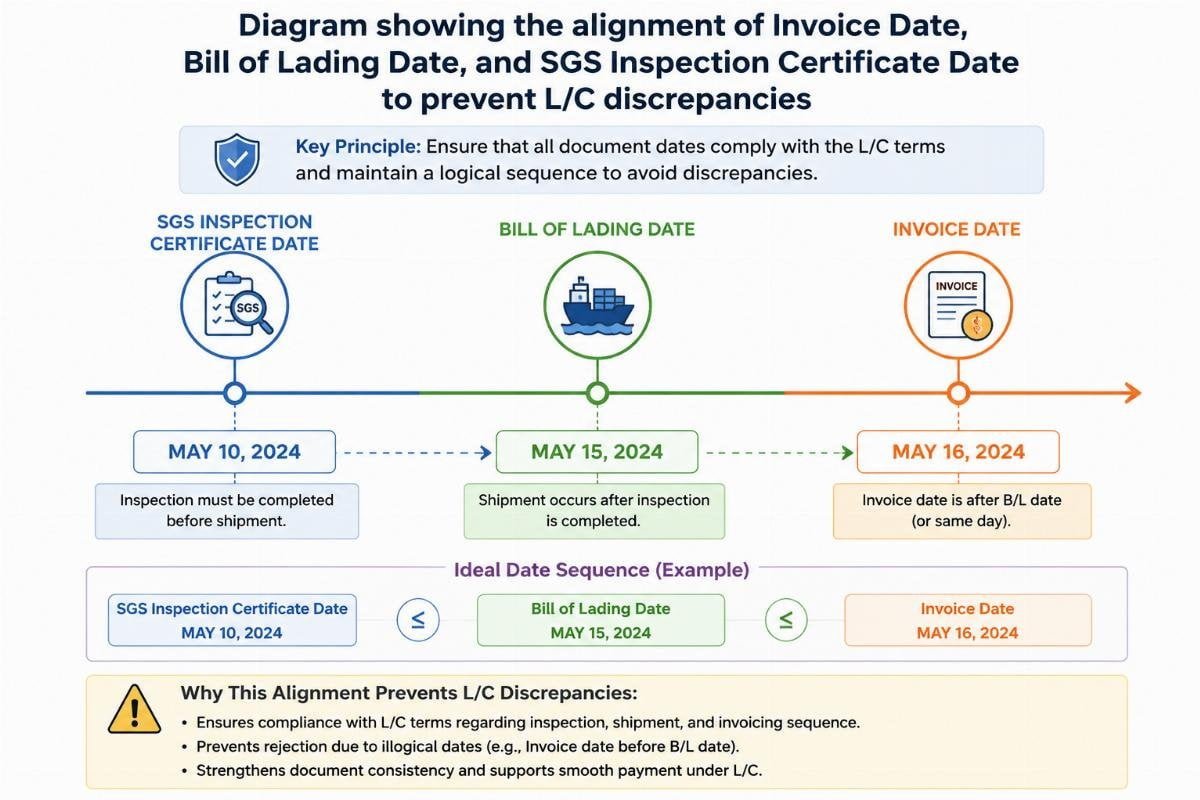
The core answer to securing favorable Payment Terms for Chinese Structural Steel Manufacturers is not negotiation, but engineering. Buyers must audit every L/C clause against UCP600 standards and ensure that inspection certificates, such as those from SGS, align perfectly with invoice dates and bill of lading details to avoid documentary discrepancies that lead to refused payments and costly demurrage.
I still remember the smell of salt and rust at the Ningbo Beilun Port terminals, where I spent years handling documentation before moving into sales. Every day was a battle against minor errors in bills of lading and certificates of origin. One minute saved in document review could prevent a loss that wiped out the profit margin of an entire container. A Middle East client once ordered a batch of S355JR rectangular tubes. The letter of credit specified an “inspection certificate issued by SGS at the loading port.” The goods were perfect, the shipment was on time, but the issuing bank refused payment. Their reason? The SGS report number did not match the invoice date window exactly. The cargo sat in Dubai port for over twenty days, accumulating demurrage charges that far exceeded the profit margin. We eventually had to accept a discounted payment just to clear the goods. Since then, I have treated every letter of credit as a legal trap until proven otherwise, marking every soft clause and confirming it with the buyer before production begins.
This experience highlights why understanding the nuances of Payment Terms for Chinese Structural Steel Manufacturers is critical for international procurement managers. It is not just about choosing between TT and LC; it is about ensuring that the documentation supporting the payment request is flawless.
Why Do Banks Reject L/C for Steel Shipments?
Banks do not inspect steel; they inspect documents. A discrepancy as small as a mismatched date between the Mill Test Certificate and the commercial invoice can trigger an automatic refusal of payment under UCP600 rules.
The Uniform Customs and Practice for Documentary Credits (UCP600) provides the global framework for letters of credit, but its strict compliance requirements are often misunderstood by buyers who assume that proof of quality equals proof of entitlement to payment [NEED_CITE: UCP600 article on strict compliance]. In the steel trade, this gap between physical quality and documentary perfection is where most transactions fail.
Consider the case of an African distributor who imported a mixed container of steel plates and beams. The letter of credit allowed for partial shipments, but the documentation required a single bill of lading for the entire consignment. Because the plates and beams were loaded at different times within the same vessel voyage, the carrier issued separate bills of lading. The bank rejected the documents because they did not match the single BL requirement, even though the goods arrived together. The buyer had to negotiate a waiver from the supplier, delaying the release of funds and straining the business relationship.
Common reasons for L/C rejection in structural steel trade include:
- Date Mismatches: The inspection certificate date is later than the bill of lading date, or the invoice date falls outside the validity period of the L/C.
- Description Discrepancies: The product description in the L/C says “S355JR H-Beam,” but the invoice says “S355JR Structural Steel Beam.” While technically the same, banks view this as a discrepancy.
- Missing Signatures: An inspection certificate lacks the specific signature or stamp required by the L/C terms.
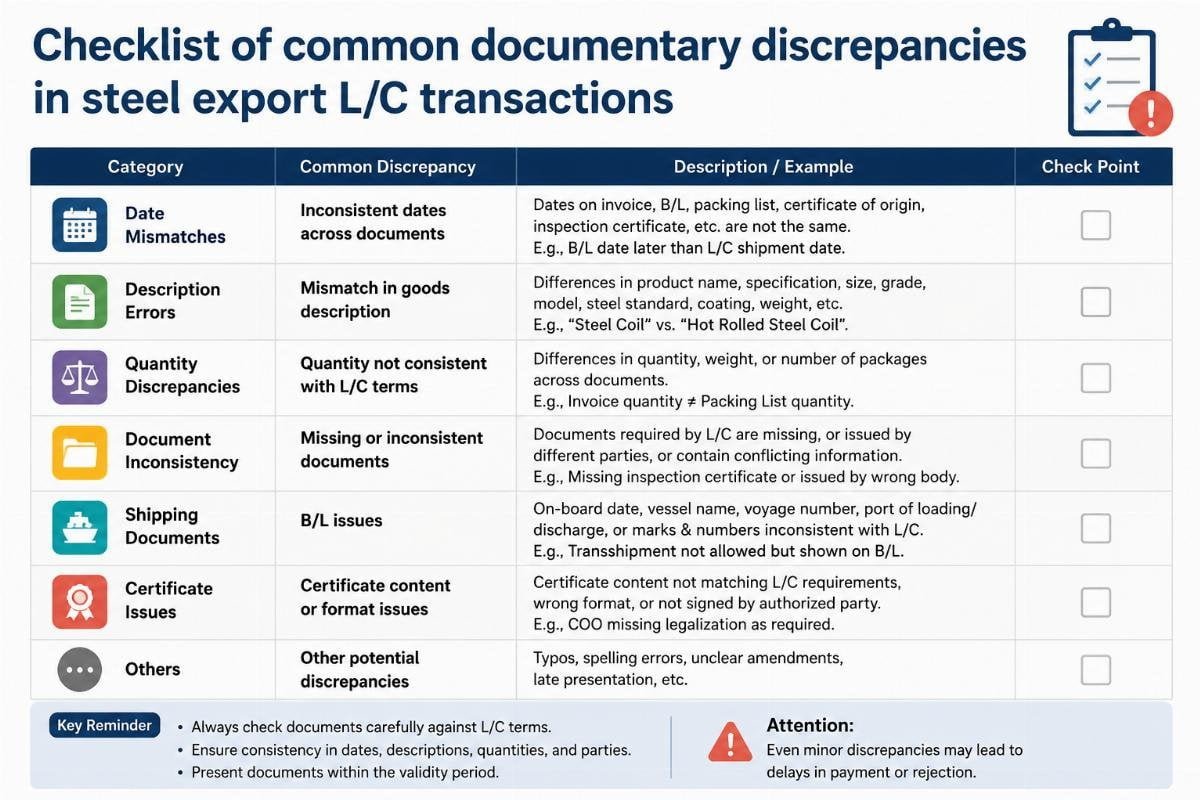
To mitigate these risks, buyers should request a draft of the letter of credit before issuance and compare it line-by-line with the proforma invoice and expected shipping documents. This pre-emptive audit is a crucial step in managing Payment Terms for Chinese Structural Steel Manufacturers effectively.
What Are the Hidden Risks in “Standard” Payment Clauses?
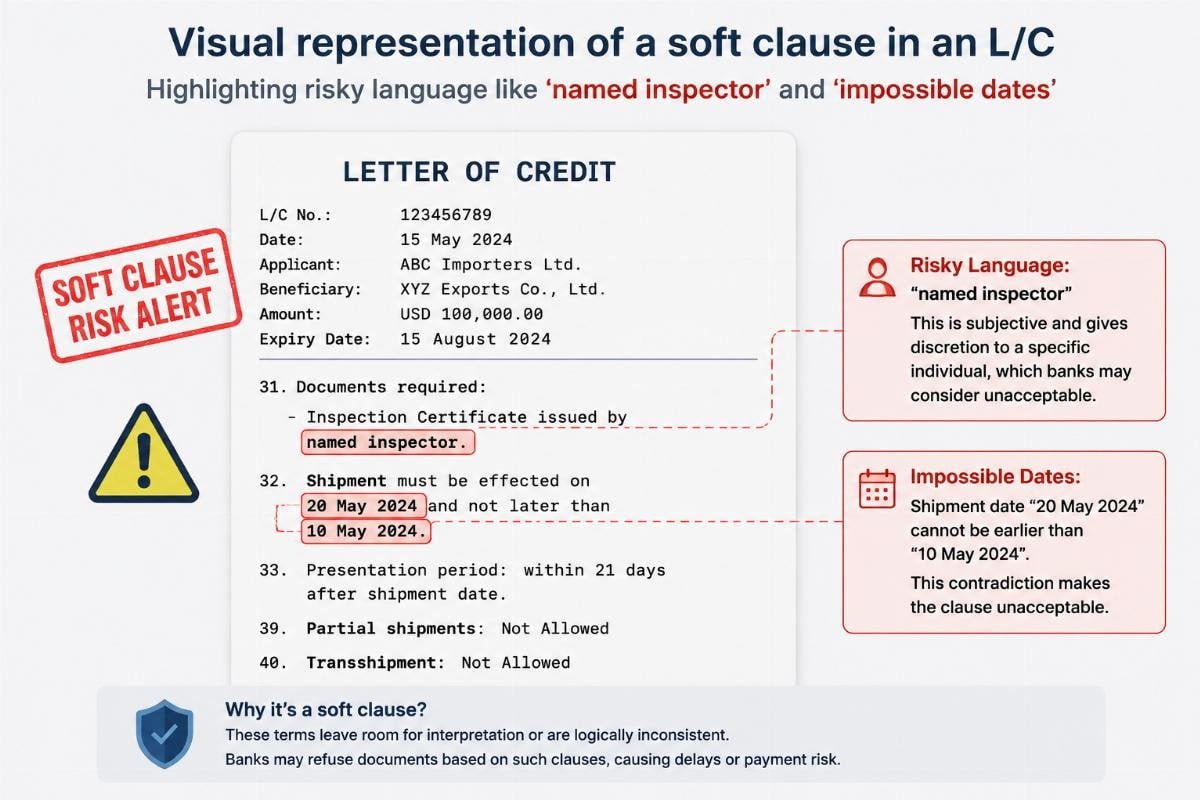
Soft clauses in letters of credit, such as requiring an inspection certificate from a named individual or setting impossible shipment windows, are designed to give the buyer unilateral control to refuse payment, regardless of the supplier’s performance.
A soft clause is a condition in a letter of credit that makes the payment contingent on an action that is difficult or impossible for the beneficiary to verify or control independently. For example, a clause stating “Inspection certificate to be issued by Mr. John Doe” gives the buyer the power to block payment simply by having Mr. Doe unavailable or unwilling to sign. Another common trap is “Shipment date strictly before L/C issuance,” which is logically impossible since the L/C must exist before shipment can be arranged under its terms.
A Latin American fabricator once requested a clause allowing “Inspection at destination” for a large order of structural pipes. The manufacturer insisted on pre-shipment verification because controlling quality liability after the goods left the factory was impractical. The compromise was a third-party inspection at the loading port, with the certificate issued before the bill of lading date. This ensured that the quality was verified while the goods were still under the supplier’s control, aligning the risk allocation with industry norms [NEED_CITE: ICC guidelines on inspection clauses].
Key soft clauses to red-flag when reviewing Payment Terms for Chinese Structural Steel Manufacturers include:
- Named Inspector: Requiring a specific person to issue the inspection certificate.
- Impossible Dates: Requiring documents to be dated before the L/C issuance or after the expiry date.
- Vague Standards: Referencing inspection standards that are not clearly defined or internationally recognized.
Buyers should insist on neutral, third-party inspection agencies like SGS or Bureau Veritas, with clear criteria for acceptance based on international standards such as ISO or EN norms. This removes the subjective element from the inspection process and protects both parties.
How to Structure TT vs. L/C for Structural Steel?
Balancing cash flow risk with supplier trust often leads to a hybrid structure: a 30% Telegraphic Transfer deposit to secure raw materials and production slots, with the 70% balance paid against a copy of the Bill of Lading.
While letters of credit offer security, they are expensive and slow. Telegraphic Transfers are fast and cheap but offer little protection for the buyer if the supplier fails to deliver. The 30/70 split is a widely accepted compromise in the steel industry. The deposit shows the buyer’s commitment and helps the manufacturer manage cash flow for raw material procurement. The balance against the copy of the B/L ensures that the buyer only pays when the goods have been shipped, as evidenced by the transport document.
However, this structure requires a high level of trust. To build this trust, buyers can request regular production updates and photos during the manufacturing process. Some manufacturers, like Xin Jiyuan, have in-house laboratories that generate Mill Test Certificates instantly and accurately matched to invoice details, reducing documentary friction and building confidence in the quality control process [NEED_CITE: ISO standards for inspection protocols].
When negotiating Payment Terms for Chinese Structural Steel Manufacturers, consider the following factors:
- Order Volume: Larger orders may justify the cost and security of an L/C, while smaller trial orders are better suited for TT.
- Supplier Relationship: New suppliers may require stricter terms, while long-term partners may offer more flexible payment options.
- Market Conditions: In volatile markets, suppliers may prefer TT to avoid currency fluctuation risks associated with L/Cs.
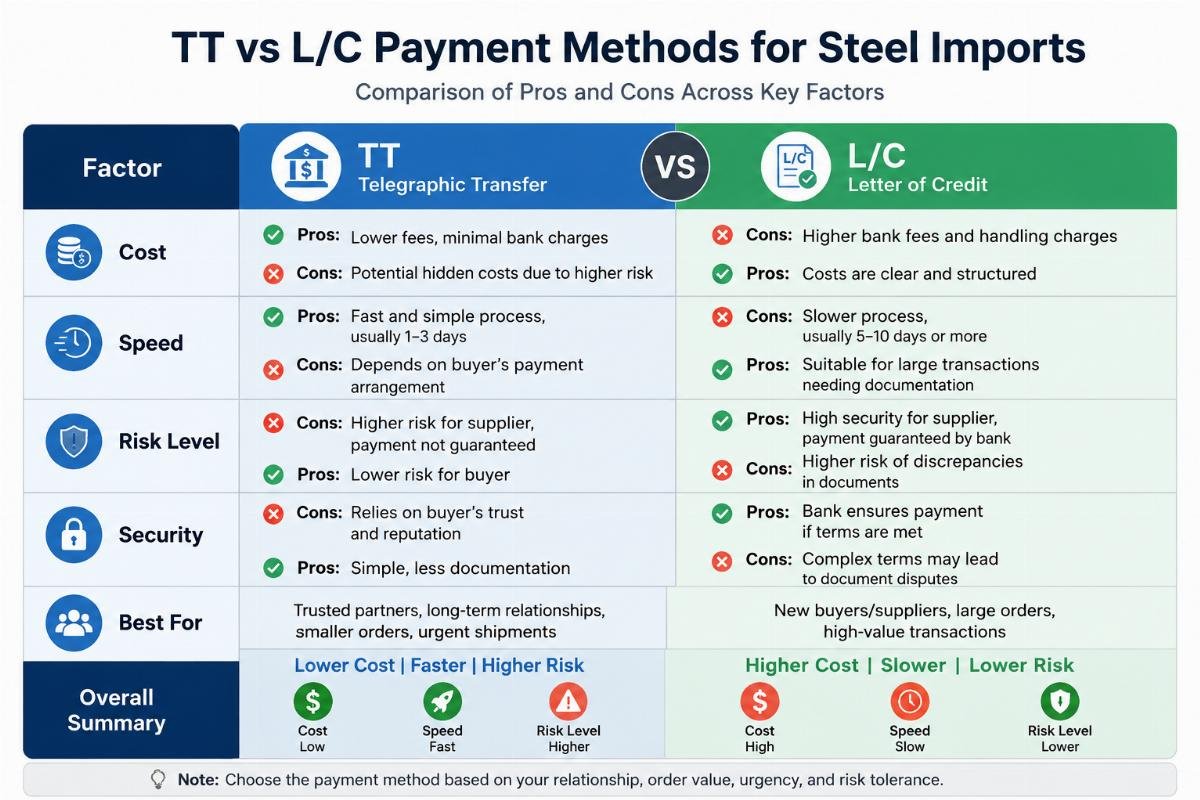
Ultimately, the choice between TT and L/C depends on the specific risk profile of the transaction and the relationship between the buyer and seller. A well-structured payment term protects both parties and ensures smooth execution of the contract.
Which Documents Must Align Perfectly?
The Commercial Invoice, Packing List, Mill Test Certificate, and Bill of Lading must mirror each other in every detail, from product description to weight and dimensions, to ensure successful customs clearance and payment.
Documentary consistency is the backbone of international trade finance. A discrepancy in one document can cascade into delays in customs clearance, refusal of payment by the bank, and additional storage costs at the port. For example, if the Mill Test Certificate lists the heat number as “12345” but the Packing List says “12345-A,” customs officials may question the authenticity of the documents, leading to inspections and delays.
In the case of the Middle East EPC project mentioned earlier, the mismatch between the SGS report number and the invoice date was a seemingly minor error that had major financial consequences. The bank’s refusal to pay was based on strict adherence to the L/C terms, not on the quality of the steel. This highlights the importance of meticulous document preparation.
Key documents that must align include:
- Commercial Invoice: Must match the L/C description exactly, including grade, standard, and quantity.
- Packing List: Must detail the contents of each package, matching the weights and dimensions on the Bill of Lading.
- Mill Test Certificate: Must reference the correct heat numbers, chemical composition, and mechanical properties, aligning with the invoice description.
- Bill of Lading: Must show the correct consignee, notify party, and port of discharge, as specified in the L/C.
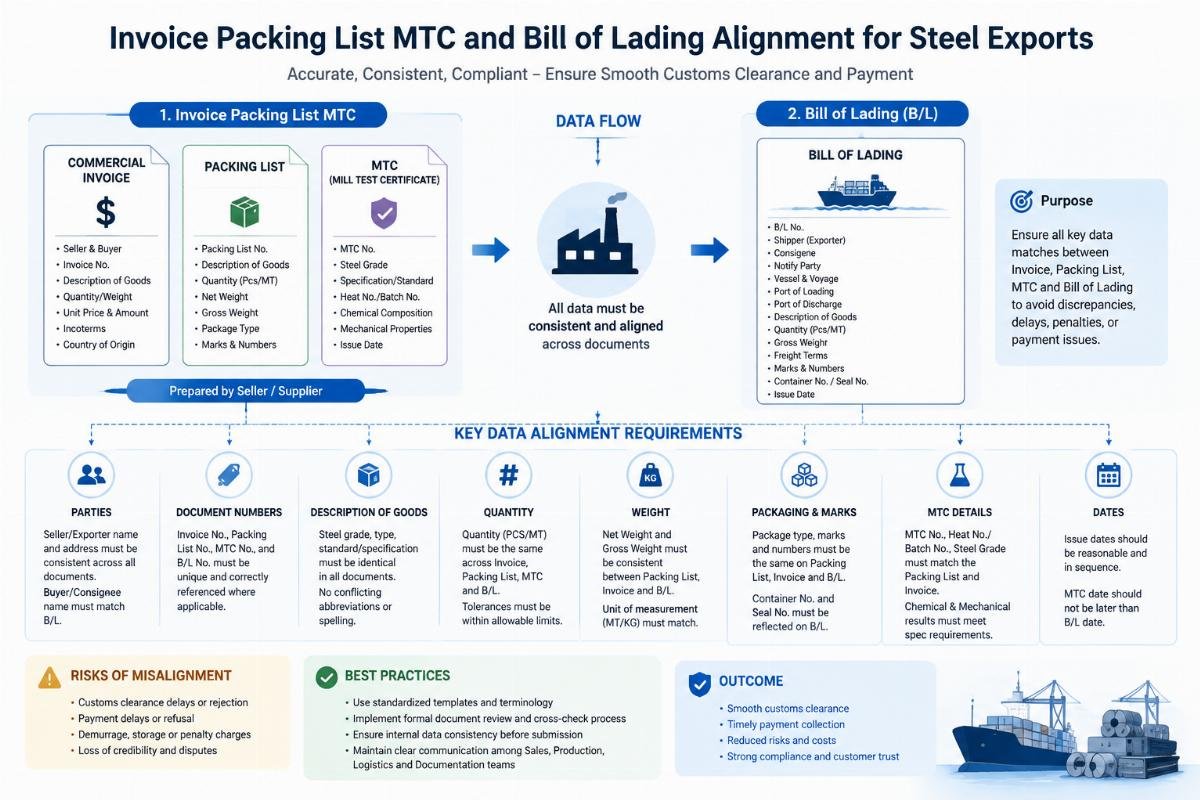
Buyers should work closely with their suppliers to review all documents before shipment. Many reputable manufacturers have dedicated documentation teams that specialize in preparing export papers that meet international banking standards. Understanding these requirements is essential for navigating Payment Terms for Chinese Structural Steel Manufacturers successfully.
Conclusion
Payment terms in steel trade are not negotiated but engineered through precise documentation and risk allocation.
Avoiding the traps of soft clauses and ensuring documentary alignment are critical for successful imports. By understanding the nuances of UCP600 and the importance of consistent documentation, buyers can mitigate financial risks and ensure smooth transactions. Whether using TT or L/C, the key is to balance security with efficiency, fostering a trustworthy relationship with suppliers. This approach not only protects your investment but also streamlines the supply chain for future projects.