
EN10219 Steel HS Code Import MENA: Xin Jiyuan Wholesale Supplier
The customs officer does not care about your material certificate if the HS code contradicts the manufacturing process.
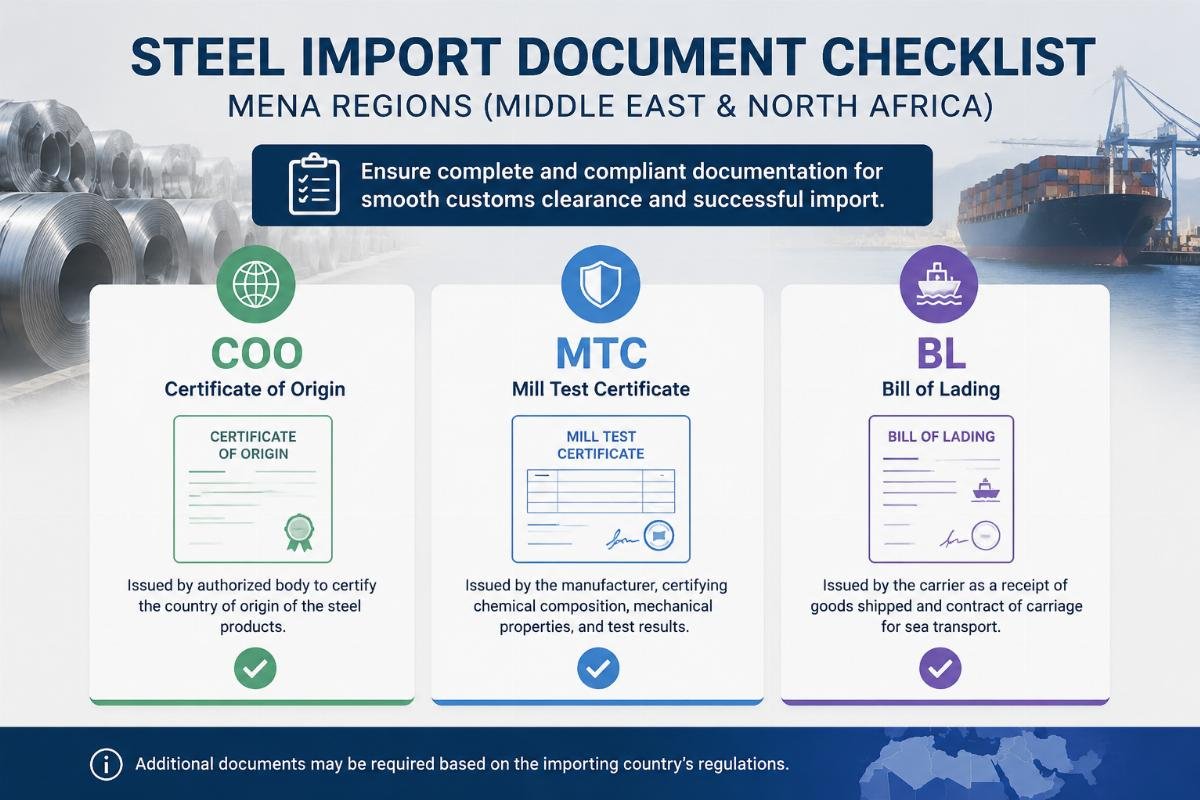
For EN10219 structural hollow sections entering MENA markets, the correct HS classification typically falls under 7306.61 (square or rectangular) or 7306.69 (other circular), distinct from hot-rolled or seamless pipes. Misclassifying cold-formed welded tubes as general welded pipes or seamless structures triggers immediate customs holds in Dubai, Riyadh, and Doha. Accurate declaration requires aligning the declared code with the cold-forming production method specified in EN10219, ensuring consistency between the Bill of Lading, Certificate of Origin, and Mill Test Certificates.
I have stood on the dusty tarmac of Jebel Ali Port more times than I can count, watching containers sit idle while paperwork disputes escalate. The heat is not the only thing that burns; it is the accumulating demurrage charges when a simple coding error turns a routine clearance into a forensic audit. Early in my career, I learned that Middle Eastern customs authorities operate with a rigorous focus on logical consistency rather than just document presence. A mismatch between the physical product’s cold-bent nature and a HS code implying hot-rolling is an instant red flag. This article breaks down the specific pitfalls of importing EN10219 steel in the Gulf region, drawing from real-world clearance challenges to help you avoid costly delays.
Why Does HS Code Matter for EN10219 Steel in MENA?
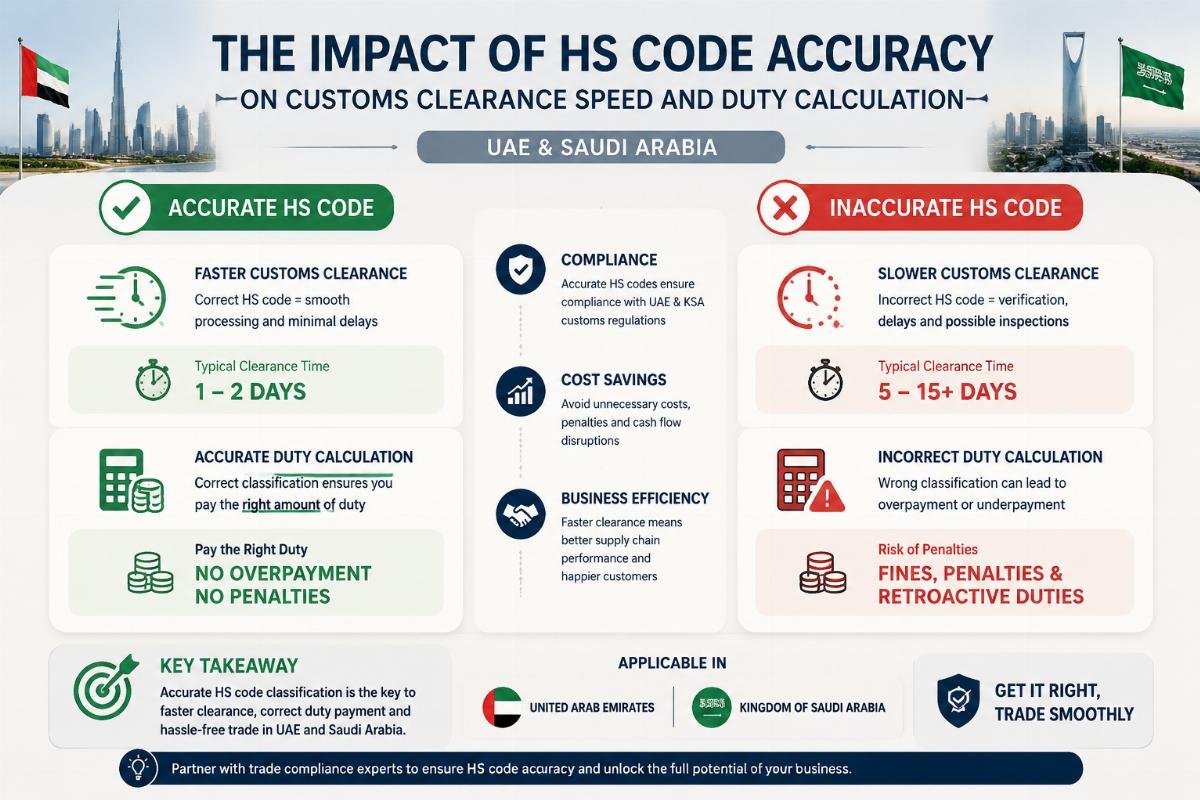
The Harmonized System code is not merely a statistical label; it is the primary determinant of duty rates and regulatory compliance in GCC countries. For structural steel, the difference between a correctly classified cold-formed tube and a misclassified hot-rolled section can mean the difference between standard duty rates and punitive tariffs designed to protect local heavy industry. [NEED_CITE: GCC Common Customs Law regarding industrial protection tariffs]
In the MENA region, customs administrations are increasingly digitized and data-driven. They cross-reference declared values and codes against global databases. If you declare EN10219 square hollow sections under a generic welded pipe code, the system may flag the shipment for undervaluation or misdescription because the market price for precision structural tubing differs significantly from standard commercial piping. This triggers a manual inspection, which in ports like Jeddah or Khalifa Port, can add weeks to your lead time.
The core issue lies in the perception of value. EN10219 products are engineered for structural integrity, often requiring higher grade steels like S355J2. When these are grouped with lower-specification welded pipes, the declared unit price appears anomalously high to customs algorithms. By using the precise HS code for cold-formed hollow sections, you justify the premium pricing through technical specification, aligning the financial declaration with the physical reality of the goods. This alignment is the first line of defense against arbitrary re-valuation.
Common Misclassification Pitfalls in Dubai and Riyadh Ports
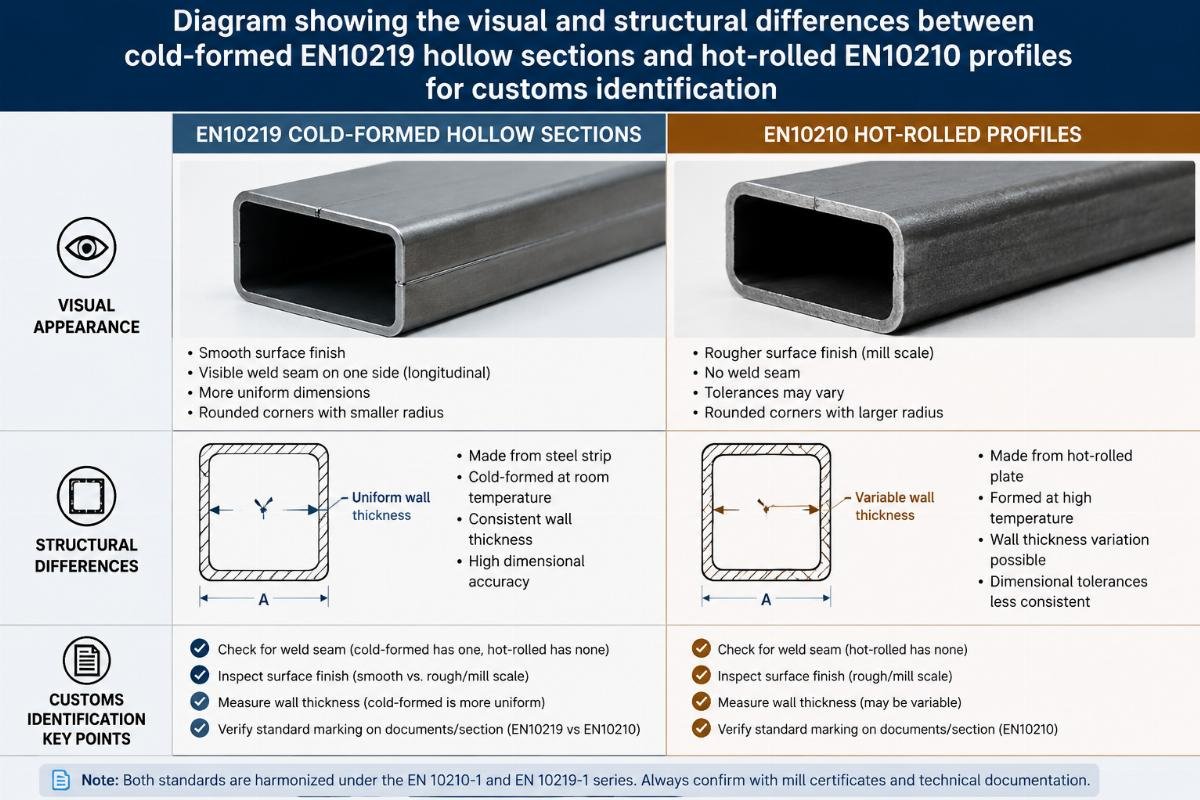
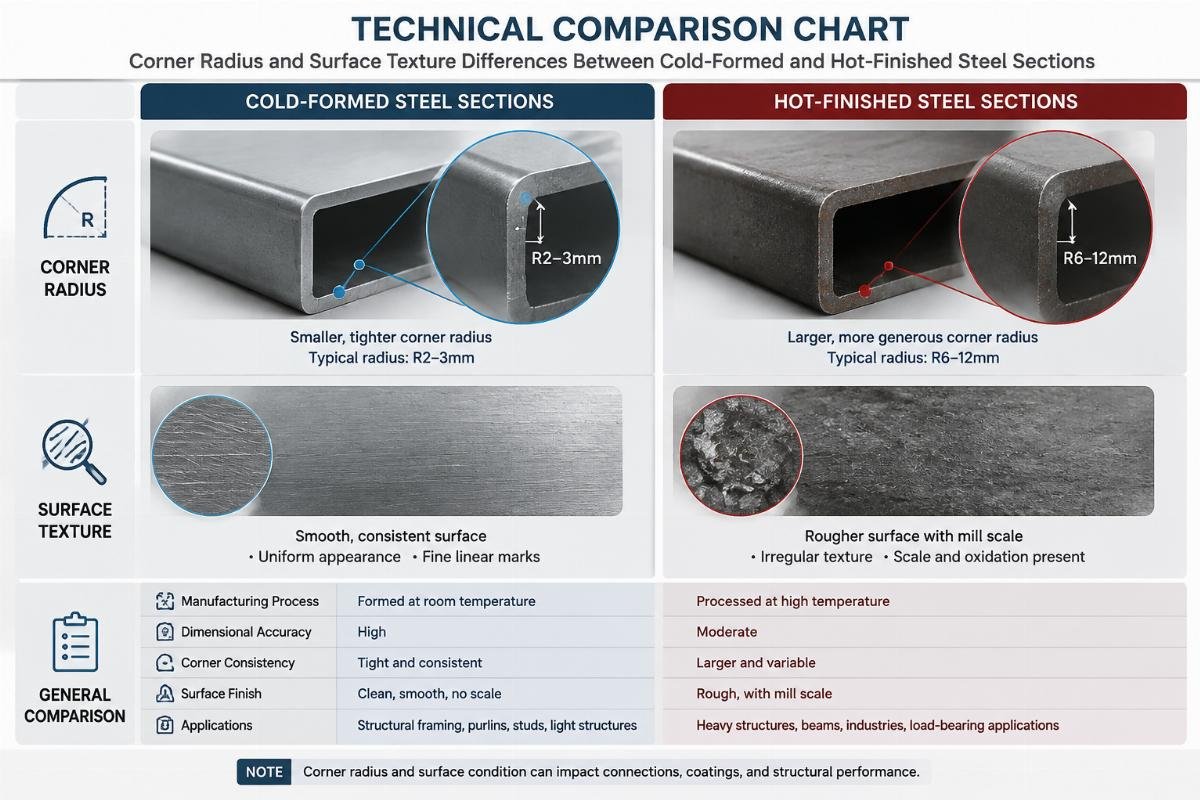
The most frequent error I encounter involves conflating EN10219 with EN10210 or general ERW pipes. While they may look similar to the untrained eye, their manufacturing processes dictate their legal classification. EN10219 specifies cold-formed welded hollow sections, whereas EN10210 covers hot-finished ones. In Dubai, I once witnessed a shipment of S355J2 square tubes held because the broker used a code associated with hot-rolled structural steel. The customs officer noted the sharp corner radii typical of cold-forming and questioned the declaration. The resulting delay cost the importer significant storage fees and disrupted a tight construction schedule.
In Riyadh, the pitfall is often related to mixed consignments. A recent case involved a container carrying both structural beams and EN10219 hollow sections. The declarant used a single HS code for the entire lot, assuming the structural nature covered all items. However, Saudi customs requires item-level specificity. The hollow sections were flagged because their code did not match the beam’s classification, leading to a full container examination. This level of scrutiny exposes every piece of cargo to potential damage and delays the entire project timeline.
Another common mistake is ignoring the shape-specific subheadings. Circular, square, and rectangular hollow sections often have distinct sub-codes within the 7306 chapter. Using a generic “other” code for square tubes invites questions about why the specific code was avoided. Customs officers in Doha have been known to request detailed technical drawings to verify the cross-section when the code is vague. Providing these documents after the fact is possible but inefficient. Pre-emptive accuracy prevents these interrogations entirely.
How to Distinguish EN10219 from Other Structural Steel Codes?
Distinguishing EN10219 from other structural steel products requires a focus on two key attributes: the forming method and the final cross-section geometry. EN10219 strictly governs cold-formed welded hollow sections for structural purposes. This means the steel strip is formed at ambient temperature and welded, resulting in specific mechanical properties and dimensional tolerances. In contrast, EN10210 covers hot-finished hollow sections, which are formed at high temperatures, leading to different surface characteristics and stress distributions. [NEED_CITE: EN10219 vs EN10210 standard scope definitions]
From a customs perspective, the distinction is critical because hot-finished products often fall under different tariff lines that may carry different duty implications or anti-dumping measures. When preparing documentation, ensure the Mill Test Certificate explicitly states “Cold Formed” and references EN10219. Do not rely on generic terms like “structural tube.” The language must be precise. If the MTC says “Hot Finished,” but you declare it as EN10219, you create a direct contradiction that will halt clearance.
Additionally, pay attention to the weld type. EN10219 allows for various welding methods, but the code must reflect the welded nature of the product. Seamless pipes, even if used for structure, fall under Chapter 7304. Confusing welded hollow sections with seamless pipes is a severe error, as seamless products often attract higher duties due to their complex manufacturing process. Verifying the production method against the HS code description is a simple yet vital step.
| Feature | EN10219 Cold-Formed | EN10210 Hot-Finished | Seamless Structural |
|---|---|---|---|
| Forming Process | Cold bending at ambient temperature | Hot forming at elevated temperature | Piercing and rolling without welding |
| Typical HS Chapter | 7306 (Welded Tubes) | 7306 (Welded Tubes) or 7304 depending on interpretation | 7304 (Seamless Tubes) |
| Surface Finish | Smoother, sharper corners | Rougher scale, rounded corners | Uniform, no weld seam |
| Customs Risk | Medium if misdeclared as hot-rolled | High if confused with cold-formed | High if confused with welded |
| Documentation Key | Must state “Cold Formed” | Must state “Hot Finished” | Must state “Seamless” |
Checklist for Smooth Customs Clearance in GCC Countries
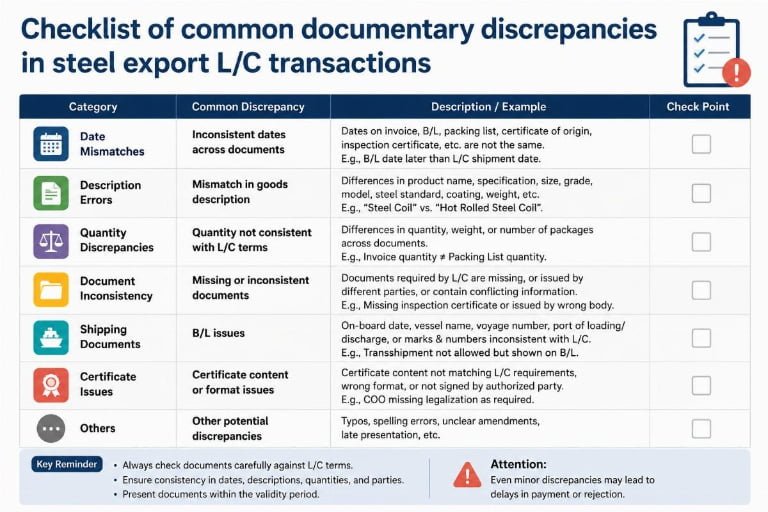
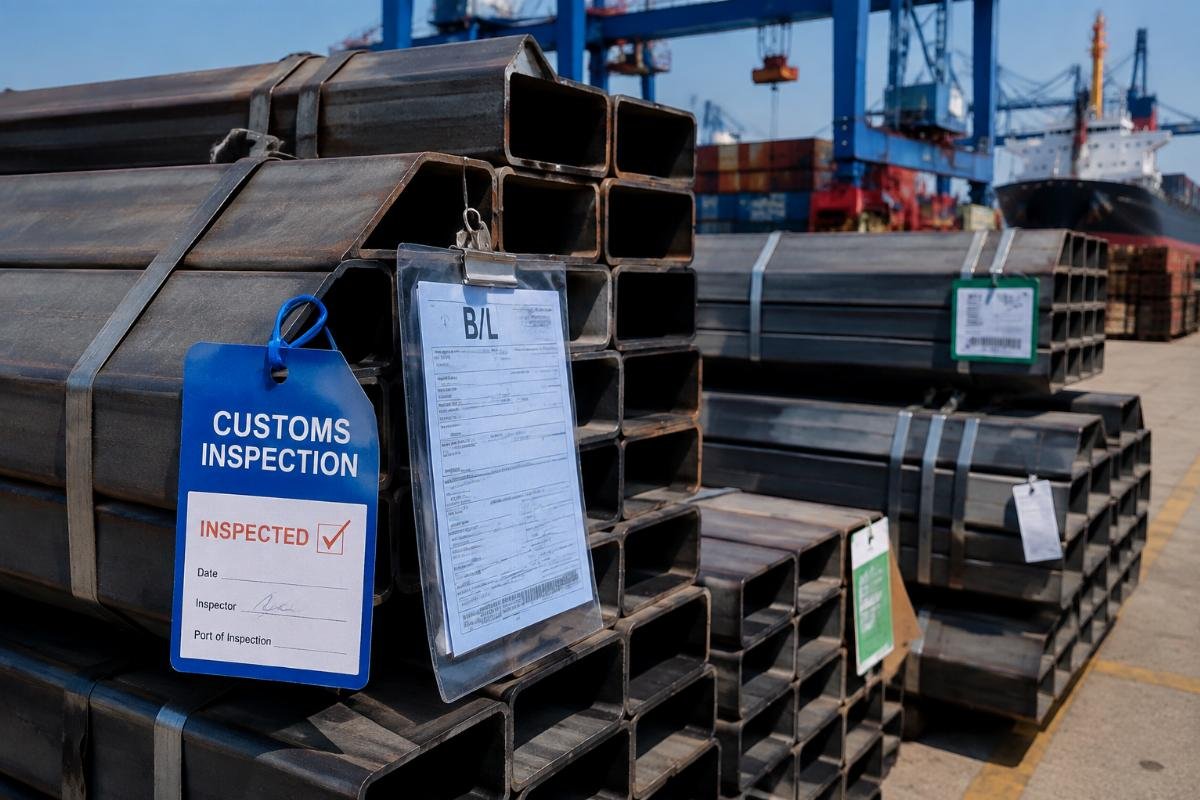
Clearing structural steel in the GCC requires a proactive approach to documentation. The authorities do not just check for the presence of papers; they check for coherence. A mismatch between the Certificate of Origin, the Bill of Lading, and the Mill Test Certificate is a guaranteed path to detention. Before shipment, verify that the HS code on the commercial invoice matches the code used in the pre-arrival declaration. Even a minor digit error can trigger a system alert.
Ensure the Certificate of Origin is legalized if required by the destination country. In Saudi Arabia, for instance, chamber of commerce attestation is often mandatory. The description on the CO must mirror the invoice exactly, including the reference to EN10219. Do not abbreviate standards or use internal product codes that customs officers cannot verify. Use the full international standard designation.
Furthermore, prepare a packing list that details the dimensions and weight of each bundle. For EN10219 sections, specify the outer dimensions and wall thickness clearly. This helps customs officers verify the cargo during physical inspections without needing to unpack every bundle. If the shipment contains mixed sizes, group them logically in the packing list to facilitate quick verification.
At Xin Jiyuan, we ensure that every export package of EN10219 steel comes with a meticulously prepared documentation set. Our Mill Test Certificates are generated directly from our laboratory data, ensuring that the chemical and mechanical properties listed are verifiable and consistent with the declared HS code. We understand that a missing signature or an ambiguous grade description can stall a shipment in Jebel Ali or King Abdulaziz Port. Therefore, our team reviews all export documents for logical consistency before they leave our facility, providing our clients with a clear path through customs.
Conclusion
Accurate HS code classification for EN10219 steel is a technical necessity, not just an administrative formality.
Missteps in declaring cold-formed hollow sections can lead to significant financial and temporal losses in MENA markets. By understanding the distinctions between EN10219 and other structural steel standards, and by maintaining rigorous documentation consistency, importers can navigate customs procedures with confidence. Precision in classification protects your project timeline and ensures compliance with regional trade regulations.