
EN10219 Structural Steel Manufacturer for Trade Assurance Contracts
Trade Assurance does not automatically cover quality disputes for structural steel.
The platform’s protection is strictly limited to the explicit terms written in your contract attachment. If your agreement lacks specific technical acceptance criteria—such as defined tolerance classes, testing standards, and inspection nodes—the buyer bears the full risk of port demurrage and rejected cargo.
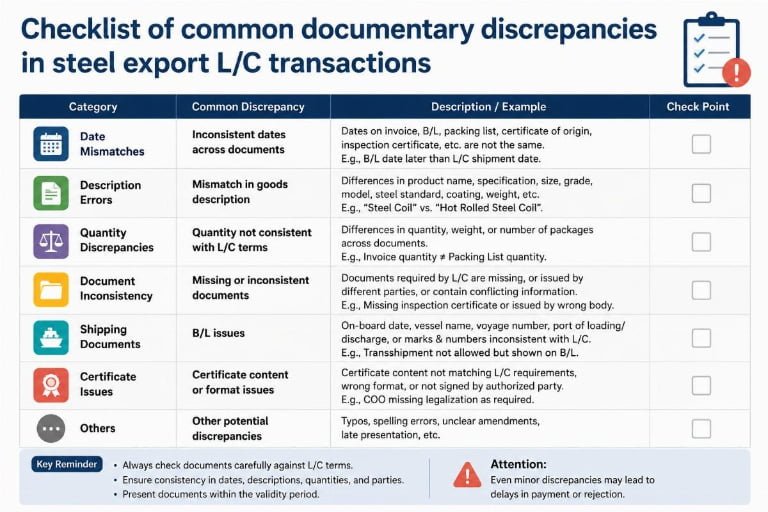
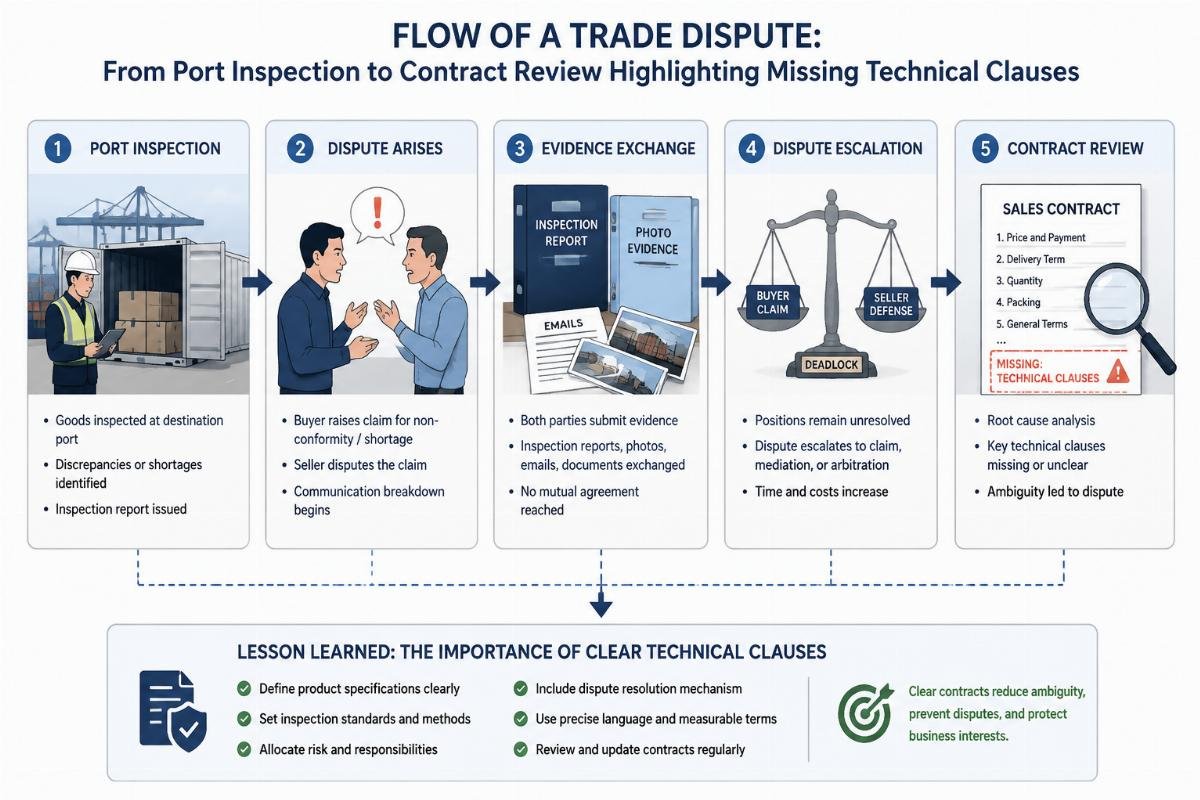
I still remember the humidity in the warehouse office when the call came from Dubai. A client had ordered a full container of S355J2 square hollow sections for a multi-level parking structure. The contract stated “EN10219 standard” and nothing else. When the shipment arrived at Jebel Ali Port, the local third-party inspector flagged a discrepancy between the impact test values on the Mill Test Certificate (MTC) and the physical samples. Because the contract did not specify whether the MTC should be EN10204 3.1 or 3.2, nor did it define the exact impact temperature for J2 grade verification, the dispute stalled. The cargo sat on the dock for over twenty days. The resulting demurrage fees consumed most of the project’s margin. That incident shifted my focus entirely to the granularity of contract clauses. [NEED_CITE: common causes of trade disputes in structural steel imports]
This experience underscores a critical reality for importers: ambiguity is expensive. To secure your investment, you must treat the contract attachment as a technical specification document, not just a commercial invoice.
Why Does Trade Assurance Fail for Structural Steel?
Most buyers assume that selecting “Trade Assurance” at checkout provides a blanket safety net for product quality. This is a dangerous misconception. The platform acts as an escrow service and a mediator, but it does not act as an engineer. It enforces what is written, not what is implied.
When a dispute arises regarding structural integrity or dimensional accuracy, the mediator looks for binary evidence: Did the supplier deliver the goods? Yes. Did the goods match the written description? If the description is vague, the answer is often subjective. For structural components like beams and pipes, “good quality” is not a legal definition. [NEED_CITE: Alibaba Trade Assurance policy regarding quality disputes]
In the case of the Dubai parking project, the lack of specificity meant there was no clear benchmark for rejection. The supplier argued that their internal factory standard was met, while the buyer relied on a general understanding of European norms. Without a pre-agreed testing protocol, the platform could not rule definitively in favor of either party without costly independent arbitration, which delays release of funds and cargo.
An EN10219 Structural Steel Manufacturer for Trade Assurance Contracts understands that the contract must bridge the gap between commercial intent and technical reality. The failure usually stems from three areas: undefined tolerance limits, missing inspection milestones, and ambiguous documentation requirements. By leaving these open, buyers inadvertently transfer the risk of non-compliance from the factory floor to the destination port.
What Technical Clauses Must Be in Your Contract?
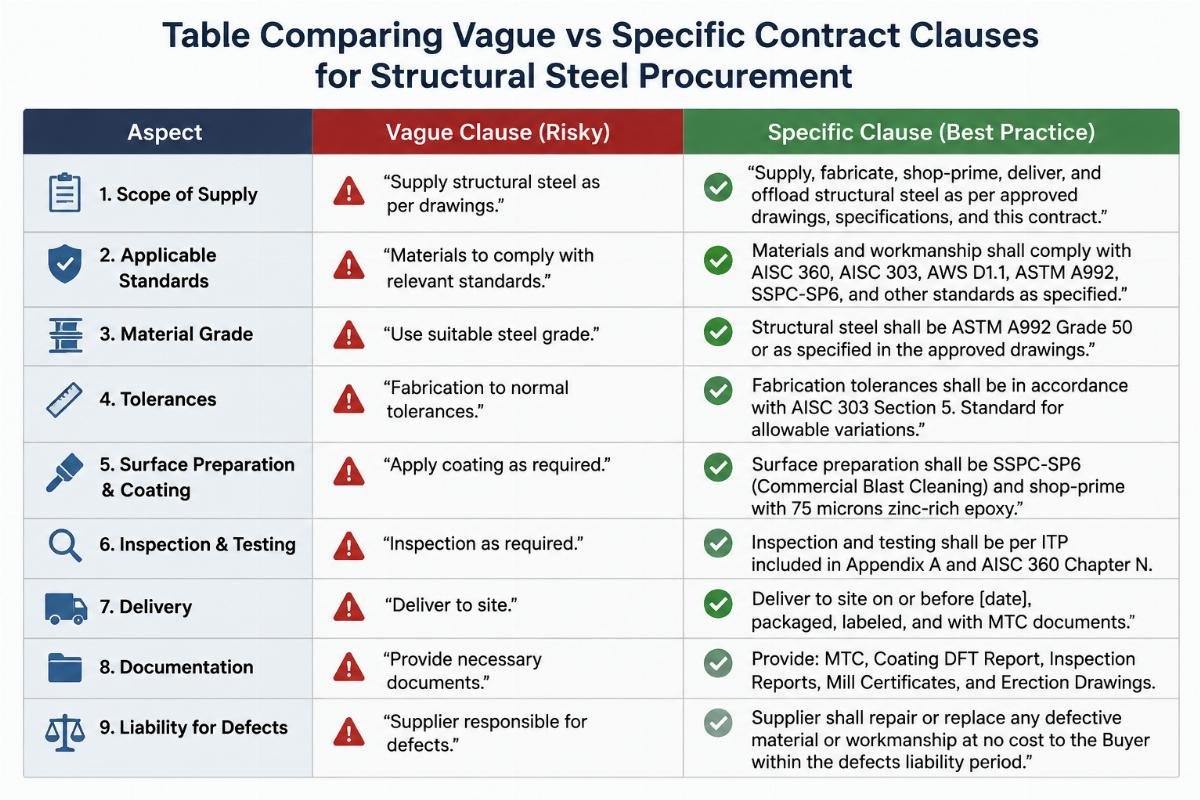
To avoid the ambiguity that leads to disputes, your contract must explicitly define the technical parameters of the steel. General references to standards are insufficient. You must specify the exact grade suffixes, tolerance classes, and testing methods.
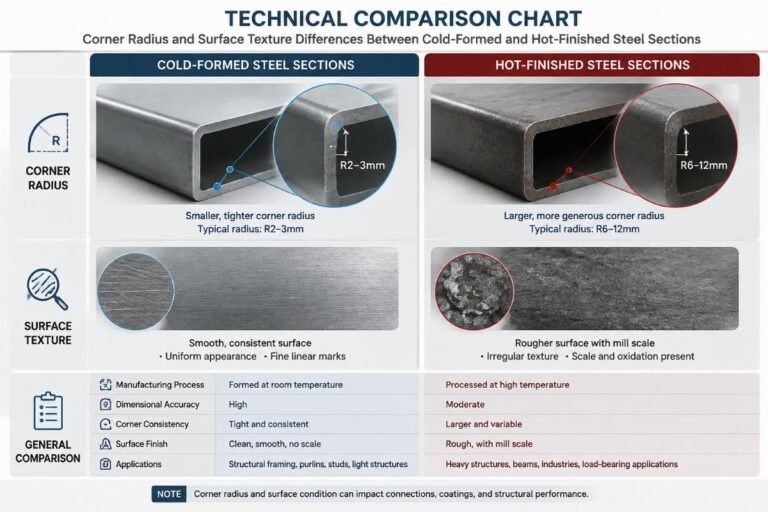
For example, specifying “S355” is not enough. You must define “S355J2” if low-temperature impact resistance is required for your climate or application. Furthermore, EN10219 allows for different tolerance classes for dimensions. If your fabrication process requires tight fits, you must specify “Tolerance Class C” rather than the default “Class B.” [NEED_CITE: EN10219 standard tolerance classes for cold-formed welded structural hollow sections]
| Parameter | Vague Clause (High Risk) | Specific Clause (Low Risk) |
|---|---|---|
| Standard | “EN10219 compliant” | “EN10219-1:2017, Tolerance Class C” |
| Grade | “S355” | “S355J2 (Impact tested at -20°C)” |
| Certification | “Mill Certificate provided” | “EN10204 3.2 Certificate with traceable heat numbers” |
| Surface | “Painted” | “Shot blasted Sa 2.5, Epoxy primer 60 microns” |
A US-based trading company once faced a similar issue with H-beams destined for a warehouse project in Southeast Asia. The contract simply stated “standard tolerance.” Upon arrival, five percent of the beams were rejected by the local fabricator because the camber exceeded their welding jig limits. Had the contract specified a maximum camber deviation per meter, the supplier would have been liable for rework before shipment. Instead, the buyer absorbed the cost of straightening the beams locally.
Working with an experienced EN10219 Structural Steel Manufacturer for Trade Assurance Contracts means these details are often part of their standard operating procedure, but they must still be codified in your agreement. Do not rely on verbal assurances or catalog descriptions. The contract attachment is the only document that matters in a dispute.
How to Define “Quality” to Avoid Disputes?
Defining quality requires moving the inspection point from the destination back to the origin. Waiting until the cargo arrives at the port to verify quality is too late. At that stage, you are dealing with logistics costs, customs penalties, and potential project delays.
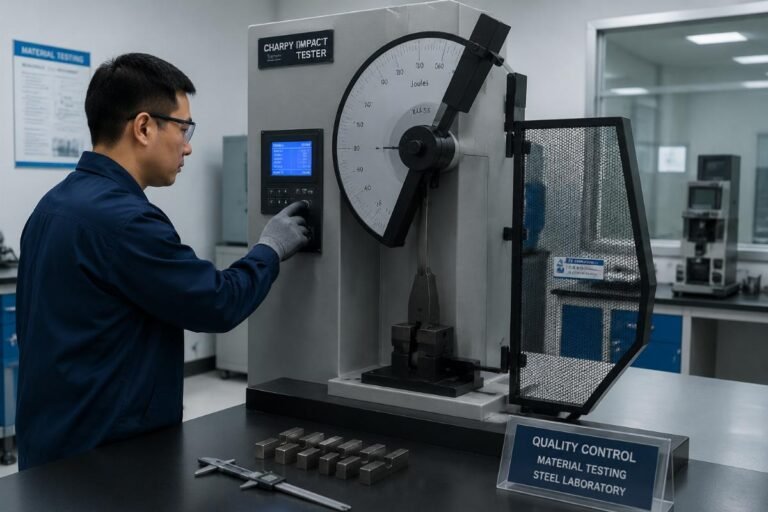
The most effective strategy is to mandate third-party inspection at the factory before shipment. This shifts the burden of proof to the pre-shipment phase. You should specify the inspection agency (e.g., SGS, BV, or Intertek) and the scope of inspection in the contract. [NEED_CITE: best practices for pre-shipment inspection of structural steel]
Key inspection nodes include:
- Pre-production sample approval: Verify the surface treatment and dimensional accuracy of a pilot batch.
- In-process checks: Monitor welding procedures and non-destructive testing (NDT) results during production.
- Pre-shipment verification: Confirm final dimensions, weight, and packaging against the packing list.
A buyer in Africa recently lost a major infrastructure bid because the supplied steel pipes lacked proper certification traceability. The client required EN10219 certification, but the supplier provided generic mill certs that did not link the heat numbers on the pipes to specific test batches. The project manager rejected the entire shipment. If a pre-shipment inspection had been mandated, this documentation gap would have been identified and corrected while the goods were still at the manufacturer’s facility.

By defining these inspection milestones, you create a clear pathway for acceptance. If the goods pass the third-party inspection, the Trade Assurance payment is released, and the risk transfers to the buyer for transit issues only. This clarity protects both parties and ensures that the EN10219 Structural Steel Manufacturer for Trade Assurance Contracts delivers exactly what was agreed upon.
What Documents Prove Compliance?
Documentation is the backbone of compliance. In the steel industry, the paper trail is as important as the physical product. Without proper documentation, even high-quality steel can be deemed non-compliant by customs authorities or end clients.
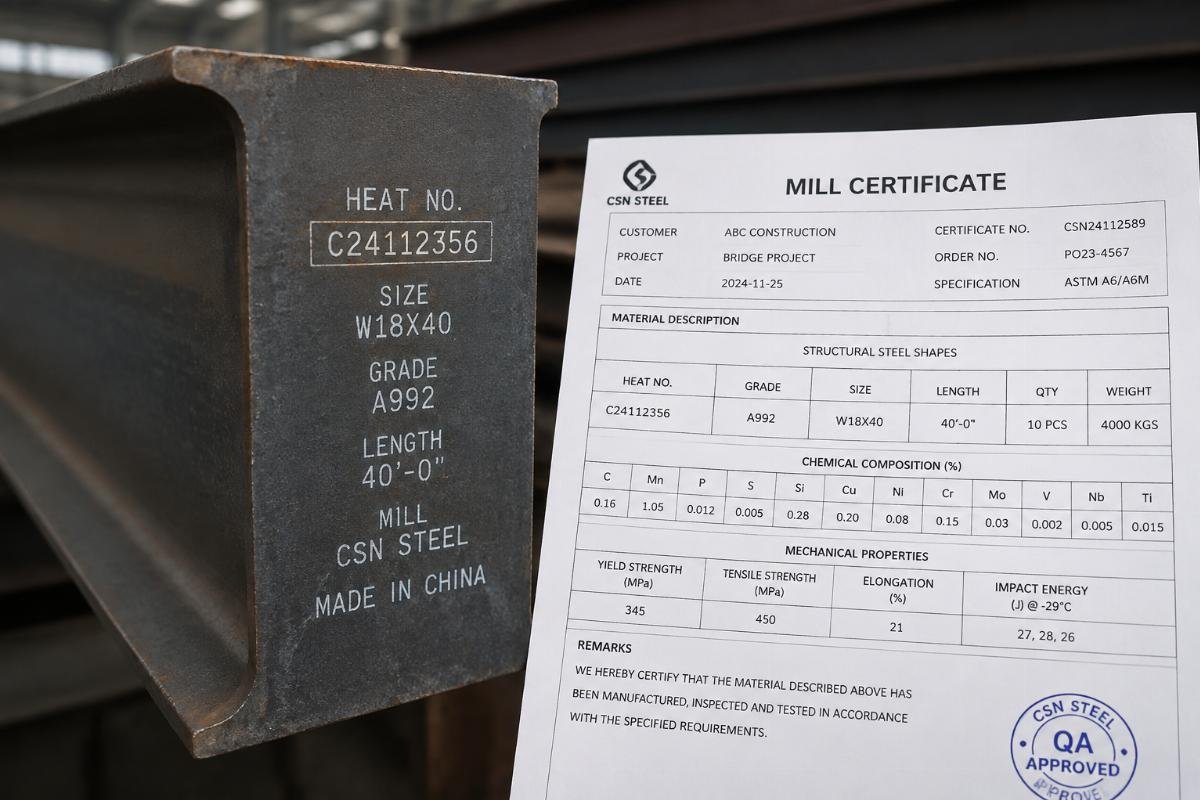
The primary document is the Mill Test Certificate (MTC). However, not all MTCs are created equal. You must specify whether you require an EN10204 3.1 certificate (issued by the manufacturer) or an EN10204 3.2 certificate (issued by an independent inspector). For critical structural applications, 3.2 is often required to ensure impartiality. [NEED_CITE: difference between EN10204 3.1 and 3.2 certificates]
Additionally, the certificate must be traceable. Each bundle of steel should have a heat number stamped on it, which corresponds to a specific batch in the MTC. This allows for verification of chemical composition and mechanical properties for every single piece.
Other essential documents include:
- Certificate of Origin: Required for customs clearance and tariff determination.
- Packing List: Detailed breakdown of weights, dimensions, and bundle counts.
- Surface Treatment Logs: If painting or galvanizing is specified, logs proving the process parameters (e.g., zinc thickness, paint cure time) are necessary.
A European distributor once received a shipment of galvanized beams where the zinc coating was uneven. The supplier claimed it met the standard, but without surface treatment logs or pre-shipment thickness measurements, the distributor had no proof. The cost of re-galvanizing the beams locally far exceeded the initial savings.
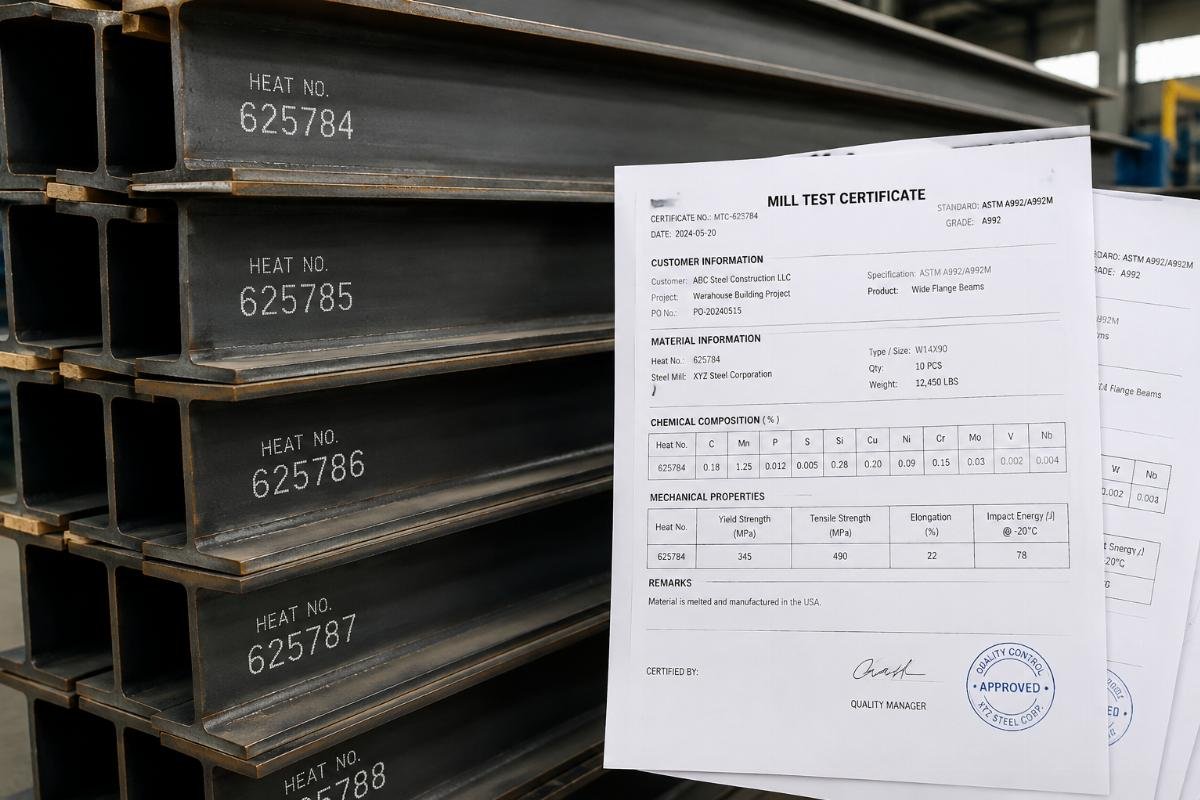
Ensuring that your EN10219 Structural Steel Manufacturer for Trade Assurance Contracts provides this complete documentation chain is vital. It transforms the transaction from a simple purchase into a verifiable engineering supply.
Conclusion
Clarity in contracts prevents costly disputes.
Trade Assurance is a powerful tool, but it is only as strong as the terms you define. By specifying technical standards, mandating pre-shipment inspections, and requiring traceable documentation, you mitigate the risks associated with importing structural steel. Partnering with a knowledgeable EN10219 Structural Steel Manufacturer for Trade Assurance Contracts ensures that these technical requirements are understood and met from the start.