
Verify EN10219 S355JR Steel Factory Compliance for EU Buyers
A certificate is not a guarantee; it is merely a claim.
To verify Chinese steel factory compliance for the EU market, buyers must move beyond generic mill certificates and enforce batch-specific validation. This requires cross-referencing heat numbers on physical stock with Mill Test Certificates (MTC), confirming that impact test temperatures match the specific sub-grade (JR, J0, or J2), and demanding third-party inspection reports for critical structural applications. Compliance is proven by traceability, not just paperwork.
The smell of burnt flux and hot metal still triggers a specific anxiety in me. It takes me back to a loading dock in Jinan, watching a container of S355JR square hollow sections being sealed for shipment to a major infrastructure project in the Middle East. The paperwork was perfect. The EN10219 certification was valid. The yield strength values were well within limits. Yet, months later, the client’s site engineer called with a problem that nearly cost us the account: the steel failed the impact toughness test at -20°C.
We had supplied JR grade material, which is tested at +20°C, but the project specifications implicitly required J0 performance due to nighttime temperature drops in the desert region. The discrepancy wasn’t in the chemistry; it was in the interpretation of the standard. That incident reshaped how I approach quality control. It taught me that verifying Chinese steel factory compliance is not about collecting PDFs; it is about understanding the microscopic details of how steel behaves under stress and ensuring the documentation matches the physical reality of every single heat number. 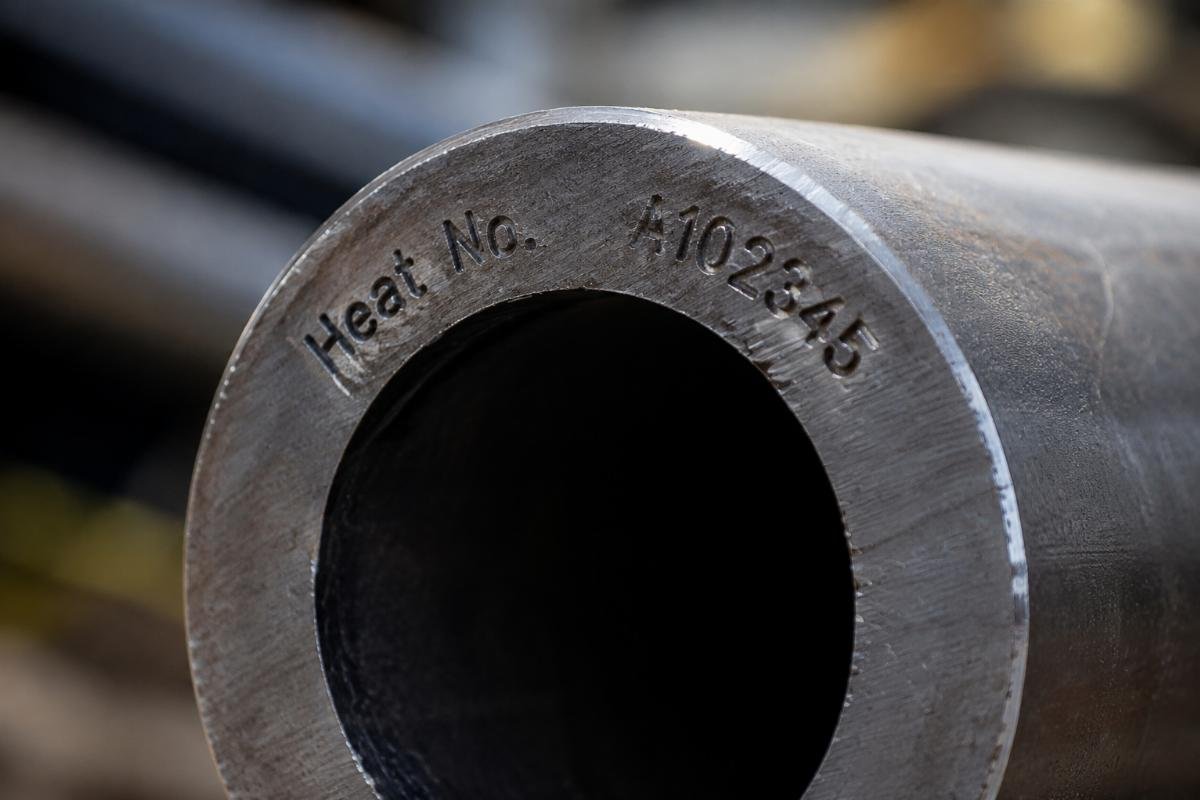
This guide breaks down the practical steps EU buyers and procurement managers must take to avoid similar pitfalls. We will look at why standard certificates often fail during customs or site inspections, the critical differences between S355 sub-grades, and how to audit a manufacturer’s quality control process effectively.
Why Do Standard Certificates Fail During EU Customs or Site Inspection?
Generic certificates prove capability, not batch compliance.
Many buyers assume that holding an EN10219 certificate means every product leaving the factory is compliant. This is a dangerous misconception. A factory’s certification confirms they have the equipment and processes to produce compliant steel, but it does not guarantee that a specific batch meets the requirements. [NEED_CITE: difference between type approval and batch certification in EN standards]
When customs officers or site inspectors reject steel, it is rarely because the factory lacks certification. It is usually because the Mill Test Certificate (MTC) provided does not align with the physical markings on the steel, or the testing parameters do not match the purchase order. For instance, an MTC might list average yield strength, but if the individual heat number data is missing or obscured, the batch cannot be traced back to its original production run.
In my experience, the most common failure point is the lack of traceability from the coil to the finished pipe. If a distributor consolidates mixed containers, they might strip the original markings to save space or reduce confusion. Without the heat number stamped on the steel, the MTC becomes useless. The inspector sees a piece of steel with no identity and a certificate that references a batch they cannot physically verify. To truly verify Chinese steel factory compliance, you must demand that heat numbers remain visible and legible throughout the manufacturing and packing process. 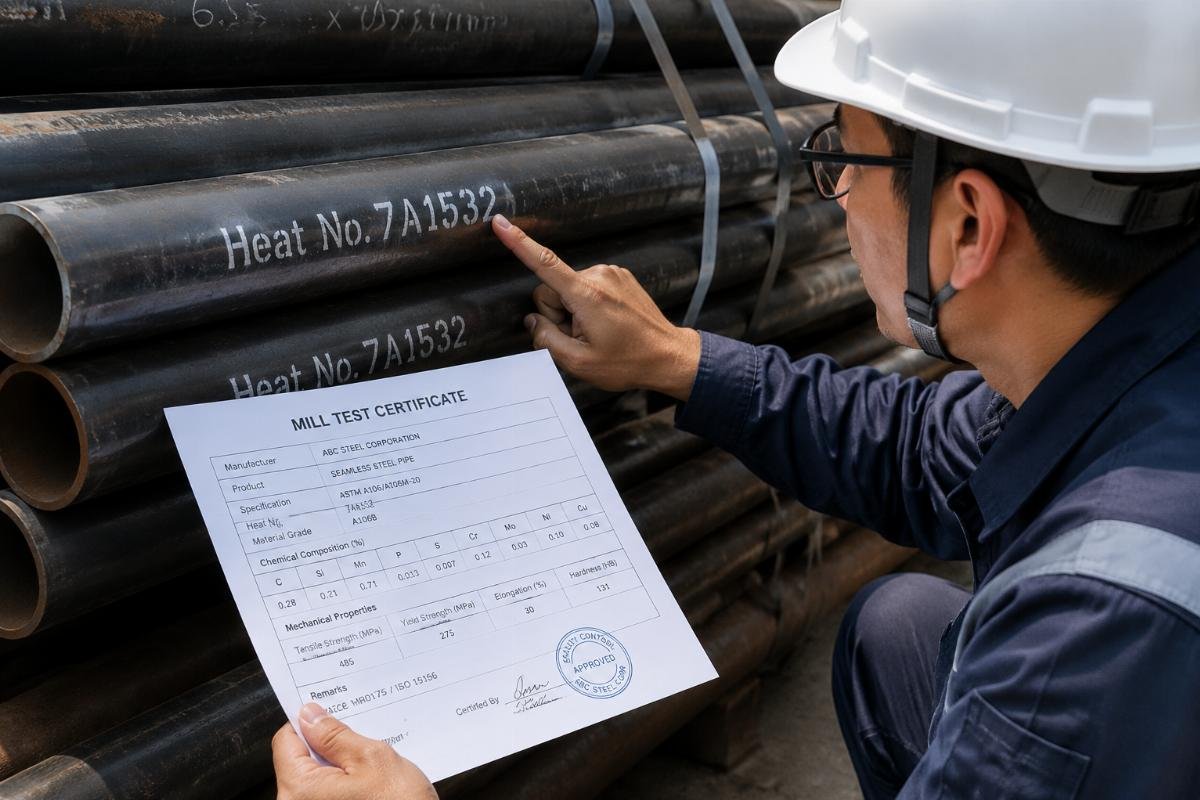
What Are the Critical Differences Between S355JR, J0, and J2?
Impact temperature is the key differentiator, not just yield strength.
“S355” is often treated as a universal label for structural steel, but this overlooks the critical suffixes that define its performance in cold environments. The letters JR, J0, and J2 refer to the Charpy V-notch impact test temperature and the minimum energy required. [NEED_CITE: EN 10025-2 impact testing temperature requirements for S355 grades]
| Grade | Impact Test Temperature | Minimum Impact Energy (Longitudinal) | Typical Application Context |
|---|---|---|---|
| S355JR | +20°C | 27 J | Indoor structures, warm climates |
| S355J0 | 0°C | 27 J | General outdoor structures in temperate zones |
| S355J2 | -20°C | 27 J | Cold climate structures, offshore, critical bridges |
The mistake we made in the Middle East was assuming that “structural steel” implied a certain level of cold toughness. In reality, JR grade steel can become brittle at temperatures near freezing. If your project involves outdoor exposure in Northern Europe or high-altitude regions, specifying JR is a liability.
When reviewing MTCs, look specifically for the impact test column. It should explicitly state the test temperature. If the MTC says “Impact Test: Passed” without specifying the temperature, it is incomplete. For EU buyers, verifying that the test temperature matches the grade specification is a non-negotiable step in the compliance check. A factory that cannot provide detailed impact data for each heat number is not ready for serious export work. 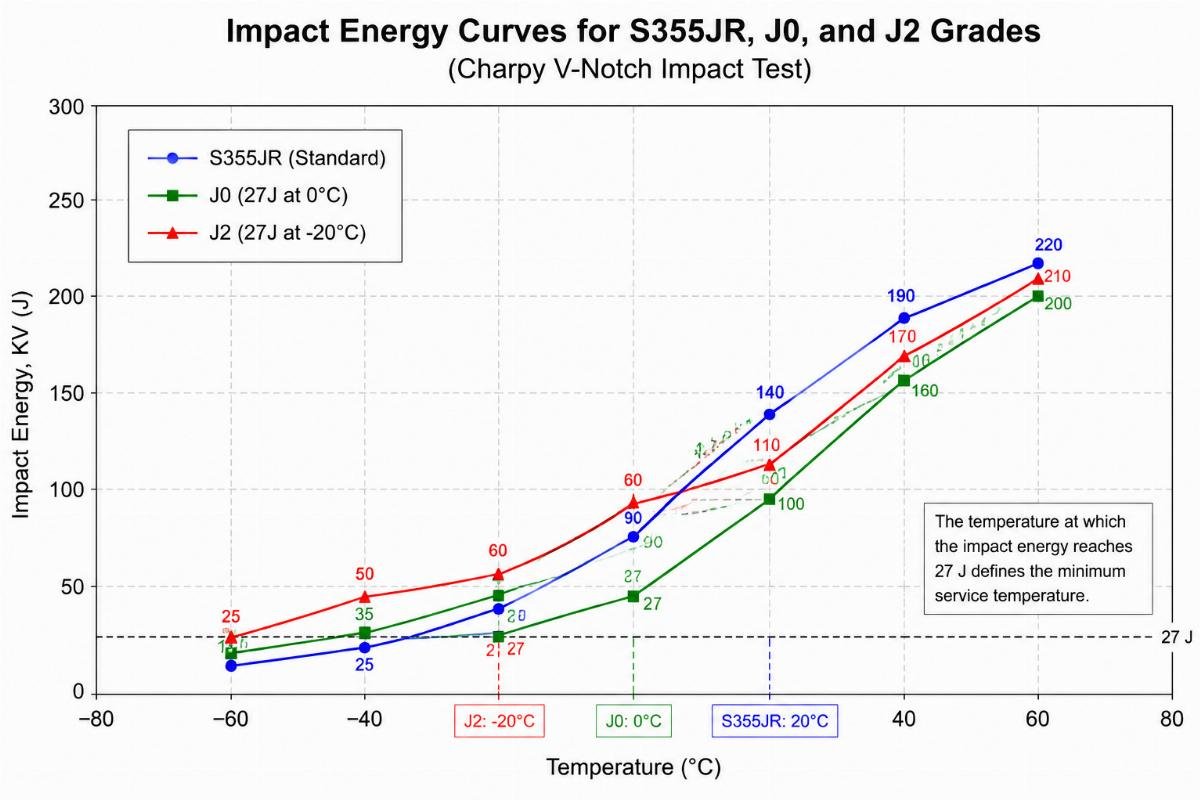
How to Audit a Chinese Manufacturer’s Quality Control Process?
Look for in-house labs with calibrated impact testers and traceability systems.
Auditing a supplier is not just about walking through the production floor; it is about verifying their ability to self-police. A genuine manufacturer will have an in-house laboratory equipped with Charpy impact testers, tensile testing machines, and spectrometers for chemical analysis. [NEED_CITE: requirements for internal quality control laboratories in EN 10219]
During a recent audit of a potential partner, I didn’t just ask to see the lab. I asked to see the calibration logs for their impact tester. If the machine hasn’t been calibrated recently, the results are suspect. I also checked their traceability system. Can they pull up the production record for a specific heat number from six months ago? If the answer is “we’ll check with the workshop,” it means their digital tracking is weak.
At our facilities in Jinan, we maintain over 20 production lines with a dedicated quality control team that operates independently from sales. This separation is crucial. The QC team’s bonus is tied to accuracy, not volume. When you visit a factory, ask to speak to the QC manager, not just the sales representative. Ask them how they handle a failed test. Do they re-test until it passes, or do they quarantine the batch? The answer tells you everything about their integrity. Verifying Chinese steel factory compliance requires seeing this operational discipline firsthand. 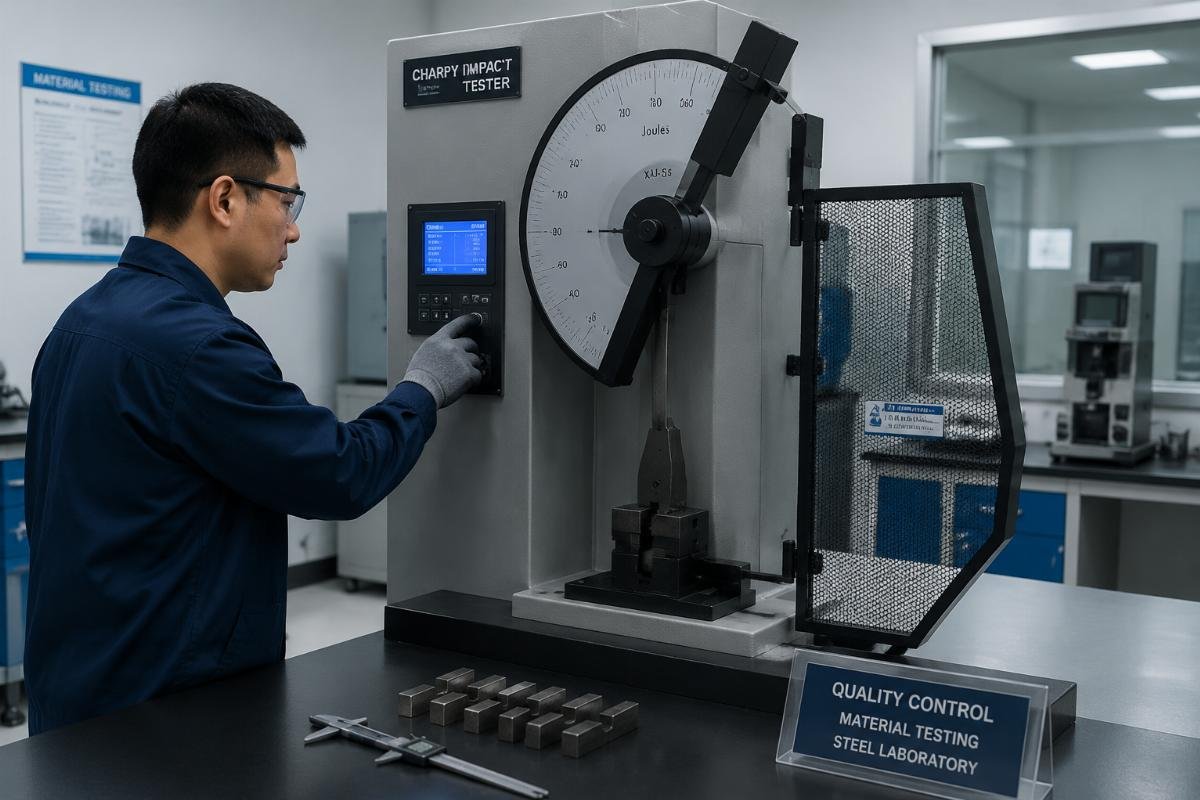
Which Documents Are Non-Negotiable for EU Import?
MTC with heat numbers, third-party inspection reports, and CE marking declarations.
Paperwork is the first line of defense against non-compliance. For EU imports, three documents are essential. First, the Mill Test Certificate (MTC) must be issued according to EN 10204 Type 3.1 or 3.2, depending on the criticality of the application. Type 3.1 is issued by the manufacturer’s authorized inspection representative, while Type 3.2 involves an independent third party. [NEED_CITE: EN 10204 types of inspection documents]
Second, a CE Marking Declaration of Performance (DoP) is mandatory for construction products regulated under the Construction Products Regulation (CPR). This document declares the essential characteristics of the steel, such as yield strength and impact toughness. Without a valid DoP, the steel cannot be legally used in many EU construction projects.
Third, for high-value or critical orders, a third-party inspection report from agencies like SGS, Bureau Veritas, or TUV is highly recommended. These reports provide an unbiased verification of dimensions, surface quality, and mechanical properties. Relying solely on factory-issued documents leaves room for error or manipulation. A third-party report acts as an insurance policy, ensuring that what you ordered is exactly what you received. 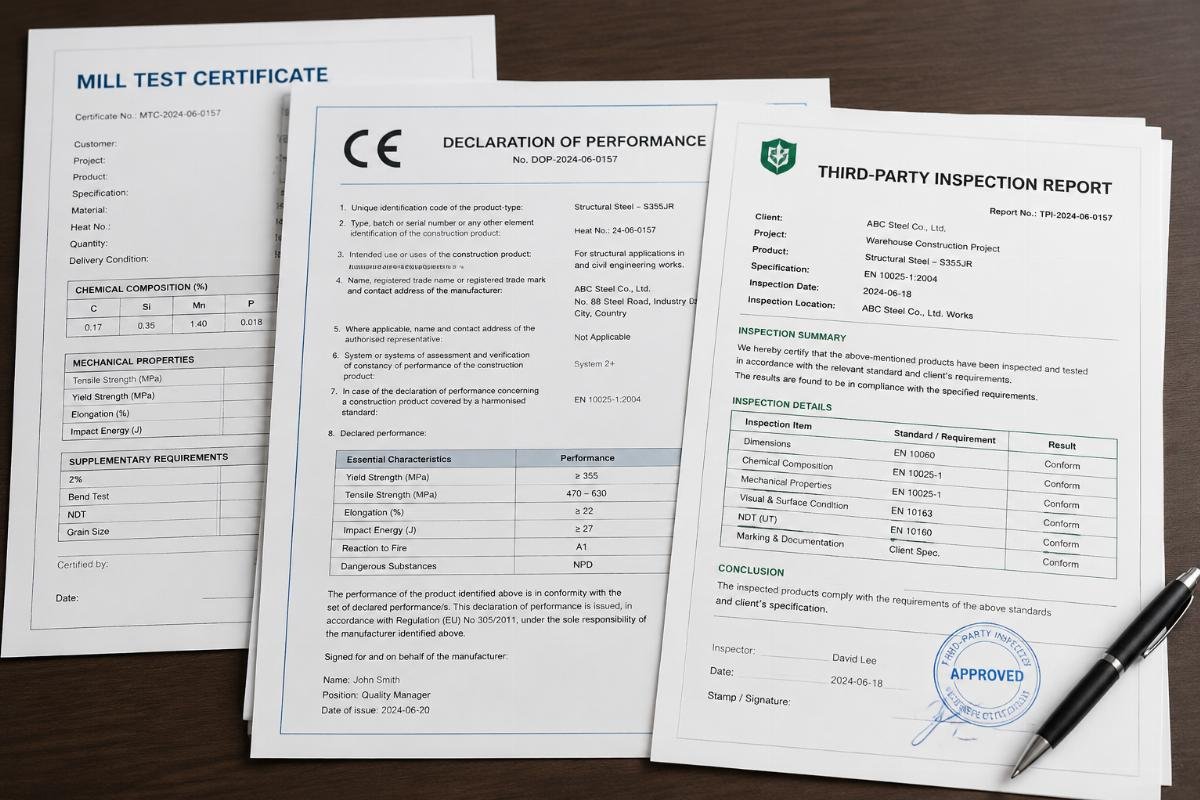
How to Handle Discrepancies Before Shipment?
Pre-shipment inspection is cheaper than return shipping.
Discovering a compliance issue after the steel has arrived in Rotterdam or Hamburg is a financial disaster. Return shipping costs, customs penalties, and project delays can multiply the original cost of the steel several times over. The solution is rigorous pre-shipment inspection (PSI).
Before the container is sealed, engage an independent inspector to verify the following:
- Marking: Ensure heat numbers are clearly stamped on each piece.
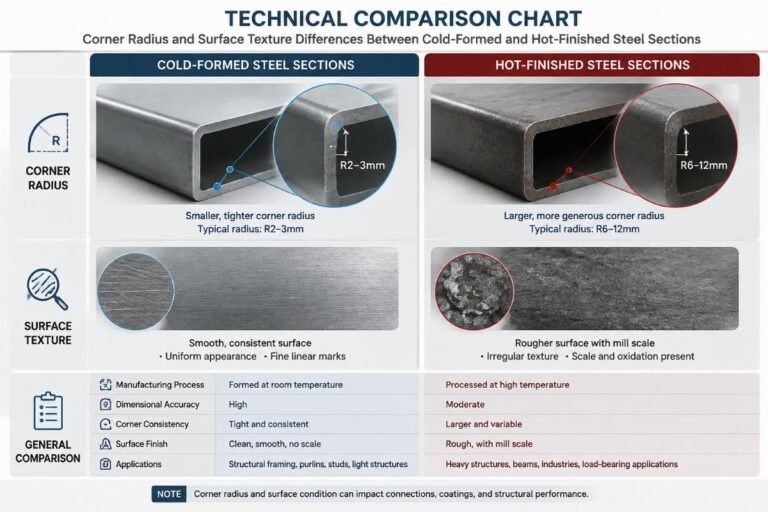
- Dimensions: Check outer diameter, wall thickness, and length against EN10219 tolerances.
- Surface Quality: Look for rust, pits, or welding defects.
- Packaging: Verify that the steel is properly bundled and protected against moisture during sea freight.
If discrepancies are found, they can be rectified at the factory. Replacing a few pipes or re-blasting a surface is manageable. Shipping a full container back to China is not. By making PSI a standard part of your procurement process, you shift the risk from the destination port to the source, where it is easier and cheaper to manage. This proactive approach is the hallmark of professional procurement and the most effective way to verify Chinese steel factory compliance. 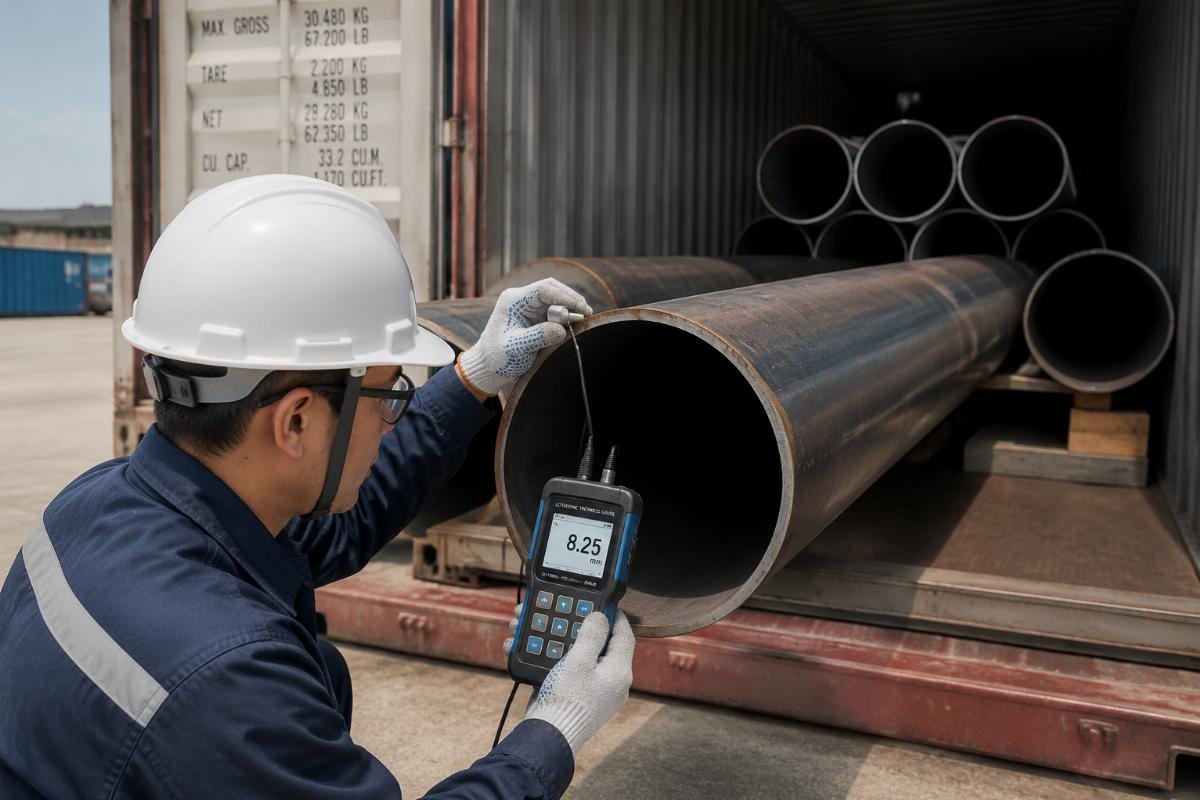
Conclusion
Compliance is verified through traceability, not just certificates.
Avoiding costly rejections requires a shift from passive document collection to active verification. By understanding the nuances of S355 sub-grades, demanding heat-number traceability, and enforcing pre-shipment inspections, EU buyers can secure their supply chains. Real security comes from knowing that every beam and pipe has been tested, tracked, and validated against the exact standards required for your project.