
Source EN10219 S355JR Steel from China Manufacturer
The lowest FOB price is often the most expensive line item on your final project ledger.
Sourcing compliant structural steel requires rigorous verification of mill test certificates against physical goods, not just price comparison. The primary risk for Southeast Asian distributors and EPC contractors is not material quality per se, but documentation mismatch that triggers customs rejection and structural liability. To successfully source EN10219 S355JR steel from China manufacturer facilities, buyers must prioritize traceable heat numbers, verified impact testing data, and surface preparation standards suitable for tropical climates over initial unit cost savings.
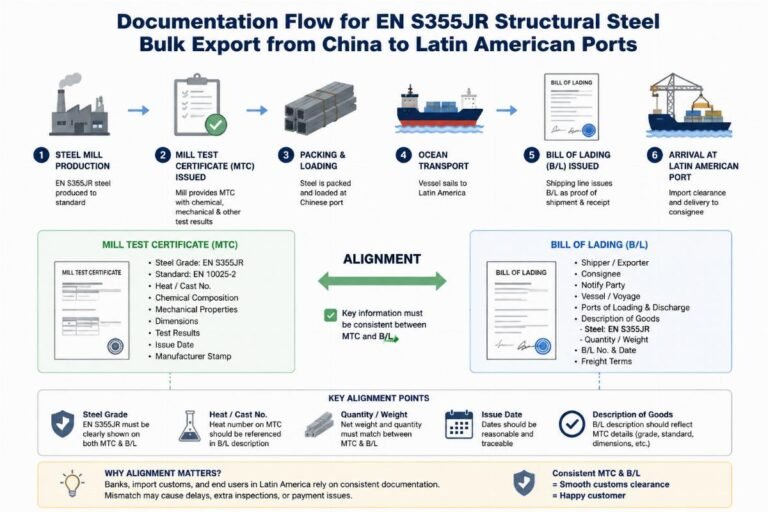
I have spent years stationed in Jakarta, learning the trade from old hands down at the docks. One case still sticks with me—an Indonesian client building a multi-level car park ordered S355JR square hollow sections from a Chinese supplier. When the container hit Tanjung Priok, the mill certs didn’t match EN10219 specs. The inspector rejected the whole lot. Steel sat rusting in the yard while the client called me at midnight, screaming about schedule delays. That’s when it clicked—what buyers dread isn’t high prices, it’s certificates that don’t match the product. Picking a steel source is never just about comparing quotes.
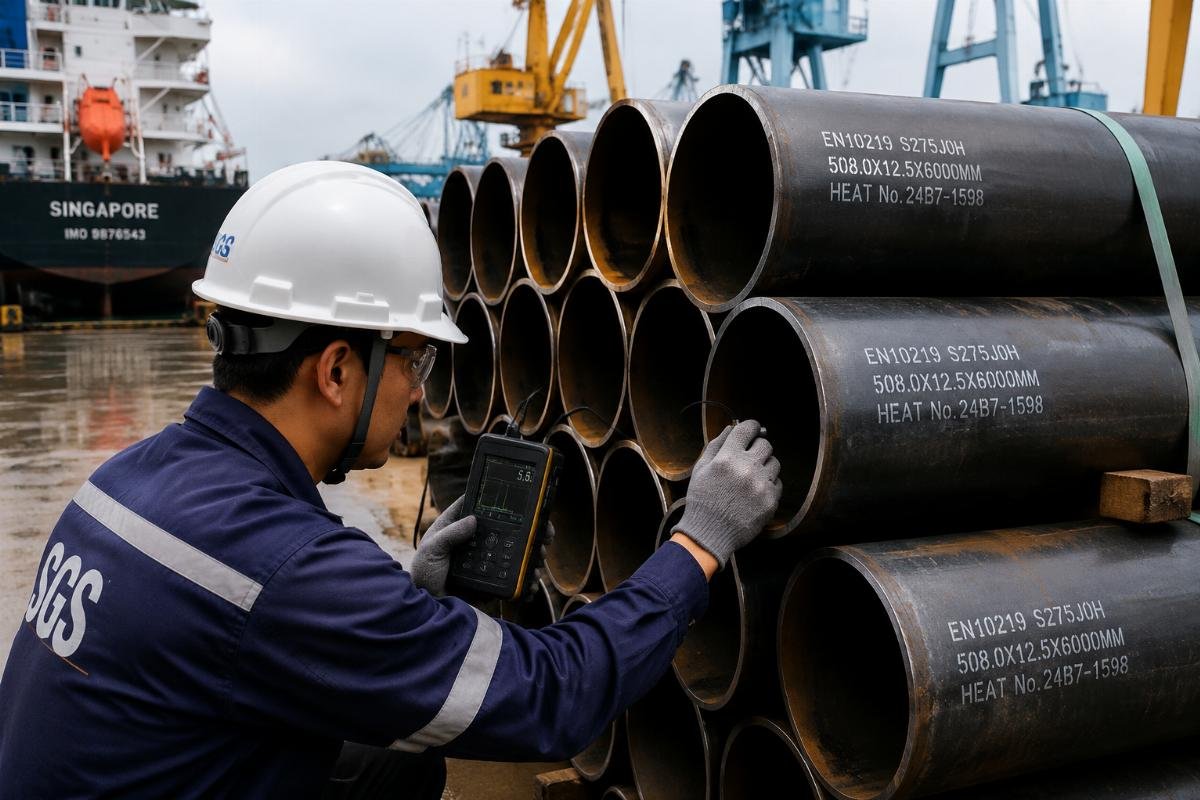
This reality shapes how serious distributors approach their supply chain. It is not enough to request a PDF certificate; one must understand the physical and chemical distinctions that define genuine compliance.
Why Do Southeast Asian Buyers Fail Customs with Chinese Steel?
Documentation mismatch is the primary cause of clearance failure, not necessarily substandard metal quality.
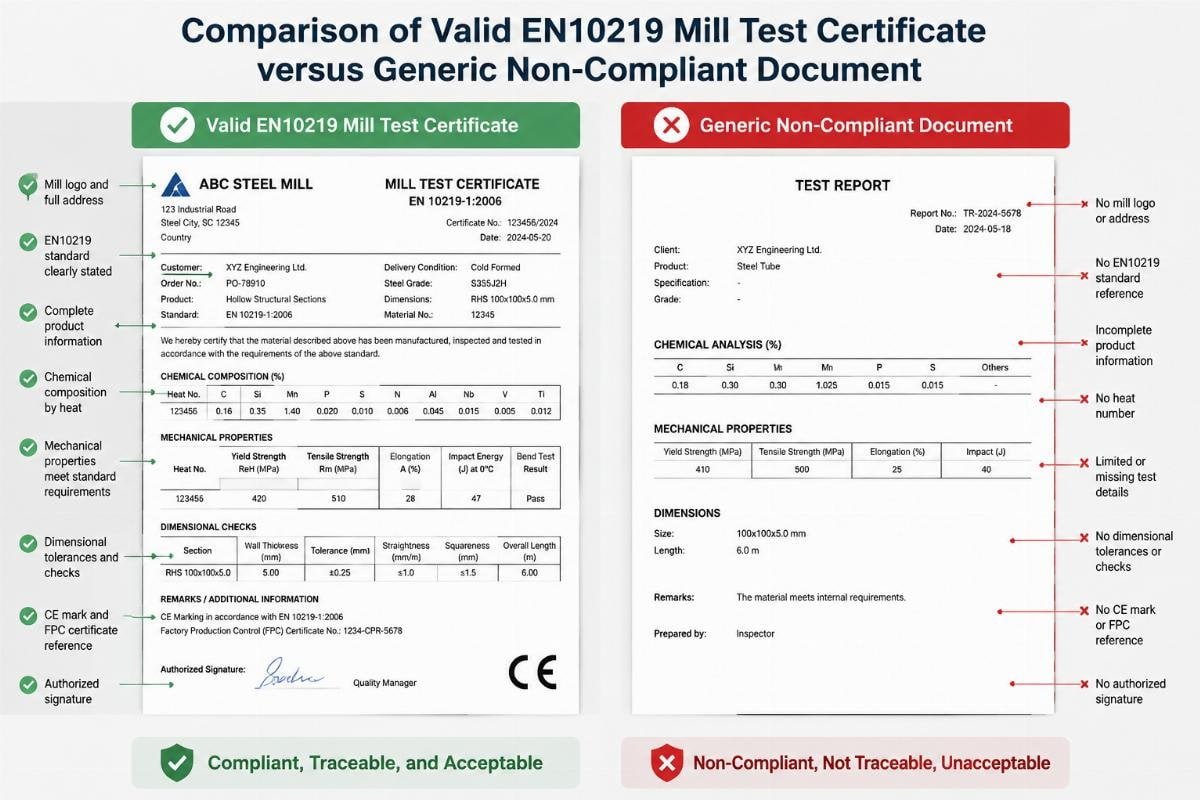
Many importers assume that if the steel looks right and weighs right, it will pass inspection. This is a dangerous misconception. Customs authorities and project consultants in regions like Indonesia, Vietnam, and Thailand are increasingly strict about verifying that the Mill Test Certificate (MTC) aligns perfectly with the physical markings on the steel. A common scenario involves generic Q345B material being labeled as S355JR without the specific impact testing data required by European norms.
When I reviewed a recent shipment delay for a warehouse framework project, the issue was not the steel itself but the lack of specific batch heat numbers on the MTC. The certificate provided was a generic template, lacking the traceability to the specific production run. Without this link, the local engineering consultant could not verify the material’s origin or its compliance with the tender specifications. The result was a detention of the cargo at the port, leading to demurrage charges that far exceeded any savings gained from choosing a cheaper supplier.
| Verification Point | Compliant Practice | Risky Practice |
|---|---|---|
| Heat Number Traceability | Physical stamp matches MTC exactly | MTC lists generic batch or no number |
| Standard Reference | Explicitly cites EN10219 | Cites only GB/T or ASTM without cross-ref |
| Impact Testing Data | Specific Joule values at specified temperature | “Passed” or missing data fields |
| Chemical Composition | Full breakdown including Carbon Equivalent | Only basic elements listed |
[NEED_CITE: Common reasons for steel import rejection in Southeast Asian customs]
To avoid this, buyers must demand original mill logs or digitally verifiable certificates that link directly to the production facility’s quality control records. The ability to cross-reference these details before shipment is critical.
How to Verify EN10219 Certification Authenticity?
Trace heat numbers and demand original mill logs, not just PDF copies.
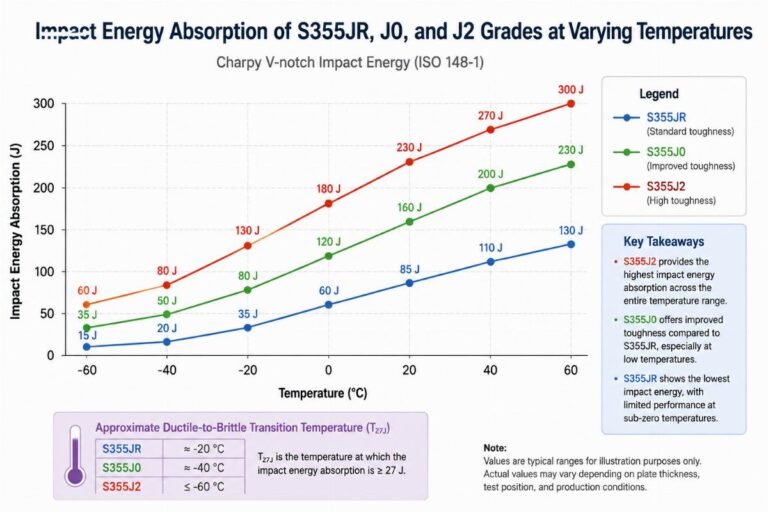
Authenticity verification goes beyond checking the logo on a letterhead. It requires a deep dive into the technical data provided. For EN10219 structural hollow sections, the certification must include specific impact testing results, particularly for grades like S355J0 or S355J2, which have stricter toughness requirements than the standard JR grade.
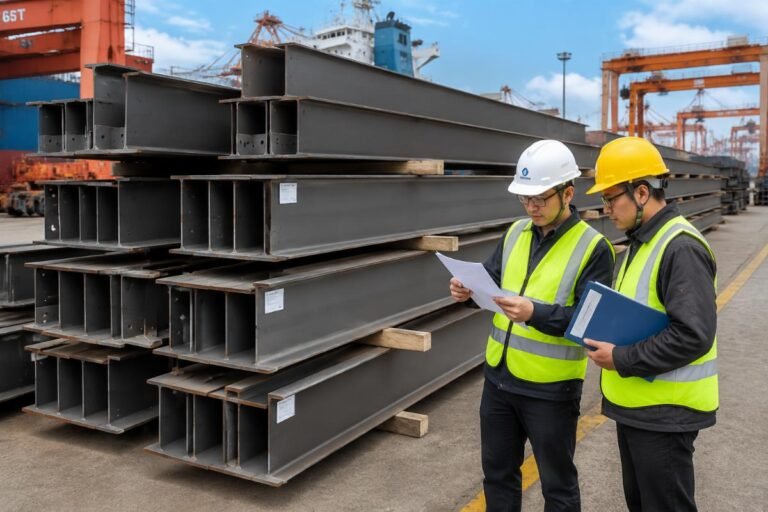
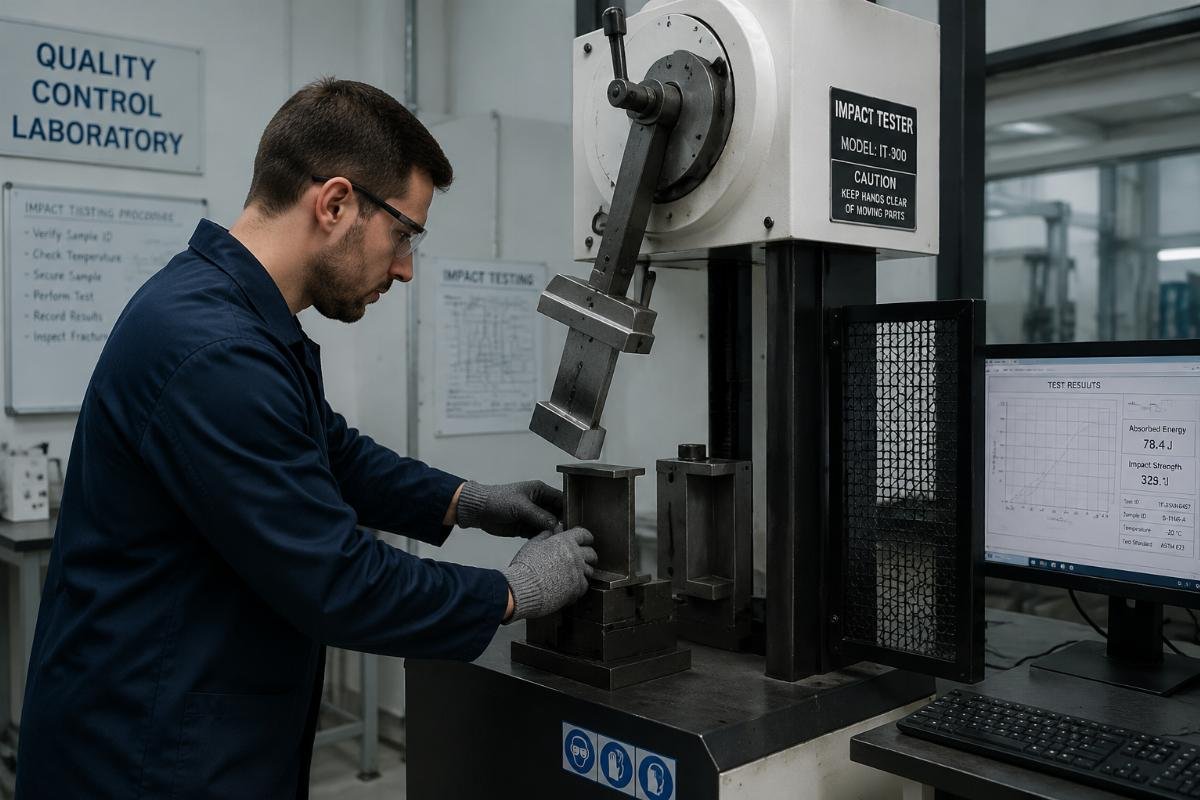
A reliable manufacturer will have an in-house laboratory capable of performing these tests and providing detailed reports. For instance, when evaluating potential partners, I look for facilities that can demonstrate transparent manufacturing processes. A supplier with multiple production lines and internal quality control capabilities, such as those found in established Shandong-based manufacturers, offers a higher degree of reliability. These facilities can provide traceable MTCs that stand up to third-party audits.
The verification process should include:
- Checking the validity of the manufacturer’s EN10219/EN10210 certification via independent third-party audits.
- Ensuring the chemical composition limits, especially the Carbon Equivalent (CEV), are within range to guarantee weldability. High CEV values can lead to cracking during fabrication, a costly error on site.
- Confirming that the dimensional tolerances meet the strict requirements of EN10219, which are often tighter than general structural standards.
[NEED_CITE: EN10219 standard requirements for impact testing and chemical composition]
What Are the Critical Differences Between EN10219 and Local Standards?
Dimensional tolerances and impact testing requirements differ significantly from general structural standards.
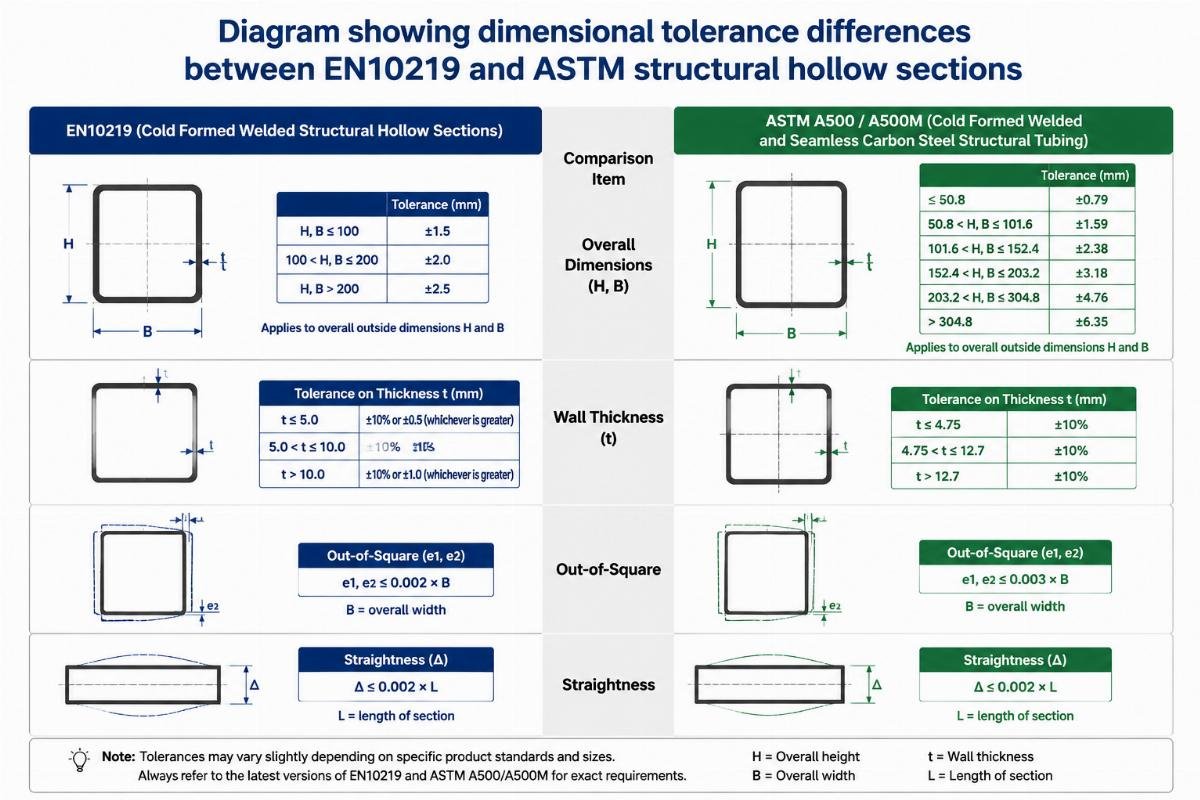
Many buyers assume that all “S355” steel is equal, regardless of the standard it is produced under. This is a false equivalence. EN10219 specifies cold-formed welded structural hollow sections, which have different mechanical properties and dimensional tolerances compared to hot-rolled sections or those produced under ASTM A500.
For example, the corner radius and wall thickness tolerance in EN10219 are strictly defined to ensure consistent structural performance. In contrast, some local or alternative standards may allow for wider variations, which can complicate fabrication and assembly. Additionally, the impact testing requirements for EN10219 S355JR are specific to certain temperatures, ensuring the steel remains tough in varying climate conditions.
| Feature | EN10219 Standard | ASTM A500 Grade B/C | General Local Standard |
|---|---|---|---|
| Production Method | Cold-formed welded | Cold-formed or hot-formed | Varies |
| Impact Testing | Required for specific subgrades | Not always mandatory | Often omitted |
| Dimensional Tolerance | Strict uniformity | Moderate | Loose |
| Certification Traceability | Heat number specific | Batch level | Often generic |
[NEED_CITE: Comparison of dimensional tolerances between EN10219 and ASTM A500]
Understanding these differences is crucial for EPC contractors who must meet strict engineering specifications. Using a substitute standard without explicit approval from the project engineer can lead to rejection of the entire structure during final inspection.
Which Surface Treatments Survive Tropical Humidity?
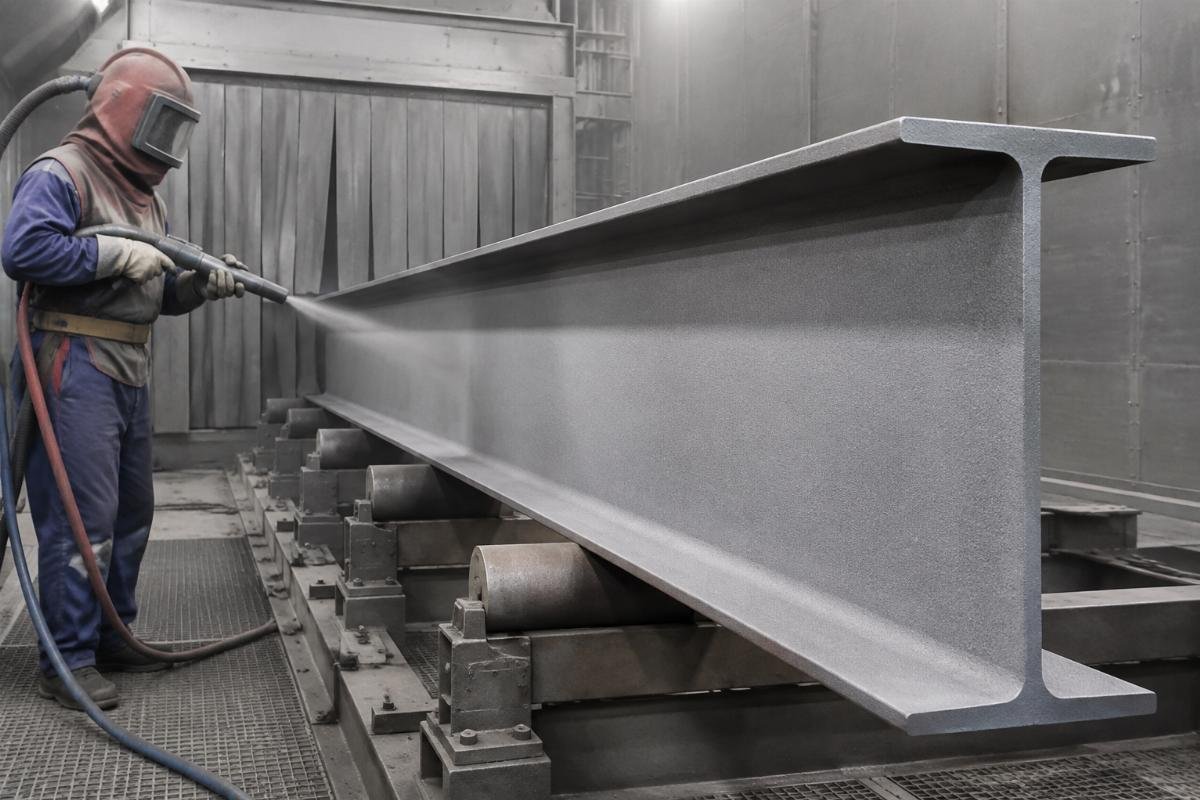
Shot blasting (Sa2.5) is mandatory before painting for long-term durability in humid climates.
In Southeast Asia, the combination of high humidity and salt air accelerates corrosion. A common mistake is accepting steel with minimal surface preparation, such as St2 hand tool cleaning, which leaves behind mill scale and contaminants. This leads to early rusting under the paint layer, compromising the structural integrity and aesthetic appeal of the project.
I recall a warehouse framework project where the steel began to show signs of corrosion within months of installation. The root cause was inadequate surface preparation before painting. The supplier had skipped the shot blasting step to save costs, resulting in poor paint adhesion. The lifespan of the coating was reduced significantly, requiring premature maintenance.
To prevent this, specify shot blasting to Sa2.5 standard before any painting or galvanizing. This ensures a clean, profiled surface that allows the coating to bond effectively. For projects in coastal areas, additional protective measures such as hot-dip galvanizing or specialized epoxy coatings may be necessary.
[NEED_CITE: ISO 8501-1 standards for surface preparation and corrosion protection]
Conclusion
Compliance is not optional; it is the foundation of project success.
Sourcing EN10219 S355JR steel from China manufacturer partners demands a shift from price-focused buying to verification-focused procurement. By prioritizing traceable documentation, understanding standard-specific technical requirements, and enforcing strict surface preparation protocols, distributors and contractors can avoid costly delays and ensure the longevity of their infrastructure projects. The true cost of steel is measured not just in dollars per ton, but in the reliability of the supply chain and the integrity of the final structure.