
Buy S355JR Structural Steel for US Warehouse | Factory Direct Wholesale
Most buyers assume “S355” is a universal standard that works everywhere. This assumption leads to costly structural failures in cold climates.
You can successfully source Chinese structural steel for US warehouse projects, but only if you explicitly specify the impact toughness grade (J0 or J2) rather than the default JR, and verify mill test certificates against ASTM A992 equivalents before shipment. Dimensional accuracy alone does not guarantee code compliance or winter weldability.
I still remember the silence on the phone line from a project manager in the Midwest. He was standing in front of a newly erected warehouse frame where twelve critical beam-to-column welds had cracked overnight. The temperature had dropped to single digits, a common occurrence in that region during late autumn. The steel supplied was S355JR. On paper, it met the yield strength requirements. In reality, the “JR” suffix indicated impact testing at +20°C. The steel became brittle when the ambient temperature fell below zero, leading to cold cracking during the welding process. The repair work, involving cut-outs, re-welding, and non-destructive testing, delayed the project by weeks and cost several times the initial savings on the material price. That incident shifted my entire approach to procurement. I no longer look at the grade prefix first; I look at the suffix and the destination climate. [NEED_CITE: relationship between steel impact toughness and ambient temperature in structural welding]
This guide breaks down the technical nuances of importing Chinese structural steel for US warehouse construction, focusing on grade matching, certification validity, and logistical optimization to prevent similar failures.
Is Chinese Structural Steel Compliant with US Warehouse Codes?
Compliance is not automatic; it requires a documented cross-reference between European EN standards and American ASTM specifications.
Many US general contractors hesitate to use imported steel due to perceived code conflicts. However, major US building codes, including those referenced by the American Institute of Steel Construction (AISC), allow the use of foreign materials provided they meet equivalent mechanical and chemical properties. The key lies in the documentation. [NEED_CITE: AISC Code of Standard Practice for foreign material equivalence]
When sourcing Chinese structural steel for US warehouse frames, you are typically dealing with EN10210 or EN10219 standards. These must be mapped to ASTM A992 (for wide-flange shapes) or ASTM A572 Grade 50. The yield strength of S355 (355 MPa) is roughly equivalent to 50 ksi (345 MPa) in ASTM terms, making it a viable substitute. However, the chemical composition limits, particularly for carbon equivalent (CEV), must be verified to ensure weldability.
| Parameter | EN10210 S355 Series | ASTM A992 / A572 Gr 50 | Compliance Note |
|---|---|---|---|
| Yield Strength | ≥ 355 MPa | ≥ 345 MPa (50 ksi) | S355 exceeds minimum requirement |
| Tensile Strength | 470-630 MPa | 450-655 MPa | Overlapping ranges |
| Carbon Equivalent | Varies by thickness | ≤ 0.45% (typical limit) | Must verify CEV for thick sections |
| Impact Testing | Defined by suffix (JR/J0/J2) | Typically Z-direction or Charpy V | Critical for cold weather |
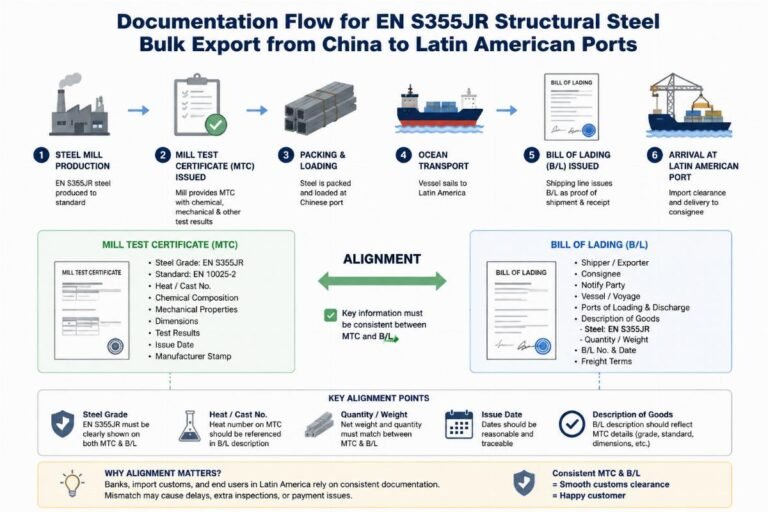
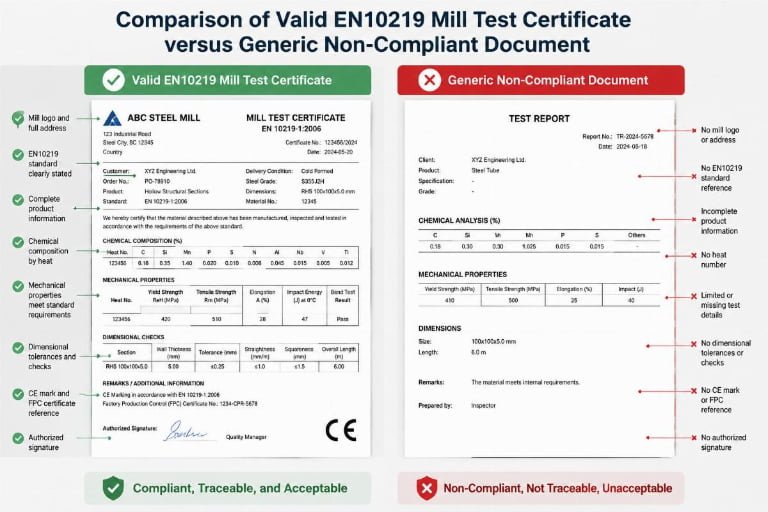
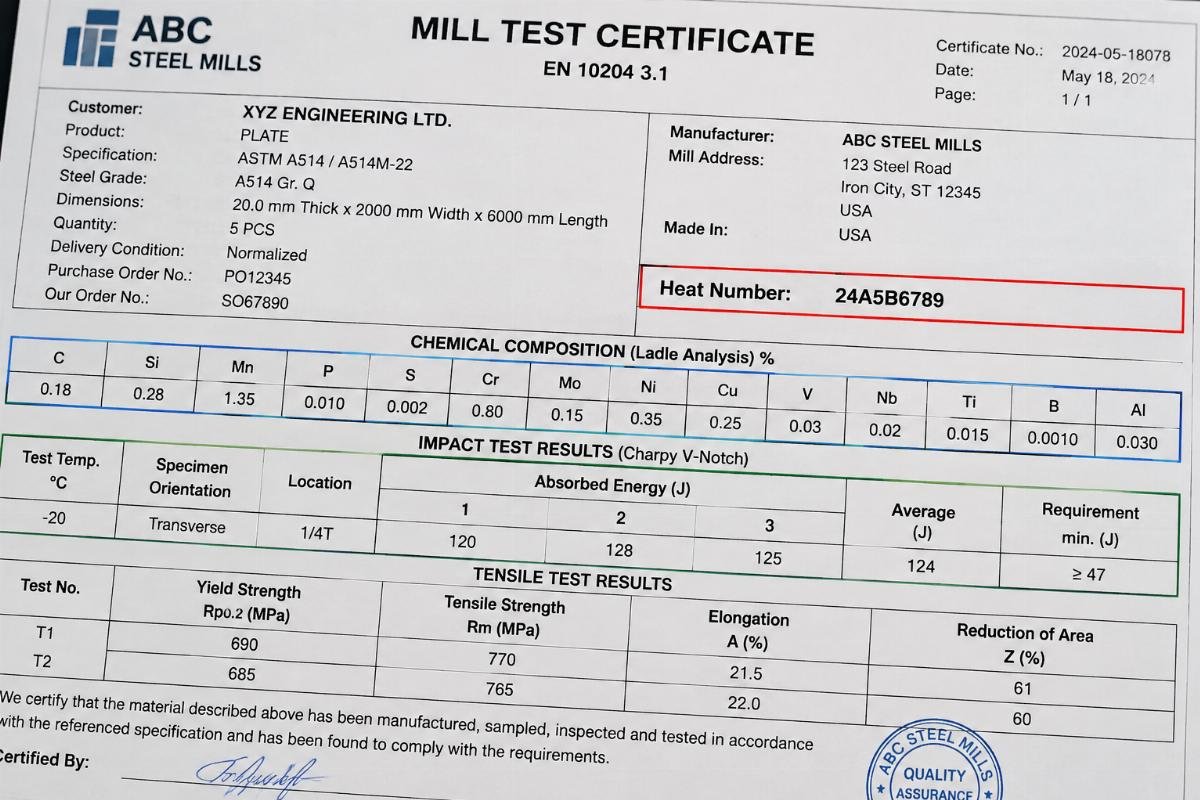
Without a Mill Test Certificate (MTC) that explicitly traces the heat number to these mechanical properties, US inspectors may reject the material. The certificate must come from an accredited laboratory, not just a trading company’s letterhead. [NEED_CITE: requirements for mill test certificates in international steel trade]
Why “S355JR” Might Fail in Your US Winter Construction?
The suffix after the grade number determines whether your steel survives the winter or cracks under stress.
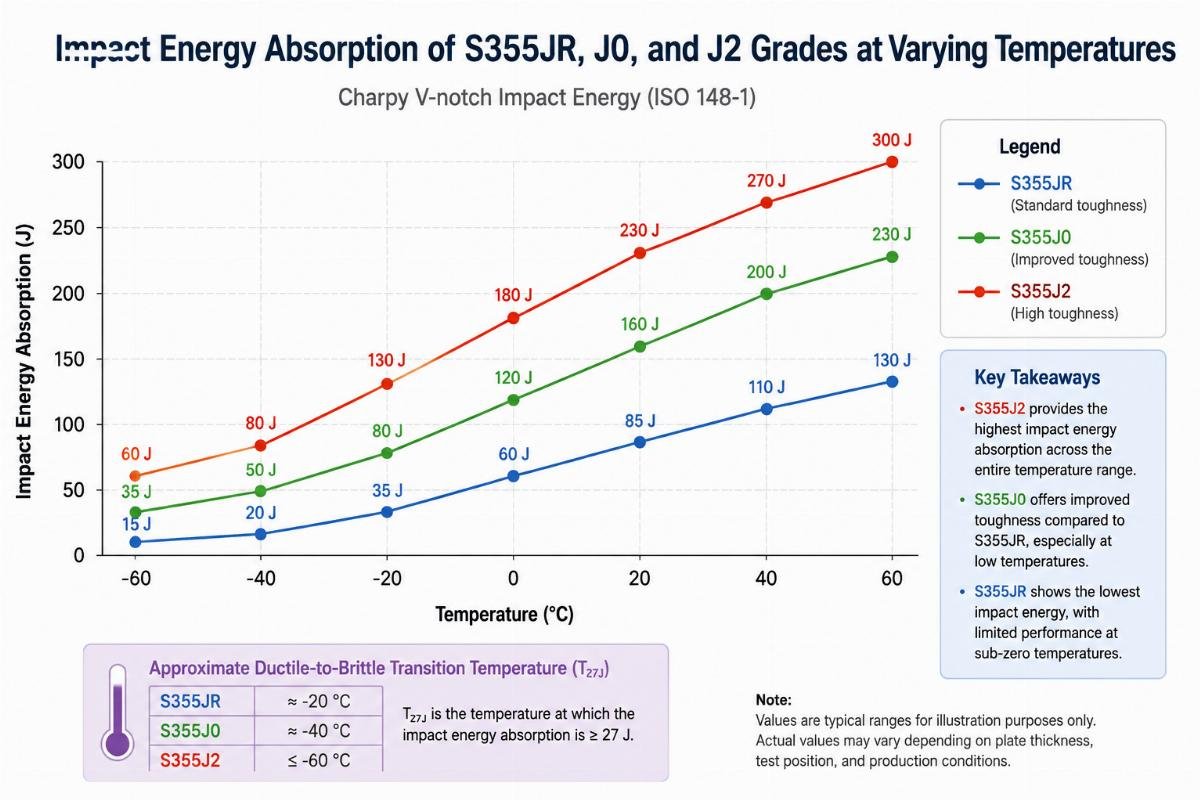
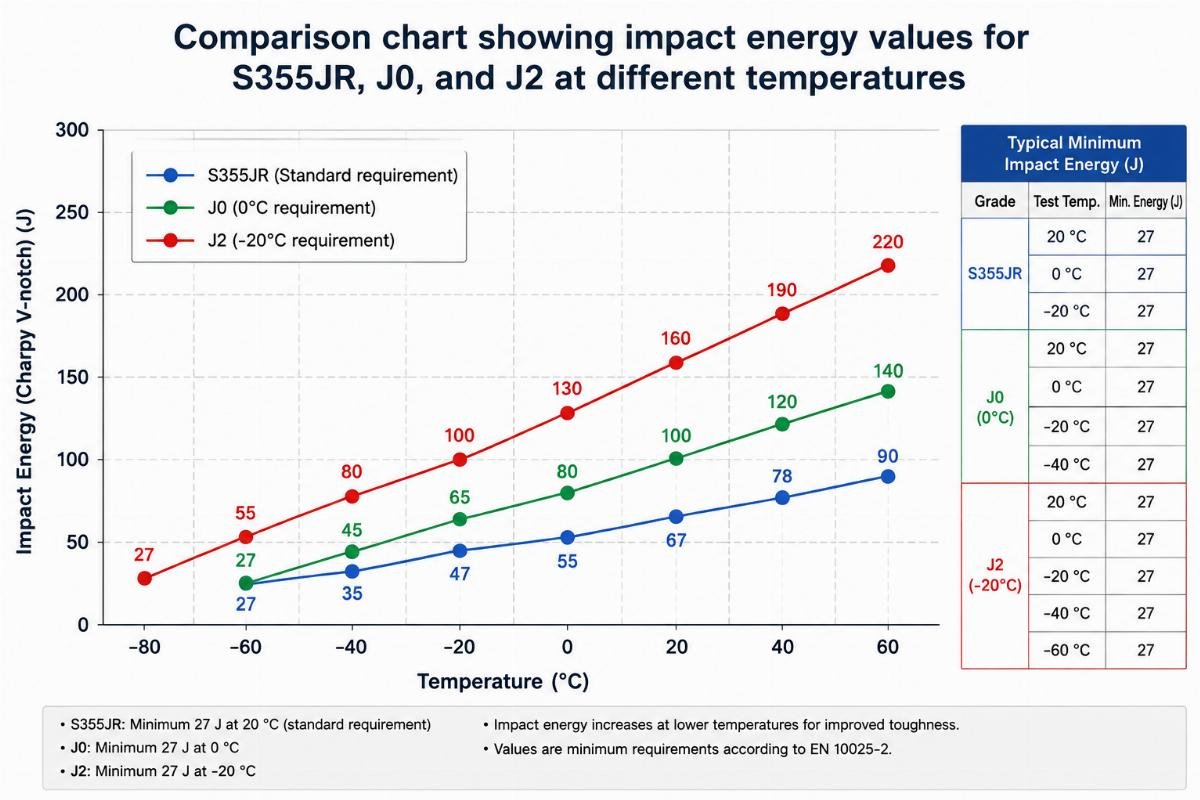
In the European naming convention, S355 indicates the yield strength. The letters following it—JR, J0, J2, K2—indicate the temperature at which the steel was tested for impact toughness. This is the most overlooked detail in international procurement.
- JR: Tested at +20°C. Suitable for indoor structures or warm climates.
- J0: Tested at 0°C. Suitable for moderate climates.
- J2: Tested at -20°C. Required for cold climates and exposed structures.
A warehouse in Texas might seem safe with JR grade, but a distribution center in Ohio or Pennsylvania faces sub-zero nights. If welding occurs during these periods, the heat-affected zone becomes vulnerable. The energy required to propagate a crack drops significantly as temperature decreases. Using JR grade in such conditions is a high-risk gamble. [NEED_CITE: charpy v-notch impact test temperatures for EN steel grades]
When evaluating Chinese structural steel for US warehouse projects, always specify J0 or J2 if the construction site experiences freezing temperatures. The cost difference between JR and J2 is marginal compared to the risk of structural failure. In one case, a contractor in the Northeast saved on material costs by choosing JR but spent a significant portion of their budget on pre-heating welding areas and post-weld heat treatment to mitigate cracking risks. Switching to J2 grade would have eliminated these extra labor costs entirely.
Critical Specs: What to Verify Before Shipping from China?
Dimensions are easy to measure; material integrity requires verification before the container leaves the factory.
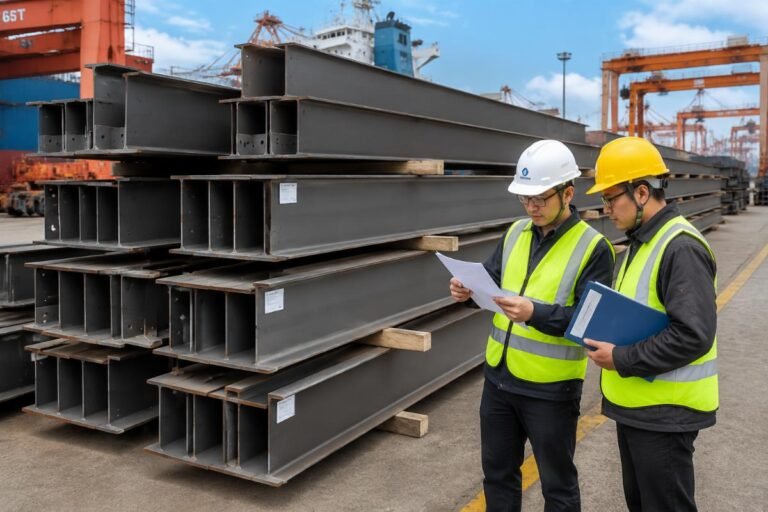
Once the steel is loaded onto a vessel, rectifying quality issues becomes exponentially more expensive. Therefore, the verification process must happen at the source. Beyond checking the length and width of H-beams or hollow sections, you must verify three critical aspects: impact test data, surface treatment quality, and MTC authenticity.
First, request the actual impact test results from the manufacturer’s in-house laboratory. Do not accept a generic certificate. Look for the specific Joules value recorded at the required temperature. For J2 grade, this should be verified at -20°C. [NEED_CITE: standard impact energy requirements for S355J2]
Second, inspect the surface treatment. Many US projects require shot blasting to Sa 2.5 standard before painting. If this is done in China, it saves considerable labor time on-site. However, poor blasting can leave mill scale residues that cause paint adhesion failure. Request photos of the blasted surface and check for uniformity.
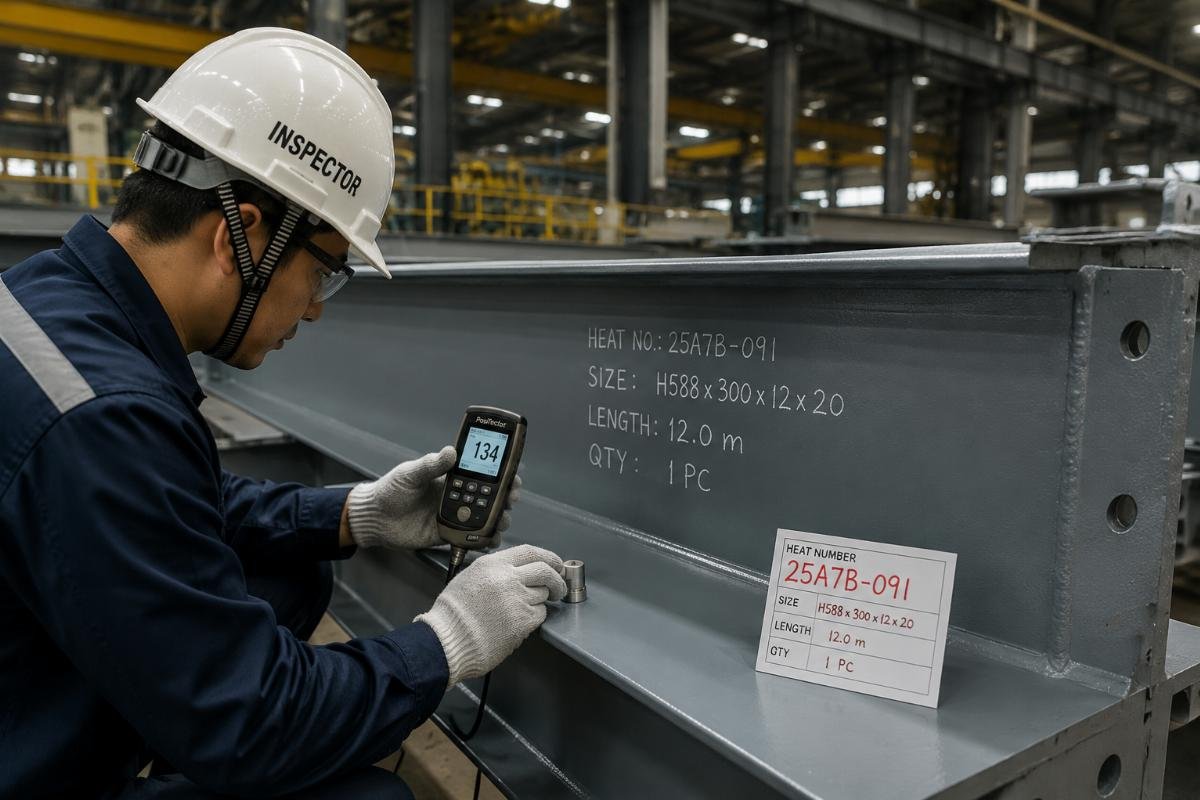
Third, validate the MTC. Ensure the heat numbers on the certificate match the markings on the steel bundles. A mismatch indicates a potential mix-up of batches. In a recent shipment to a California project, the dimensions were perfect, but the MTC lacked the required impact test data for the specified J0 grade. The cargo was held at customs for document remediation, causing a delay in the construction schedule. Verifying these documents prior to shipment prevents such bottlenecks.
How to Optimize Logistics and Cost for US Warehouse Projects?
True cost savings come from reducing on-site labor and waste, not just lowering the FOB price.
Buyers often focus intensely on the per-ton price of steel, ignoring the downstream costs of handling and fabrication in the US. Labor costs in the US are significantly higher than in China. Therefore, any processing that can be done at the factory in China adds value.
Custom-cut lengths are a prime example. Standard H-beams come in fixed lengths, often requiring on-site cutting to fit specific warehouse spans. This generates waste and requires skilled labor for precise cuts. By providing detailed shop drawings to the manufacturer, you can request non-standard lengths that fit your design exactly. This reduces material waste and eliminates cutting time on-site. In one project, customizing beam lengths reduced on-site waste by a noticeable margin and accelerated the erection process.
Additionally, factory-applied surface treatment such as shot blasting or priming protects the steel during transit and prepares it for final coating. This shifts the labor burden from the expensive US job site to the efficient Chinese factory floor. When calculating the total landed cost, include these savings. Sourcing Chinese structural steel for US warehouse projects becomes more competitive when you view the supply chain holistically.
Logistics also play a role. Consolidating mixed containers with plates, beams, and hollow sections can optimize shipping volume. Ensure the packing list is detailed to facilitate quick customs clearance. Proper stacking and securing in the container prevent damage during the long sea voyage, ensuring the material arrives ready for installation.
Conclusion
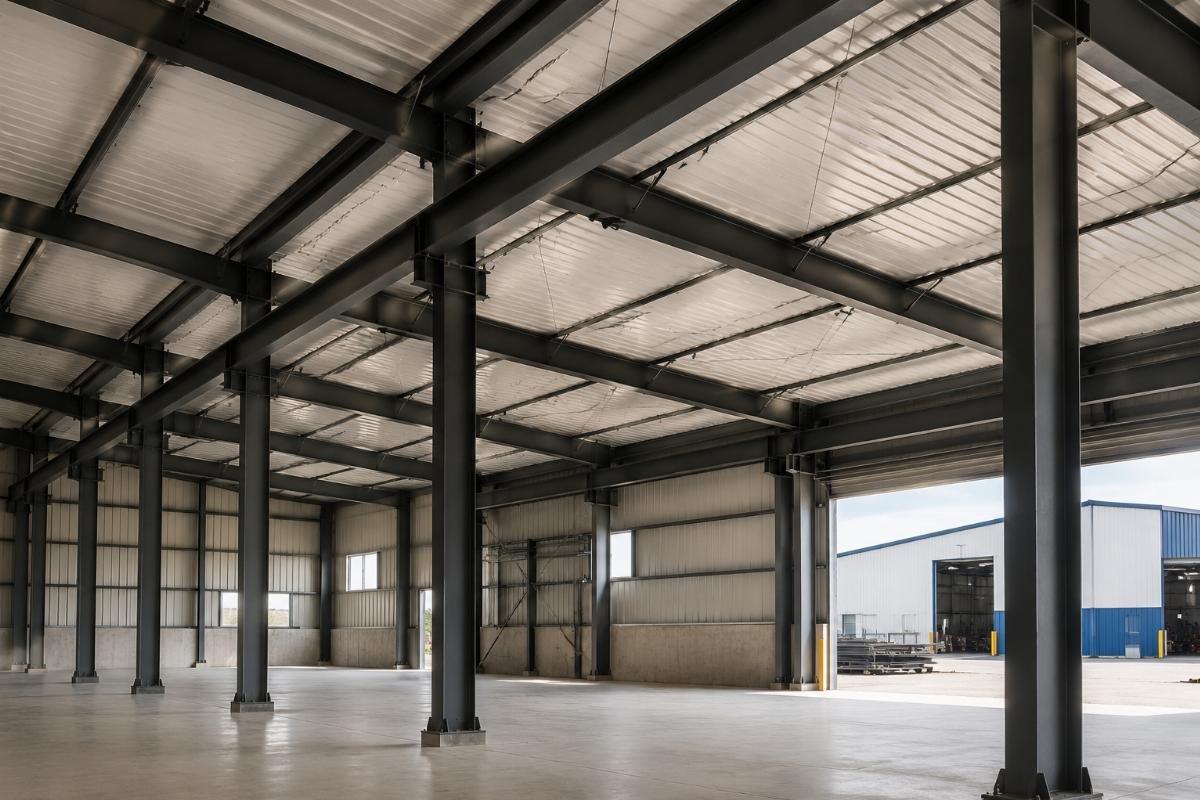
Sourcing structural steel from China is a viable strategy for US warehouse construction, provided you prioritize technical specificity over basic pricing.
Success depends on selecting the correct impact toughness grade for your climate, verifying certifications rigorously, and optimizing fabrication processes to reduce US labor costs. By focusing on these technical and logistical details, you mitigate risks and ensure a smooth project execution. The goal is not just to buy steel, but to secure a reliable component for your structural integrity.