
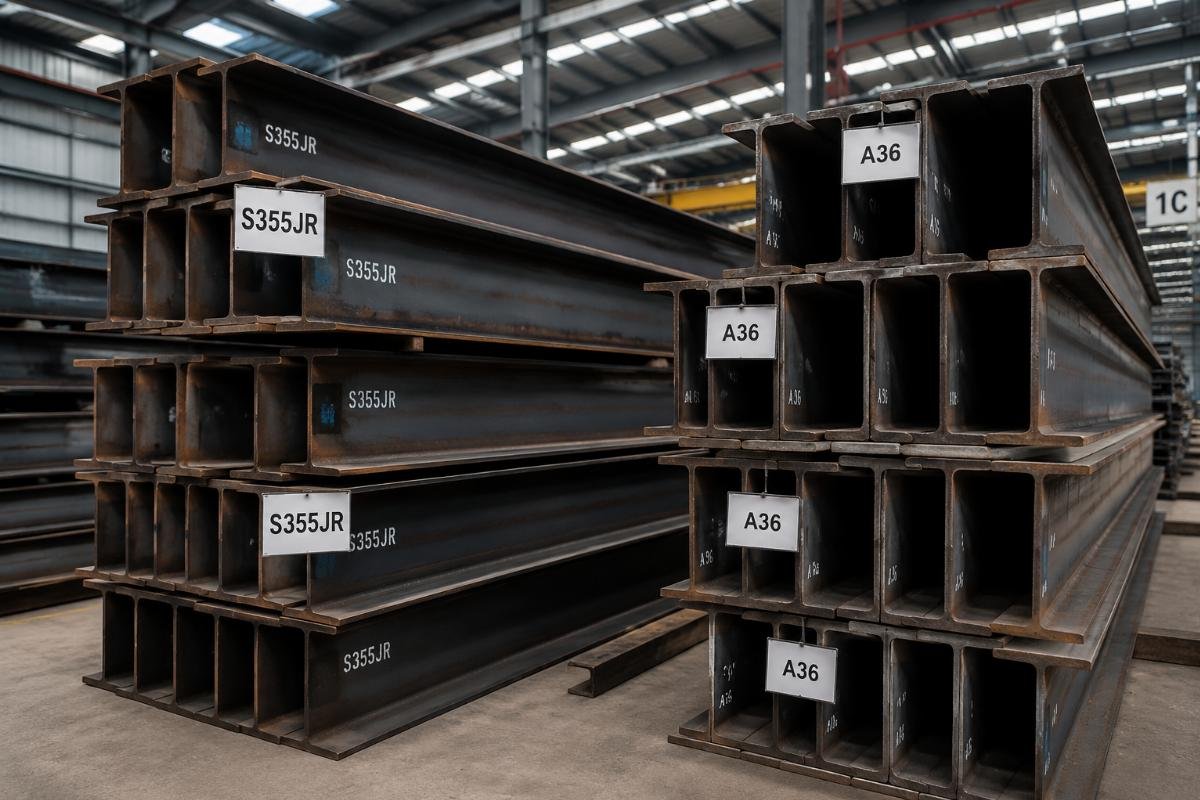
S355JR and A36 are not interchangeable substitutes.
No, S355JR is not equivalent to A36. The two grades belong to different standardization systems (EN vs ASTM), possess a significant yield strength gap of approximately 100 MPa, and require distinct certification protocols. Substituting one for the other without engineering approval risks structural failure, welding procedure rejection, and project disqualification in regulated markets.
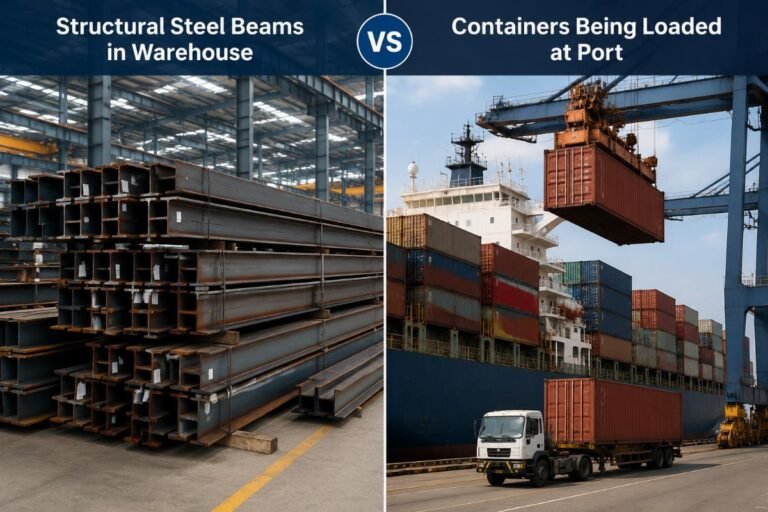
Early in my career handling documentation for steel exports from Shenzhen, I processed a shipment of H-beams destined for a warehouse project in Jakarta. The buyer had specified A36 to reduce tonnage costs, assuming it was functionally identical to the European-grade steel commonly used in the region. Upon arrival, the site engineer rejected the entire container because the project specifications strictly required EN10219 compliance and CE marking. The material test certificates for ASTM A36 were invalid for their regulatory framework. The cargo was stuck at Tanjung Priok port, incurring demurrage charges that eventually exceeded the initial savings from choosing the lower-grade steel. We had to arrange a return shipment and expedite a new order of S355JR. This incident highlighted a critical misunderstanding in global procurement: structural steel is not a generic commodity, and the choice between S355JR and A36 dictates not just material cost, but total project viability. [NEED_CITE: differences between EN and ASTM structural steel certification requirements]
Understanding these distinctions is essential for EPC contractors and distributors who navigate cross-border supply chains. The decision often hinges on more than just the price per ton; it involves load-bearing efficiency, regulatory compliance, and fabrication compatibility.
Is S355JR Equivalent to A36? Core Technical Differences
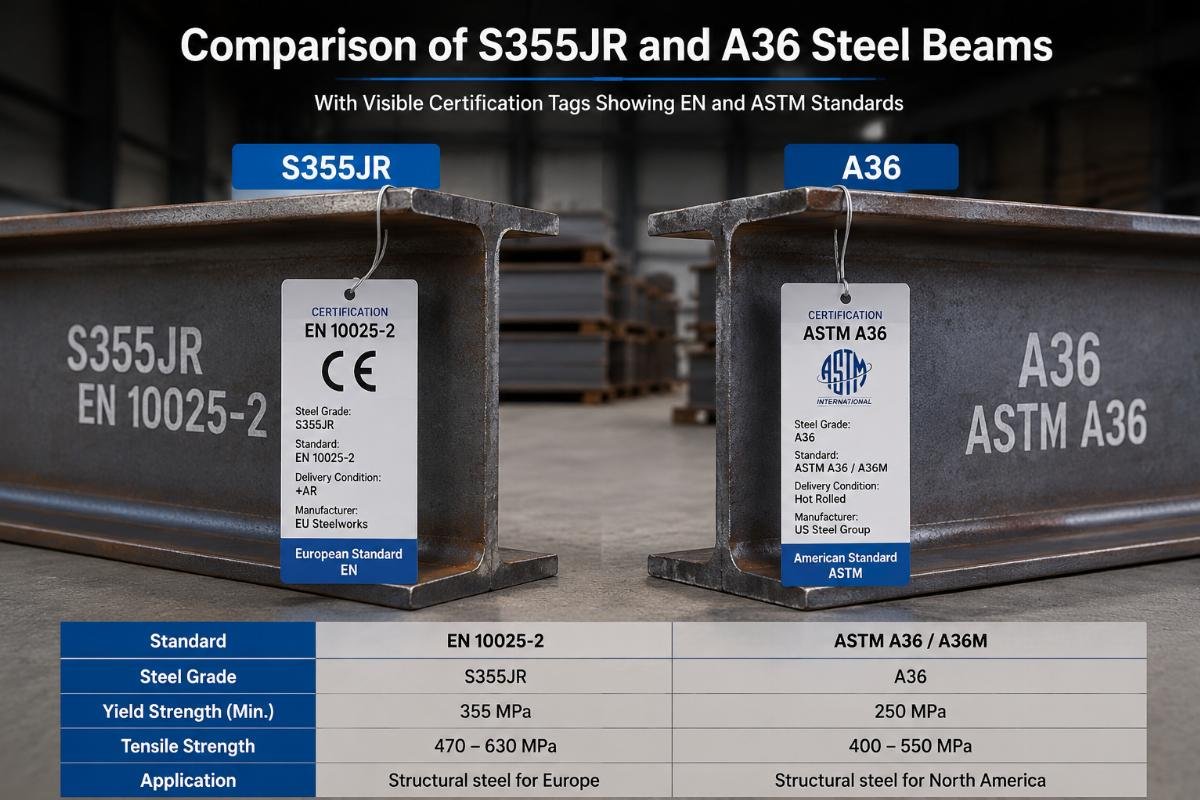
The fundamental difference lies in the yield strength and the governing standards. S355JR is defined by the European standard EN 10025-2, while A36 falls under the American ASTM A36 specification. These are not merely regional labeling differences; they represent divergent metallurgical and mechanical requirements.
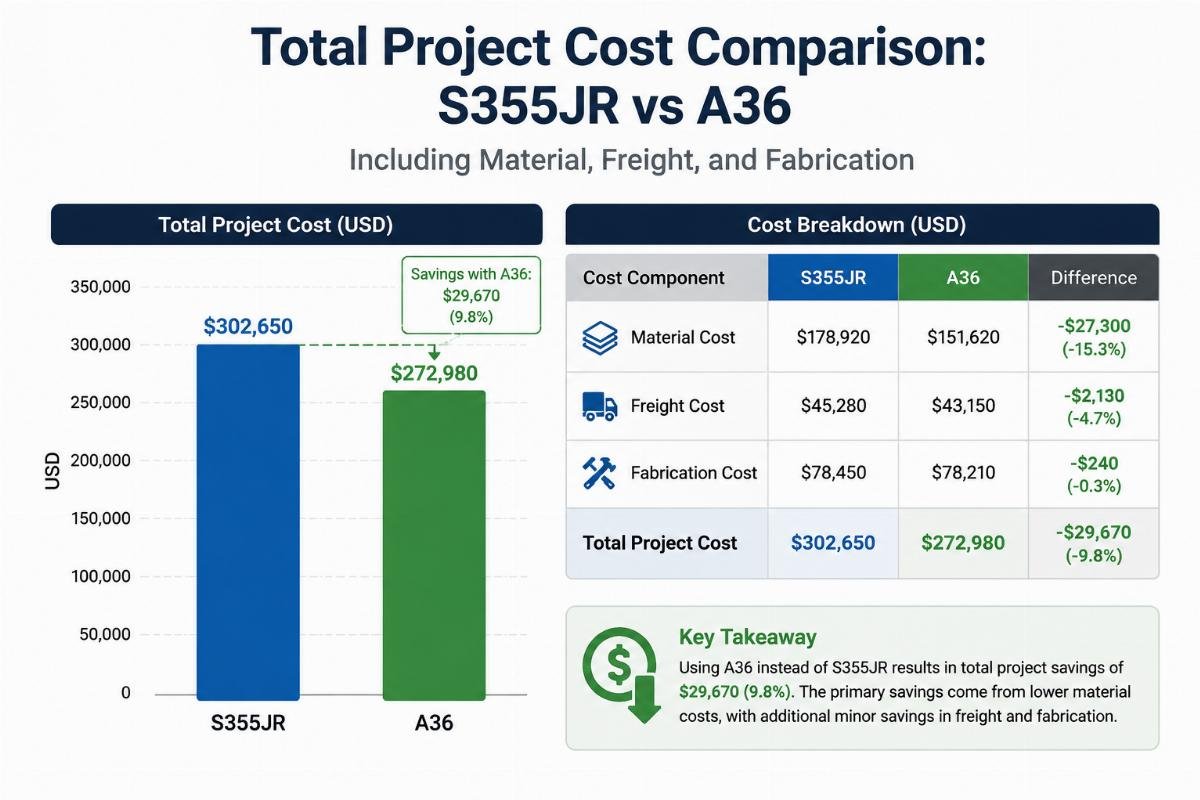
S355JR denotes a minimum yield strength of 355 MPa for thicknesses up to 16mm. In contrast, ASTM A36 has a minimum yield strength of 250 MPa (36 ksi). This 105 MPa gap means that S355JR can support significantly higher loads before undergoing permanent deformation. For structural engineers, this difference allows for the use of lighter sections when using S355JR, potentially reducing the total steel tonnage required for a project. [NEED_CITE: mechanical property comparison of EN 10025-2 and ASTM A36]
Furthermore, the impact testing requirements differ. The “JR” in S355JR indicates that the material has passed an impact test at 20°C. ASTM A36 does not mandate Charpy V-notch impact testing unless specifically requested as a supplementary requirement. This makes S355JR more suitable for applications where toughness at ambient temperatures is a concern, whereas standard A36 may be brittle in colder environments unless upgraded to higher grades like A572 or A992.
| Feature | S355JR (EN 10025-2) | ASTM A36 |
|---|---|---|
| Standard System | European Norm (EN) | American Society for Testing and Materials (ASTM) |
| Min Yield Strength | 355 MPa (up to 16mm) | 250 MPa (36 ksi) |
| Impact Testing | Required at 20°C (JR) | Not mandatory (unless specified) |
| Certification Mark | CE Marking (EN 10219/10210) | Mill Test Certificate (ASTM) |
| Primary Application | EU/Global infrastructure, heavy load | US domestic construction, general fabrication |
A buyer once attempted to use A36 plates for a bridge component in a Middle Eastern tender that referenced Eurocodes. The technical committee rejected the bid because A36 mills cannot provide the Declaration of Performance (DoP) required for CE marking under the Construction Products Regulation. This is not a matter of quality superiority but of regulatory alignment. Using the wrong standard leads to immediate disqualification, regardless of the physical properties of the steel. [NEED_CITE: CE marking requirements for structural steel under EU CPR]
Cost Analysis: Tonnage Price vs Total Project Cost
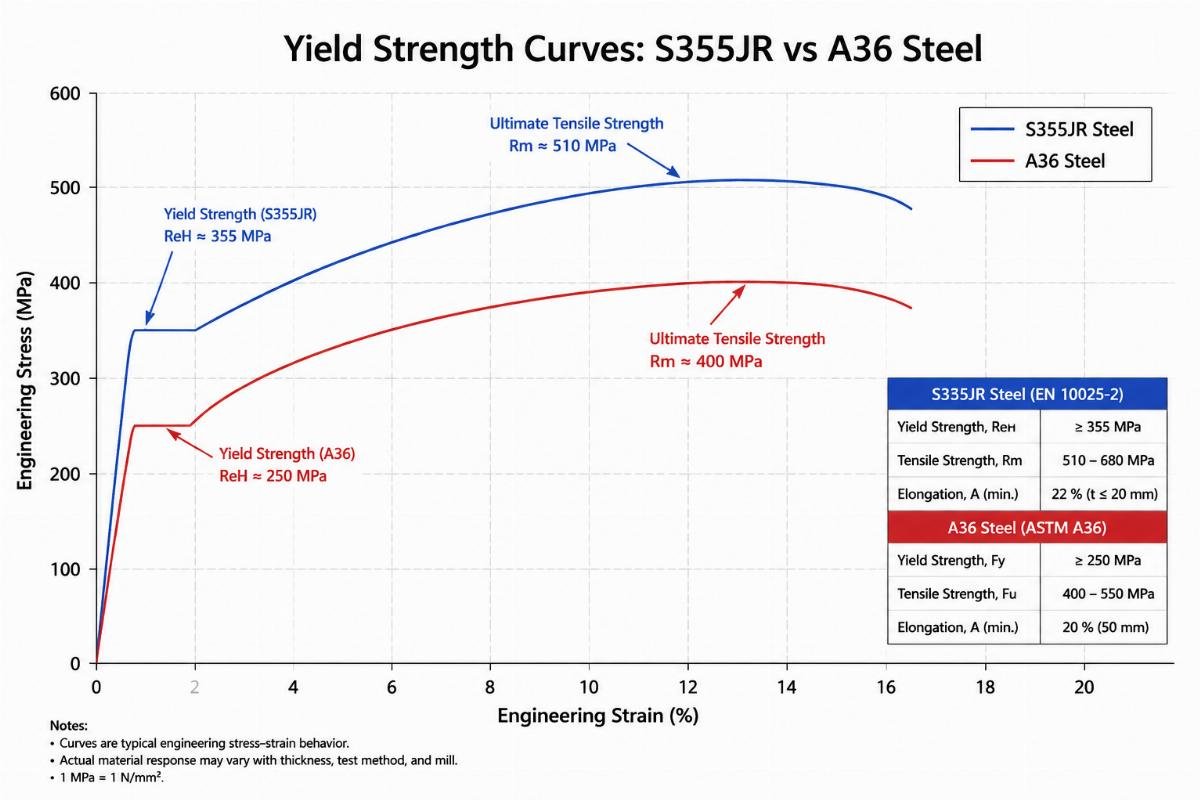
It is a common misconception that A36 is always the cheaper option because its price per ton is typically lower than that of S355JR. However, a holistic cost analysis reveals that the higher strength of S355JR can lead to lower total project costs.
Because S355JR has a higher yield strength, engineers can design with thinner walls or smaller cross-sections to achieve the same load-bearing capacity. This reduction in material volume can offset the higher unit price. Additionally, lighter structures reduce shipping costs, which are calculated by weight or volume. For overseas projects, where freight constitutes a significant portion of the landed cost, this efficiency is crucial.
Consider a scenario involving a large-scale warehouse structure in Southeast Asia. A contractor initially opted for A36 due to its lower base price. However, the structural calculations required heavier beams to meet safety factors. When they switched to S355JR, they were able to downsize the beam profiles. Although the price per ton was higher, the total tonnage decreased by a noticeable margin. The savings in freight and foundation work outweighed the material price difference. [NEED_CITE: case studies on structural steel optimization using high-strength grades]
Conversely, if a project is already designed for A36, switching to S355JR does not automatically save money unless the design is re-engineered. Simply swapping materials without recalculating loads results in over-engineering, where you pay for strength you do not utilize. Therefore, the cost benefit of S355JR is realized only when the design phase leverages its higher strength properties.
Another hidden cost is certification. Obtaining EN-compliant documentation for S355JR involves rigorous factory production control and third-party auditing. A36 mills in regions without EN accreditation cannot issue valid CE certificates. If a project requires EN compliance, sourcing A36 and attempting to certify it post-production is impossible. The cost of non-compliance—delayed shipments, rejected materials, and legal liabilities—far exceeds the premium for correctly certified S355JR.
Certification Framework: EN10219 vs ASTM A36
The certification landscape for structural steel is fragmented. Understanding the difference between EN10219/EN10210 and ASTM standards is vital for avoiding customs and site acceptance issues.
EN10219 covers cold-formed welded structural hollow sections, while EN10210 covers hot-finished structural hollow sections. Both require CE marking, which signifies conformity with health, safety, and environmental protection standards for products sold within the European Economic Area. The CE mark is backed by a Declaration of Performance and a Mill Test Certificate that traces the heat number to specific chemical and mechanical tests. [NEED_CITE: scope of EN 10219 and EN 10210 standards]
ASTM A36, on the other hand, relies on Mill Test Certificates provided by the producer. These certificates confirm that the material meets the chemical composition and mechanical property requirements of ASTM A36. There is no equivalent to the CE marking system in the US domestic market for general structural steel. While ASTM standards are widely recognized globally, they do not carry the same regulatory weight in Europe or regions that adopt Eurocodes.
A fabrication shop in Africa once received a mixed container of S355JR and A36 profiles. The welding team used the same Welding Procedure Specification (WPS) for both. However, the carbon equivalent values differed, affecting weldability. The S355JR required pre-heating to prevent cracking, while the A36 did not. The lack of clear distinction in the yard led to failed ultrasonic tests on the S355JR joints. The shop had to halt production for two weeks to re-qualify welders and revise their WPS. This delay cost them more than the value of the steel itself. [NEED_CITE: impact of carbon equivalent on welding procedures for structural steel]
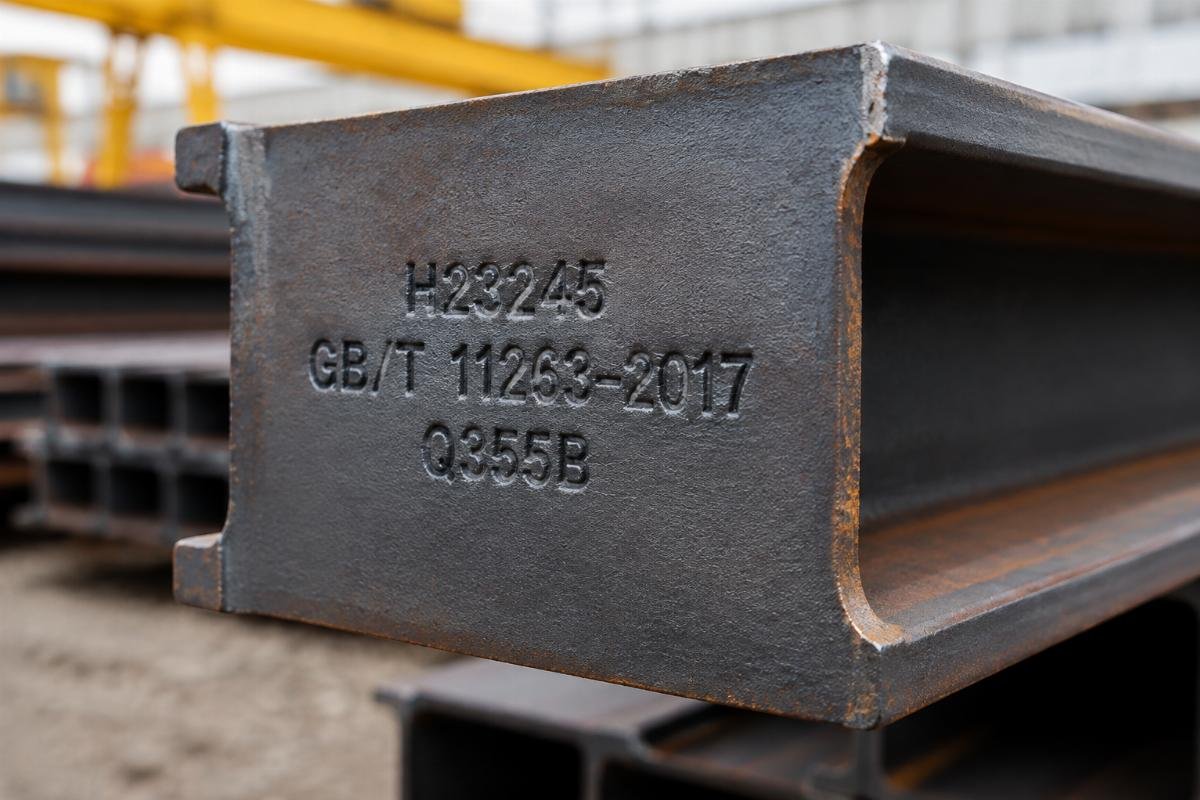
This highlights the importance of traceability. When sourcing S355JR, ensure the supplier provides EN-compliant MTCs with heat numbers clearly marked on the material. For A36, verify that the MTC references the correct ASTM edition. Mixing these grades without proper identification is a recipe for fabrication errors.
How to Choose the Right Grade for Your Project
Selecting between S355JR and A36 should be driven by the project’s technical specifications and destination regulations, not just availability.
First, check the design codes. If the project follows Eurocodes (EN 1993), S355JR is the standard choice. It integrates seamlessly with European design software and compliance checks. If the project follows AISC (American Institute of Steel Construction) standards, A36 or its higher-strength counterparts like A572 Gr. 50 are more appropriate. Using S355JR in an AISC-designed project requires conversion factors and may complicate the approval process.
Second, consider the environment. For projects in colder climates, the impact resistance of S355JR (tested at 20°C for JR, lower for J0/J2) offers better assurance than standard A36. If low-temperature toughness is required for A36, you must specify supplementary impact testing, which may not be readily available from all mills.
Third, evaluate the supply chain. Sourcing S355JR from a manufacturer with EN10219 certification ensures that the product meets the necessary quality controls for hollow sections. For A36, verify that the mill is accredited to produce to ASTM standards. Some suppliers may offer “equivalent” grades, but these are not legally interchangeable in regulated contracts.
At Xin Jiyuan, we maintain production lines certified for both EN and ASTM standards. This allows us to supply S355JR with full CE marking for European and global projects, as well as ASTM A36 for markets requiring US standards. Our in-house laboratory verifies chemical composition and mechanical properties for every batch, ensuring that the Mill Test Certificates accurately reflect the delivered material. Whether you need custom-cut plates, hollow sections, or beams, we provide the documentation required to clear customs and satisfy site engineers.
Conclusion
S355JR and A36 serve different engineering and regulatory purposes.
They are not direct equivalents. S355JR offers higher yield strength and EN-compliant certification, making it ideal for projects requiring Eurocode adherence and optimized weight. A36 remains a cost-effective choice for US-standard projects but lacks the inherent toughness and regulatory recognition of S355JR in other markets. Always align your material choice with the project’s design code and certification requirements to avoid costly delays and rework.