



Description
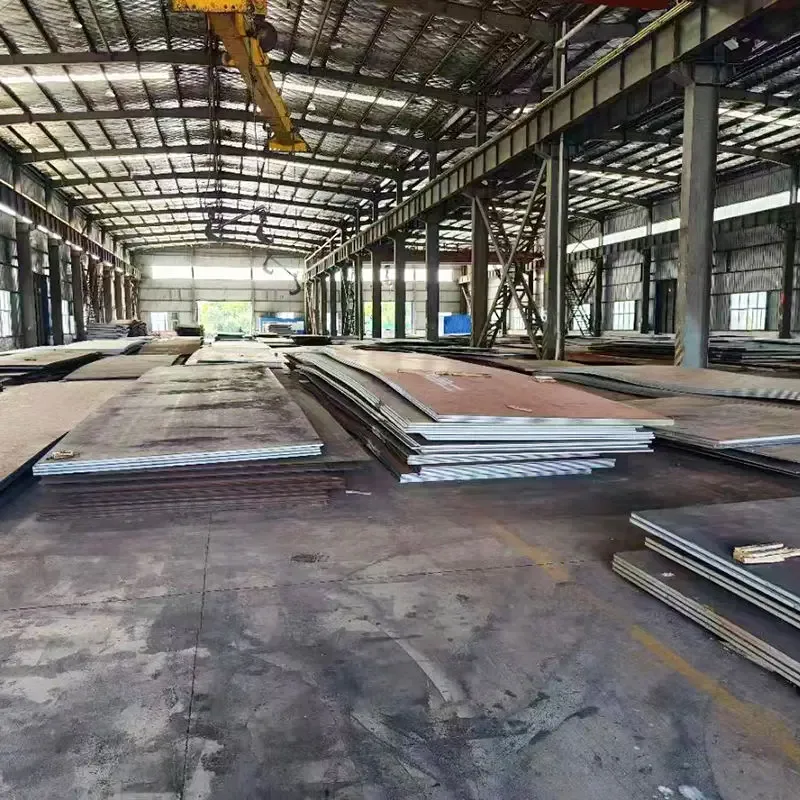
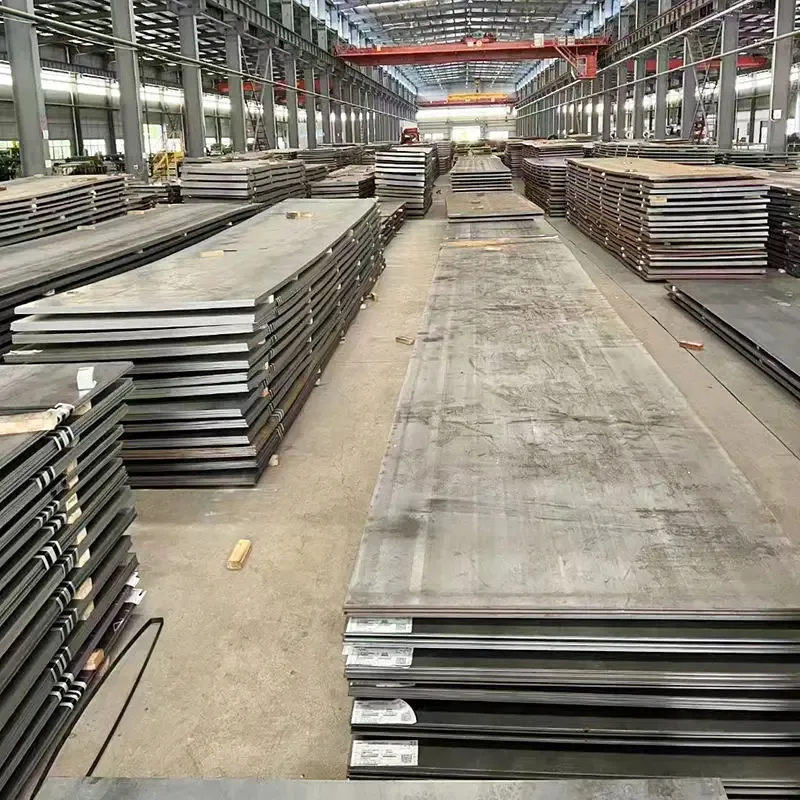
Factory-Direct Q235B Q345B Hot Rolled Carbon Steel Plate — Every plate passes in-house physical and chemical lab inspection before shipment, with original mill test certificates provided per heat number.
Technical Specifications
| Parameter | Value |
|---|---|
| Designation | Q235B / Q345B Hot Rolled Carbon Steel Plate |
| Product Type | Steel Plate |
| Steel Grade | Q235, Q235B, Q345, Q345B, A36, SS400 |
| Standard | ASTM |
| Section Shape | Flat Sheet |
| Size Range | Width 600–1250 mm (usual: 914 mm, 1000 mm, 1200 mm, 1219 mm, 1250 mm) |
| Wall Thickness | 0.21–0.50 mm |
| Length | Customized |
| Technique | Hot Rolled |
| Surface Treatment | Coated |
| Tolerance | ±1% |
| Hardness | Soft (HRB60), Medium Hard (HRB60–85), Full Hard (HRB85–95) |
| Oiled or Non-oiled | Non-oiled |
| Processing Service | Bending, Cutting, Decoiling, Punching, Welding |
| Package | Standard Seaworthy Packing |
| Application | Cutting sheets, container manufacturing, corrugated sheet production, fencing, pipe making, small tool fabrication, metal parts manufacturing |
| Origin | Shandong, China |
Application Suitability
| Industry | Typical Applications |
|---|---|
| Construction & Infrastructure | Structural frames for warehouses, bridge deck components, scaffolding platforms |
| Industrial Fabrication | Container side panels, corrugated roofing sheets, perimeter fencing |
| Machinery & Equipment | Pipe making blanks, metal bracket fabrication, small tool manufacturing |
What Thickness Tolerance Costs on a Hot Rolled Plate Order
±1% tolerance on 0.21–0.50 mm plates determines whether your corrugated sheet line runs smoothly or faces constant die adjustments.
Global buyers sourcing Q235B Q345B hot rolled carbon steel plate supplier often encounter inconsistent material properties and unclear steel grade traceability. When plates arrive with thickness deviations beyond stated tolerance, downstream fabrication — bending, punching, or roll-forming — requires re-calibration or outright rejection. Missing or incomplete mill test certificates compound the problem, causing customs delays and project compliance failures at destination ports. [NEED_CITE: EN 10219 cold-formed hollow section tolerance requirements]
How Coated Hot Rolled Plates Match Corrugated Sheet and Container Fabrication
The coated surface on these hot rolled plates provides baseline corrosion resistance for container side panels and corrugated roofing applications where painted or galvanized finishes are applied downstream. With width options from 600 mm to 1250 mm and thickness between 0.21–0.50 mm, the plates feed directly into decoiling and roll-forming lines without intermediate slitting. Our in-house laboratory verifies coating adhesion and substrate chemistry before each batch leaves the mill, ensuring Q235B Q345B hot rolled carbon steel plate supplier deliveries meet fabrication specifications.
Structural Compliance and Grade Selection for Building Projects
Engineering specifications for building frames and bridge components typically require documented compliance with recognized steel standards. Q235B and Q345B grades correspond to widely accepted structural steel classifications, with Q345B offering higher yield capacity for load-bearing members. For projects targeting EU or North American markets, cross-referencing Chinese GB grades against ASTM A36 or EN equivalents is essential for customs clearance and inspector approval. [NEED_CITE: steel grade equivalence between GB, ASTM, and EN standards] Our documentation package includes heat-number traceability and third-party inspection reports from SGS or BV to support project compliance audits.
Understanding Q235B vs Q345B Grade Selection and Hot Rolled Surface Characteristics
Q235B serves general structural and fabrication applications where moderate strength is sufficient, while Q345B provides higher yield strength for demanding load-bearing scenarios. The hot rolled process produces a mill scale surface that, when combined with the coated finish specified here, offers protection during storage and transit before final surface treatment at the fabrication facility. Thickness tolerance of ±1% on plates ranging 0.21–0.50 mm ensures compatibility with precision roll-forming equipment used in corrugated sheet production. Non-oiled condition means the surface is ready for immediate coating or welding without degreasing, reducing preparation time at the fabrication shop.
Hidden Costs When Plate Tolerance and Certification Fall Short
Plates arriving with thickness beyond ±1% tolerance force fabricators to either accept reduced structural capacity or reject entire shipments. Missing mill test certificates trigger customs holds at destination ports, generating demurrage charges that often exceed the material cost itself. Grade misidentification — such as receiving Q235B when Q345B was specified — creates structural safety concerns and potential liability exposure for engineering contractors. [NEED_CITE: mill test certificate requirements for structural steel imports]
Why Engineering Buyers Source Q235B Q345B Hot Rolled Carbon Steel Plate Here
Every plate undergoes incoming, in-process, and final inspection in our physical and chemical laboratory before shipment, with test results documented on original mill test certificates. Factory-direct pricing eliminates intermediary markups while maintaining full certification coverage including ISO 9001:2015, CE marking, and verification by SGS and BV. Custom length cutting and processing services — bending, punching, decoiling — allow buyers to receive fabrication-ready plates rather than raw coils. Professional loading plans optimize container utilization for 600–1250 mm width plates, reducing per-unit freight costs on shipments to 50+ countries.
Documentation & Compliance
- Mill test certificate documenting Q235B and Q345B chemical composition and mechanical properties per heat number
- CE certificate confirming compliance with EN 10210/EN 10219 for EU market projects
- ISO 9001:2015 quality management system certificate covering production and inspection processes
- SGS or BV third-party inspection report available for pre-shipment verification
- Material traceability documentation linking each plate to specific heat numbers and test results
- Customs documents including packing list, bill of lading, and certificate of origin
Packaging, Loading & Delivery
- Coated hot rolled plates bundled with steel strips and edge protectors to preserve surface finish during ocean transit
- Non-oiled condition requires moisture barrier wrapping to prevent surface oxidation during storage and shipping
- Container loading plans optimized for 600–1250 mm width plates to maximize payload and minimize freight costs
- Custom length cutting available to reduce on-site waste and handling for corrugated sheet and container fabrication
- Heat number and Q235B/Q345B grade markings stenciled on each bundle for site identification and traceability
- FOB, CIF, and DDP terms available with door-to-door logistics coordination to 50+ countries
Getting Your Q235B Q345B Hot Rolled Carbon Steel Plate Quote
Submit your specifications including steel grade, thickness, width, length, quantity, and destination port to receive a detailed quotation with delivery timeline and applicable certifications. Our team responds within hours with pricing, mill test certificate availability, and third-party inspection options for your project compliance requirements.
Frequently Asked Questions
Q: What is the difference between Q235B and Q345B grades for structural applications?
A: Q235B provides moderate strength suitable for general fabrication and non-critical structural components, while Q345B offers higher yield strength for load-bearing members in building frames and bridge construction. Grade selection depends on engineering specifications and local building code requirements.
Q: Can you provide third-party inspection for Q235B Q345B hot rolled carbon steel plate shipments?
A: Yes, SGS and BV third-party inspection services are available for pre-shipment verification. Inspection reports document dimensional accuracy, surface quality, and chemical composition against stated specifications.
Q: What thickness tolerance can I expect on 0.21–0.50 mm hot rolled plates?
A: Our hot rolled plates maintain ±1% thickness tolerance across the full 0.21–0.50 mm range. Each batch undergoes measurement verification in our in-house laboratory before shipment, with results documented on mill test certificates.
Q: Do you offer cutting and processing services for custom sizes?
A: Yes, processing services include bending, cutting, decoiling, punching, and welding. Custom length plates can be produced to reduce on-site fabrication waste and handling requirements for corrugated sheet and container manufacturing applications.
Q: What certifications are provided with Q235B Q345B hot rolled carbon steel plate deliveries?
A: Each shipment includes original mill test certificates with chemical composition and mechanical properties, ISO 9001:2015 quality certificate, and CE marking documentation. Third-party inspection reports from SGS or BV are available upon request for project compliance verification.
Request Your Q235B Q345B Hot Rolled Carbon Steel Plate Quotation
Send your specifications to receive pricing, mill test certificates, and delivery options for your project.
Shandong Xin Jiyuan Special Steel Tube Co., Ltd
Website: www.sdxjysteel.com
Tel: +86 531 8573 6315
Mobile/WhatsApp/WeChat: +86 188 5315 7756
Email: admin@sdxjysteel.com
Address: No.11889, Jingshi West Road, Lulian Group, Jinan City, Shandong Province, China