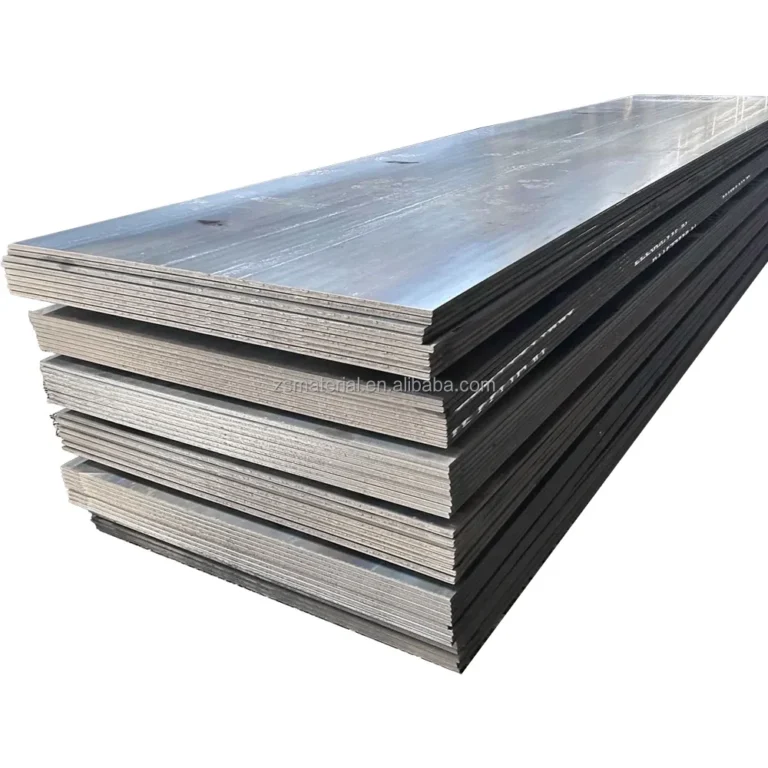


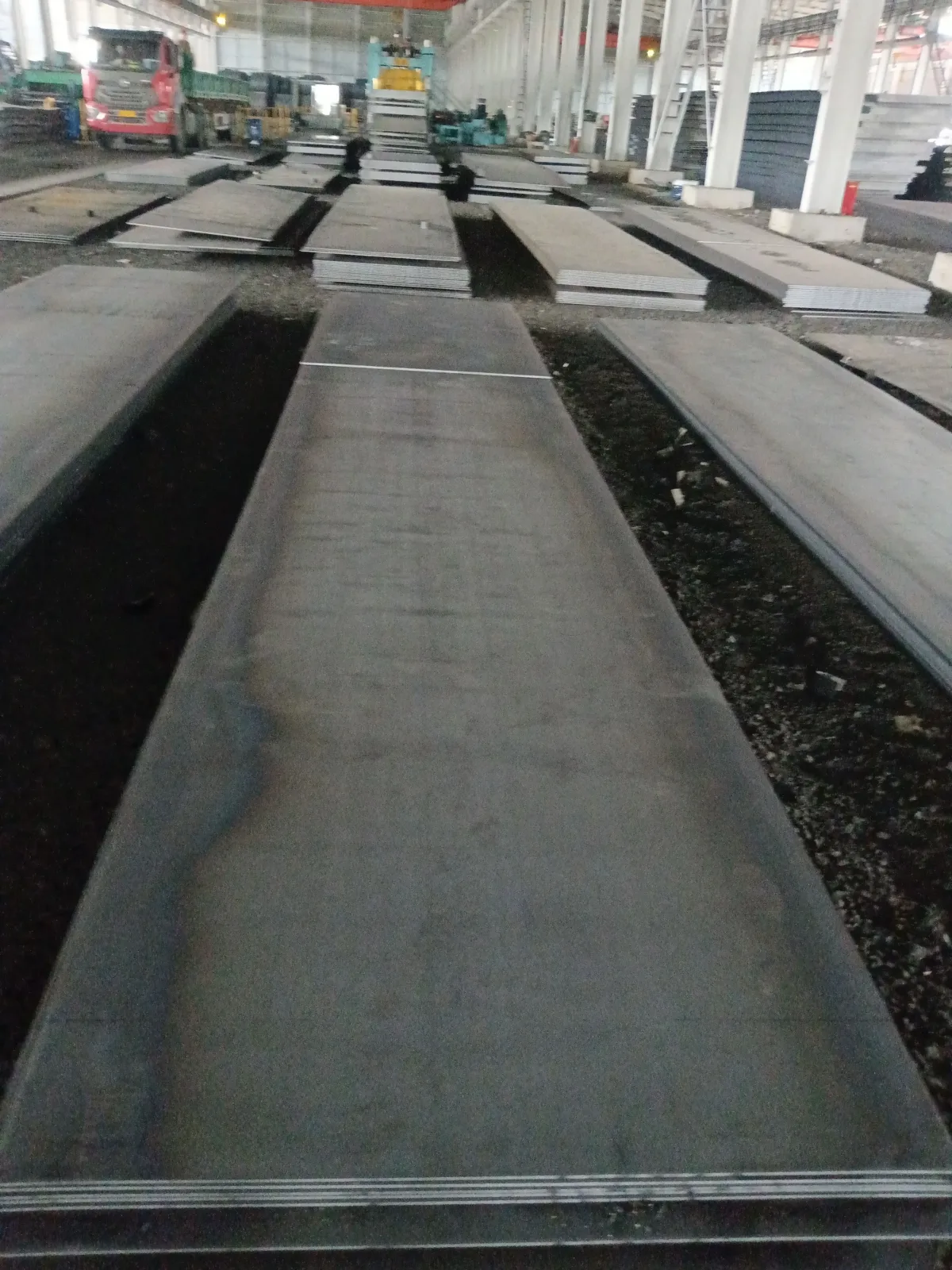


Description
Factory-Direct Hot Rolled Plates — every ASTM A36, Q235, and St37 plate rolls off our own hot strip mill, priced without trader markup.
Technical Specifications
| Parameter | Value |
|---|---|
| Designation | ASTM A36 / Q235 / St37 Hot Rolled Carbon Steel Plate |
| Product Type | Steel Plate |
| Steel Grade | ASTM A36, Q235, St37 |
| Standard | ASTM A36, GB/T 700 (Q235), DIN EN 10025 (St37) |
| Technique | Hot Rolled |
| Surface Treatment | Hot Rolled, Coated |
| Length | Custom Lengths Available |
| Width | Multiple Width Options |
| Application | Shipbuilding, Construction, Heavy-duty Structural Projects, Steel Fabrication |
| Origin | Shandong, China |
Application Suitability
| Industry | Typical Applications |
|---|---|
| Shipbuilding | Hull plating, deck stiffeners, bulkhead panels |
| Heavy-duty Construction | Column base plates, transfer girders, bridge deck plates |
| Steel Fabrication | Welded built-up sections, bracket gussets, equipment skids |
| Infrastructure / EPC | Anchor plates for wind turbine foundations, conveyor support frames |
Why ASTM A36 Q235 St37 Hot Rolled Carbon Steel Plate Supplier Certification Decides Your Customs Clearance
A missing CE stamp on a hot-rolled plate can hold an entire container at Rotterdam for weeks.
Global buyers sourcing an ASTM A36 Q235 St37 hot rolled carbon steel plate supplier often discover the problem only when the vessel reaches the discharge port: the mill test certificate references a domestic standard that EU customs does not recognize, or the chemistry report lacks the CE-marked EN equivalence statement. [NEED_CITE: CE marking requirements for structural steel imported into the European Union] Quality uncertainty compounds when fragmented suppliers ship mixed heats without clear traceability, leaving project engineers unable to match heat numbers to weld procedures. Specification gaps appear when a supplier’s catalog covers only metric widths, forcing the buyer to re-cut plates on site — adding labor, scrap, and schedule risk.
Matching Hot Rolled Plates to Marine and Structural Load Paths
An ASTM A36 Q235 St37 hot rolled carbon steel plate supplier serving shipyards and EPC contractors must deliver plates whose thickness tolerance holds under ultrasonic gauging at the quay. Hot-rolled surfaces provide a mill scale finish that accepts shop primers directly, while the carbon range of A36 and Q235 keeps weldability high for submerged-arc and GMAW joints typical in hull and foundation work. Custom lengths arriving pre-gauged let fabricators nest plates into transport frames without secondary cropping, reducing scrap on projects where every tonne matters.
Engineering Compliance Across ASTM, GB, and DIN Standards
Structural designers specifying ASTM A36 for North American projects, Q235B for Chinese EPC contracts, or St37 for European fabricators expect the same ASTM A36 Q235 St37 hot rolled carbon steel plate supplier to cross-reference chemistry and tensile requirements correctly. [NEED_CITE: steel grade equivalence tables between ASTM A36, Q235, and S235JR] Hot-rolled plates intended for load-bearing frames must carry documentation that satisfies both EN 1993 fabrication rules and AISC erection tolerances. Surface treatment choice — bare hot-rolled versus coated — is driven by the corrosion environment: marine splash zones demand coated or painted systems, while indoor structural frames can accept mill scale with shop primer. Heat-number traceability on every plate lets site inspectors pull the matching chemistry report before any weld is struck. [NEED_CITE: EN 10025 hot-rolled structural steel product standards]
Reading the Steel Grade: A36 vs Q235 vs St37
The three grades sit in different national systems but occupy a similar carbon-manganese envelope suited to general structural work. ASTM A36 follows the U.S. specification with a minimum yield point defined in ksi, while Q235 under GB/T 700 uses MPa and adds a quality letter (A, B, C, D) indicating impact-test temperature. St37, now largely superseded by S235JR under EN 10025, was the DIN standard for non-alloy structural steel with a 37 kgf/mm² tensile reference. Hot-rolling above the recrystallization temperature produces a plate with uniform grain flow through the thickness, giving predictable behavior during flame cutting and bending. The coated option adds a protective layer for storage or transit in humid ports, but the underlying hot-rolled surface must still meet the same thickness and flatness tolerance.
Hidden Costs When the Mill Test Certificate Does Not Match the Heat
Ordering from an ASTM A36 Q235 St37 hot rolled carbon steel plate supplier who cannot tie each plate to a verified heat number creates downstream failures that dwarf the original price saving. [NEED_CITE: consequences of non-conforming steel in structural fabrication] Plates with chemistry outside the grade range fail impact testing at the weld procedure qualification stage, forcing re-rolling and weeks of delay. Missing or forged certificates trigger customs holds, demurrage charges, and in worst cases, rejection at the project gate. Negative thickness tolerance beyond the standard allowance reduces the effective section modulus, meaning the engineer must either over-order or accept a structural safety margin that no certifier will sign off on.
Procurement Confidence Built on Factory Control
Every plate we ship as an ASTM A36 Q235 St37 hot rolled carbon steel plate supplier leaves our mill with chemistry and tensile results verified in our own physical and chemical laboratory before the truck is sealed. We hold ISO 9001:2015 certification and CE marking under EN 10210/10219, so European importers receive documentation that clears customs without supplementary testing. Our three dedicated production lines cover over 2,800 specifications, and when a project calls for non-standard width or length, we roll to order rather than forcing the buyer into a distributor’s stock list. SGS and BV third-party inspections are routine, and our professional loading team optimizes container weight distribution so that plates arrive without edge damage or forklift marks. Nearly two decades of export experience to 50+ countries means we know which documents the port authority in Lagos, Jakarta, or Hamburg will ask for before the container doors open.
Documentation & Compliance
- Mill test certificate documenting ASTM A36, Q235, or St37 chemical composition and tensile results per the applicable standard, linked to heat number
- CE certificate confirming conformity with EN 10210/10219 for hot-rolled structural plates entering the European Economic Area
- ISO 9001:2015 quality management certificate covering the full hot-rolling and inspection process
- SGS or BV third-party inspection report verifying dimensions, surface quality, and mechanical properties at the mill before shipment
- Material traceability sheet mapping each plate to its heat number, rolling schedule, and test coupon location
- Customs document package including packing list, bill of lading, and certificate of origin for the destination country
Packaging, Loading & Delivery
- Hot-rolled ASTM A36 / Q235 / St37 plates bundled with high-tensile steel strips and timber dunnage to prevent edge contact during ocean transit
- Coated plate surfaces wrapped in waterproof paper with plastic caps at bundle ends to preserve the coating against salt spray
- Custom-length plates loaded with weight distributed across the container floor, avoiding overhang that risks forklift damage at the discharge port
- Heat number and steel grade stenciled on each plate edge for rapid identification during site unloading and fabrication staging
- FOB, CIF, and DDP shipping terms available, with door-to-door logistics coordinated to the project’s laydown area
Securing Your Quote for the Next Structural Package
Submit your plate dimensions, steel grade (ASTM A36, Q235, or St37), tonnage, and discharge port, and our team returns a detailed quotation with unit price, typical production lead times, and the applicable certification package within twelve hours. We can also propose non-standard widths or coated surface options if your project environment requires additional corrosion protection.
Request Your ASTM A36 Q235 St37 Hot Rolled Carbon Steel Plate Quotation
Send your specifications, quantity, and destination port to receive pricing, mill test certificate samples, and a loading plan tailored to your project.
Shandong Xin Jiyuan Special Steel Tube Co., Ltd
Website: www.sdxjysteel.com
Tel: +86 531 8573 6315
Mobile / WhatsApp / WeChat: +86 188 5315 7756
Email: admin@sdxjysteel.com
Address: No.11889, Jingshi West Road, Lulian Group, Jinan City, Shandong Province, China
Frequently Asked Questions
Q: How do I decide between ASTM A36, Q235, and St37 for the same structural project?
A: The choice is usually driven by the project’s governing design code. North American engineers specify ASTM A36, Chinese EPC contracts call for Q235, and European fabricators reference St37 or its EN 10025 equivalent. We supply all three grades from the same hot-rolling line and provide the corresponding mill test certificate so your inspector can verify compliance without ambiguity.
Q: Can I verify material quality before the plates leave China?
A: Yes. Every shipment is accompanied by an original mill test certificate showing chemical composition and mechanical results tied to the heat number. We also welcome SGS or BV third-party inspection at our mill before loading, and the inspection report is included in the customs document package.
Q: Do you supply non-standard widths or cut-to-length plates?
A: Our hot-rolling lines cover multiple width options and custom lengths, so you do not need to order full-size sheets and crop them on site. Share your nesting drawing or cutting list, and we quote the exact dimensions with the same ASTM A36 Q235 St37 hot rolled carbon steel plate supplier certification package.
Q: What surface treatment is best for marine or outdoor construction use?
A: Bare hot-rolled plates suit indoor structural frames and projects where a shop primer will be applied immediately. For plates stored outdoors or shipped to humid coastal ports, we offer coated surfaces that resist mill-scale breakout during transit. The final painting or galvanizing decision usually rests with the project’s corrosion engineer.
Q: Will the documentation satisfy EU customs if I import St37 plates?
A: We provide CE marking under EN 10210/10219 for plates entering the European Economic Area, along with the mill test certificate, packing list, bill of lading, and certificate of origin. This package has cleared customs in Rotterdam, Hamburg, and other major EU ports without supplementary testing.