
EN10219 S355JR Steel for Multi-Level Car Park Construction Manufacturer
CE marking alone does not guarantee structural safety for multi-level parking decks.
Selecting the correct grade of Steel for Multi-Level Car Park Construction requires verifying impact toughness at specific sub-zero temperatures, not just checking yield strength. For projects in regions with seasonal temperature drops or high dynamic loads from moving vehicles, S355JR is often insufficient; S355J0 or J2 grades are mandatory to prevent brittle fracture. Compliance with EN10219 standards demands that Mill Test Certificates explicitly state the impact energy values at the required test temperature, a detail frequently overlooked during procurement until customs rejection occurs.
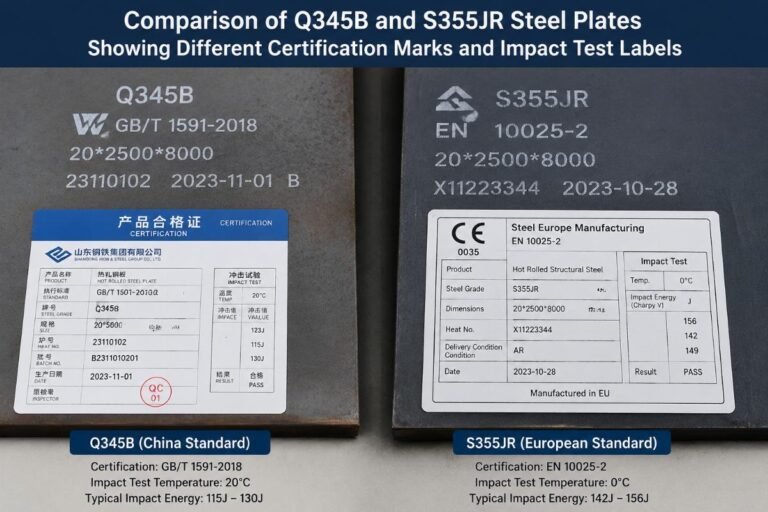
I still remember the silence on the phone line when a procurement manager from Dubai called me three years ago. His shipment of cold-formed square hollow sections was sitting idle at Jebel Ali Port. The local engineering consultant had rejected the material because the Mill Test Certificate (MTC) listed “Room Temperature” for the impact test, while the project specification required verification at 0°C. It wasn’t that the steel was weak; it was that the documentation failed to prove its resilience against sudden shock in cooler night temperatures. We had to arrange for third-party re-testing at a certified lab in the UAE, costing time and money that could have been saved if we had clarified the suffix meaning of S355JR versus S355J0 before production. That incident reshaped how I approach every inquiry for Steel for Multi-Level Car Park Construction.
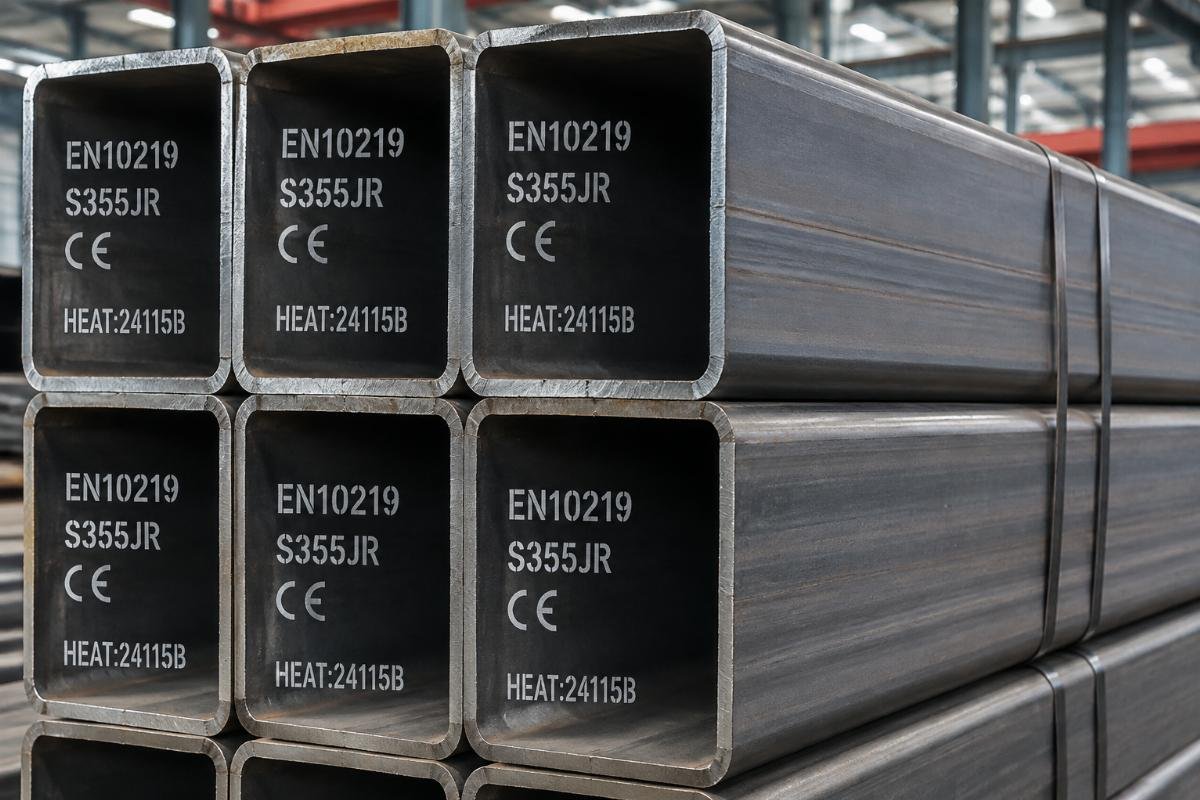
The difference between a smooth installation and a port-side nightmare often lies in the technical nuances of European standards. Let’s break down why standard structural steel isn’t always enough for car parks and how to verify what you are buying.
Why Standard Structural Steel Isn’t Enough for Car Parks?
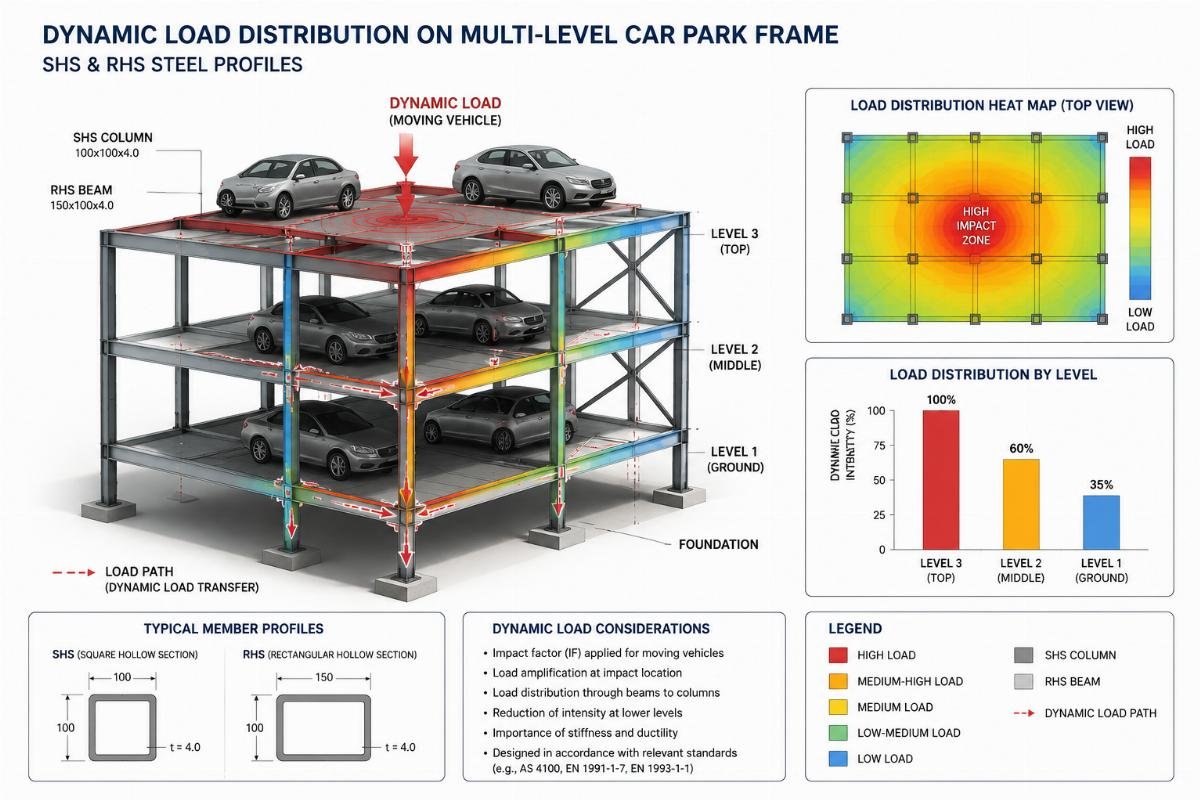
Multi-level car parks are not static storage units; they are dynamic structures subjected to continuous vibration, braking forces, and potential impact from vehicles. Unlike a warehouse roof that primarily bears dead loads and wind pressure, a parking deck experiences frequent live load cycles. This dynamic environment increases the risk of fatigue and brittle fracture, especially at connection points and welds. [NEED_CITE: fatigue failure mechanisms in dynamic steel structures]
Many buyers assume that if a steel grade meets the minimum yield strength requirement, it is suitable for any application. This is a dangerous misconception. Yield strength tells you how much load the steel can bear before deforming permanently, but it does not tell you how the steel behaves when struck suddenly at low temperatures. In colder climates, or even in air-conditioned environments where temperature differentials exist, standard carbon steel can transition from ductile to brittle. A brittle fracture propagates rapidly without warning, which is catastrophic for a structure holding hundreds of tons of concrete and vehicles.
When sourcing Steel for Multi-Level Car Park Construction, engineers prioritize impact toughness. This property measures the energy absorbed by the material during a sudden impact. The EN10219 standard, which governs cold-formed welded structural hollow sections, places heavy emphasis on this parameter. If your supplier only provides tensile test results, they are missing half the picture. You need to ensure the steel has been tested for Charpy V-notch impact energy at the specific temperature relevant to your project site.
Decoding EN10219: JR vs J0 vs J2 – What’s the Real Difference?
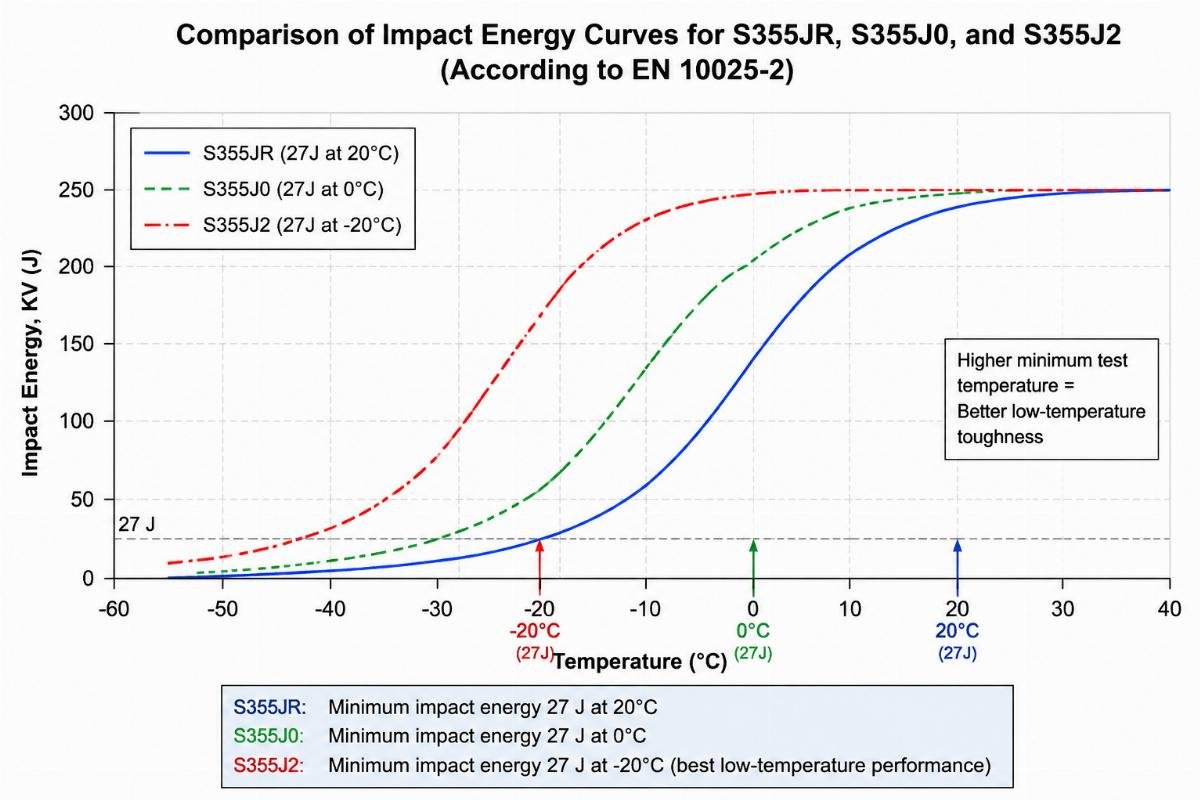
The suffix in steel grades like S355JR, S355J0, and S355J2 is not arbitrary marketing; it is a precise code defining the impact test temperature. Understanding this distinction is critical for avoiding compliance issues. [NEED_CITE: EN10025 and EN10219 impact testing temperature requirements]
- S355JR: Impact tested at +20°C (Room Temperature). Suitable for indoor structures in temperate climates where temperatures rarely drop below freezing.
- S355J0: Impact tested at 0°C. Required for structures exposed to outdoor conditions in mild winter climates or unheated indoor spaces.
- S355J2: Impact tested at -20°C. Mandatory for regions with harsh winters or high-altitude locations where brittle fracture risk is significant.
A common error I see in tender documents is specifying S355JR for an open-air parking deck in Europe or Northern China. While the steel might pass initial inspection, it fails to meet the safety margin required for winter operation. During a audit for a European fabricator, we found that their previous supplier had delivered S355JR instead of the specified S355J0. The chemical composition was identical, and the yield strength was perfect, but the lack of 0°C impact data meant the entire batch had to be quarantined.
| Grade | Yield Strength (Min) | Impact Test Temperature | Typical Application Context |
|---|---|---|---|
| S355JR | 355 MPa | +20°C | Indoor frameworks, temperate zones |
| S355J0 | 355 MPa | 0°C | Outdoor structures, mild winter regions |
| S355J2 | 355 MPa | -20°C | Harsh climate zones, critical safety structures |
When you request Steel for Multi-Level Car Park Construction, always specify the exact suffix required by your structural engineer. Do not accept “equivalent” substitutions without written approval from the project’s technical authority. The cost difference between JR and J0 is negligible compared to the risk of structural failure or customs rejection.
Key Profiles: Choosing Between SHS, RHS, and H-Beams
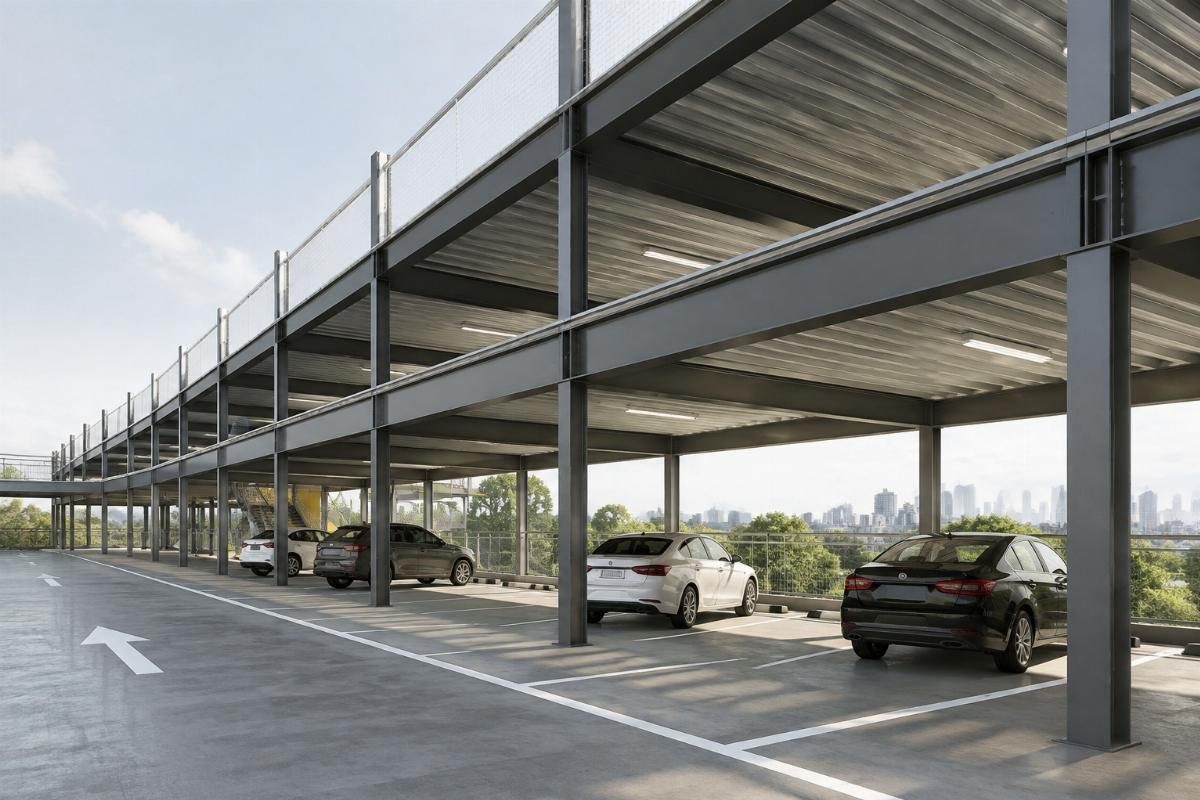
The choice of profile shape significantly affects the structural efficiency and aesthetic outcome of a multi-level car park. Hollow sections, specifically Square Hollow Sections (SHS) and Rectangular Hollow Sections (RHS), have become the preferred choice for modern parking structures over traditional H-beams. [NEED_CITE: structural efficiency of hollow sections vs open sections]
SHS and RHS offer superior torsional resistance. In a car park, columns are often subject to eccentric loads from cantilevered ramps or uneven vehicle distribution. Open sections like I-beams are weak in torsion and require additional bracing to resist twisting. Hollow sections, being closed profiles, distribute stress more evenly and provide higher stiffness-to-weight ratios. This allows for slimmer columns, maximizing parking space and improving visibility for drivers.
From a fabrication perspective, hollow sections are easier to connect and weld in clean, aesthetically pleasing joints. This is crucial for car parks where the structure is often exposed and visible. However, cold-forming these sections requires strict adherence to EN10219 standards to ensure the corners retain their mechanical properties after bending. Poorly formed corners can become initiation points for cracks under cyclic loading.
In a recent project for a mixed-use development in Southeast Asia, we consolidated an order of SHS columns and RHS beams. The client initially considered H-beams for cost reasons but switched to hollow sections after realizing the reduced need for fireproofing materials due to the lower surface area-to-volume ratio of hollow sections. This switch not only improved the architectural look but also reduced long-term maintenance costs.
The Procurement Trap: How to Verify Mill Test Certificates
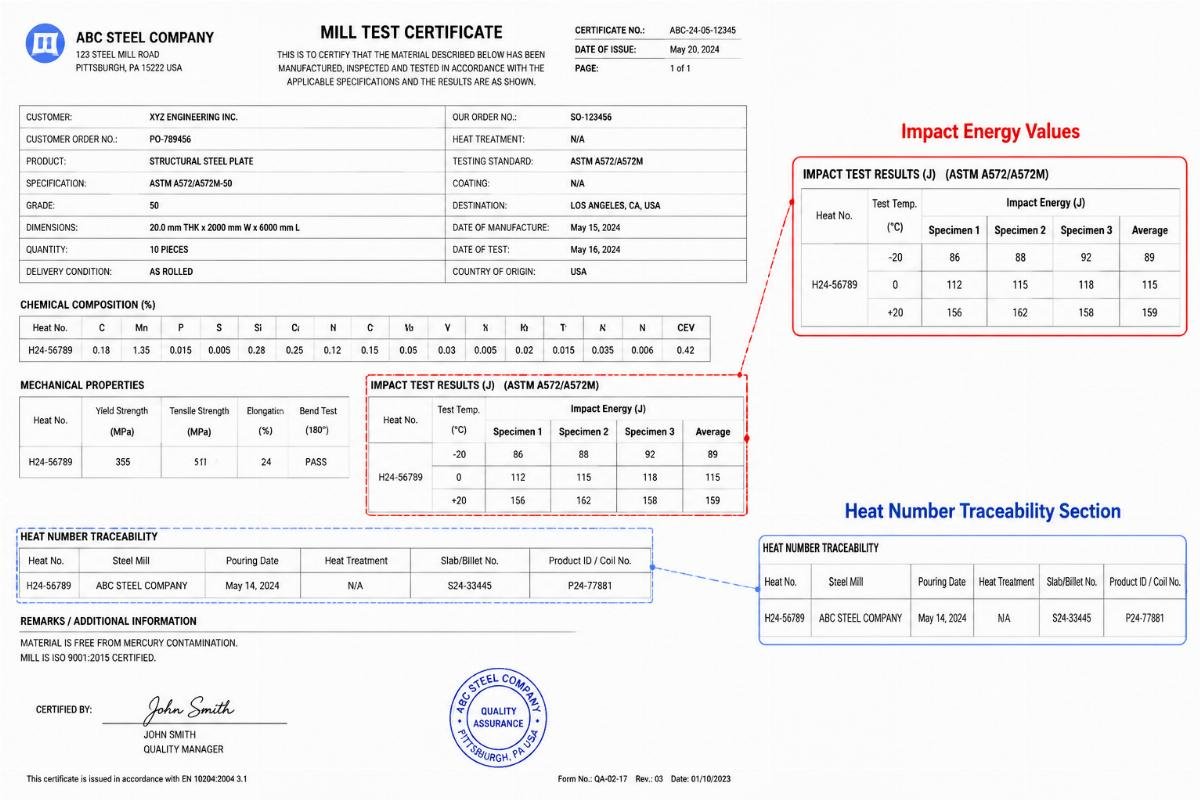
The Mill Test Certificate (MTC) is your primary defense against non-compliant material. Yet, many buyers treat it as a mere formality. A valid MTC for Steel for Multi-Level Car Park Construction must contain specific, verifiable data points. [NEED_CITE: essential elements of EN10219 compliant Mill Test Certificates]
Do not accept MTCs that simply state “Pass” or “Compliant.” You need to see the actual numerical values. Specifically, look for:
- Heat Number: Traceable to the specific batch of steel produced.
- Chemical Composition: Verified percentages of Carbon, Manganese, Silicon, etc.
- Mechanical Properties: Yield strength, tensile strength, and elongation values.
- Impact Energy Values: The most critical part. It must list the Joules (J) absorbed at the specified temperature (e.g., 27J at 0°C for S355J0).
I once reviewed an MTC from a new supplier that listed the impact test result as “>27J”. This is ambiguous. Does it mean 28J or 100J? More importantly, did they test at the right temperature? A reputable manufacturer will provide the exact average value from the three specimens tested. If the MTC lacks this detail, request the raw laboratory data or a third-party inspection report.
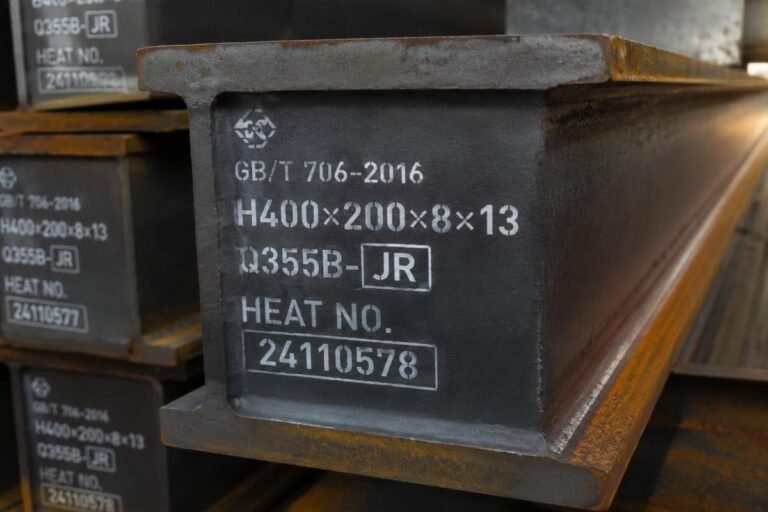
Another red flag is missing traceability. Each bundle of steel should be tagged with a heat number that matches the MTC. If the tags are missing or illegible, the certificate is useless. In our facility, we maintain rigorous batch consistency, ensuring that every piece of Steel for Multi-Level Car Park Construction leaving the factory is linked to a specific, verified heat number. This level of transparency prevents disputes during site inspections.
Conclusion
Structural integrity in multi-level car parks depends on verified impact toughness, not just yield strength.
Choosing the right Steel for Multi-Level Car Park Construction involves understanding the critical differences between S355JR, J0, and J2 grades and ensuring your supplier provides detailed, transparent Mill Test Certificates. By prioritizing EN10219 compliance and verifying impact energy values at the correct temperatures, you protect your project from costly delays and structural risks. Always demand specific data, not just general compliance statements.