
Q345B vs S355JR Bridge Steel: Wholesale Supplier for Sale
Yield strength is not the only metric that matters.
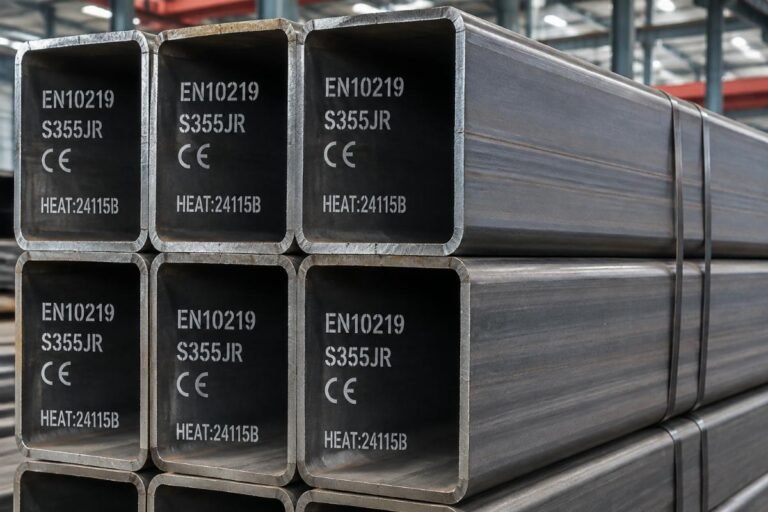
Q345B and S355JR are not direct equivalents despite similar yield strengths; ignoring impact test temperatures and standard certifications (GB/T vs EN) leads to project delays and rejection. The primary distinction lies in the certification framework and low-temperature toughness requirements, not just chemical composition. Procurement officers must verify that the mill test certificate aligns with the destination country’s regulatory standards, as a GB/T certificate is often insufficient for European infrastructure projects requiring EN10219 compliance.
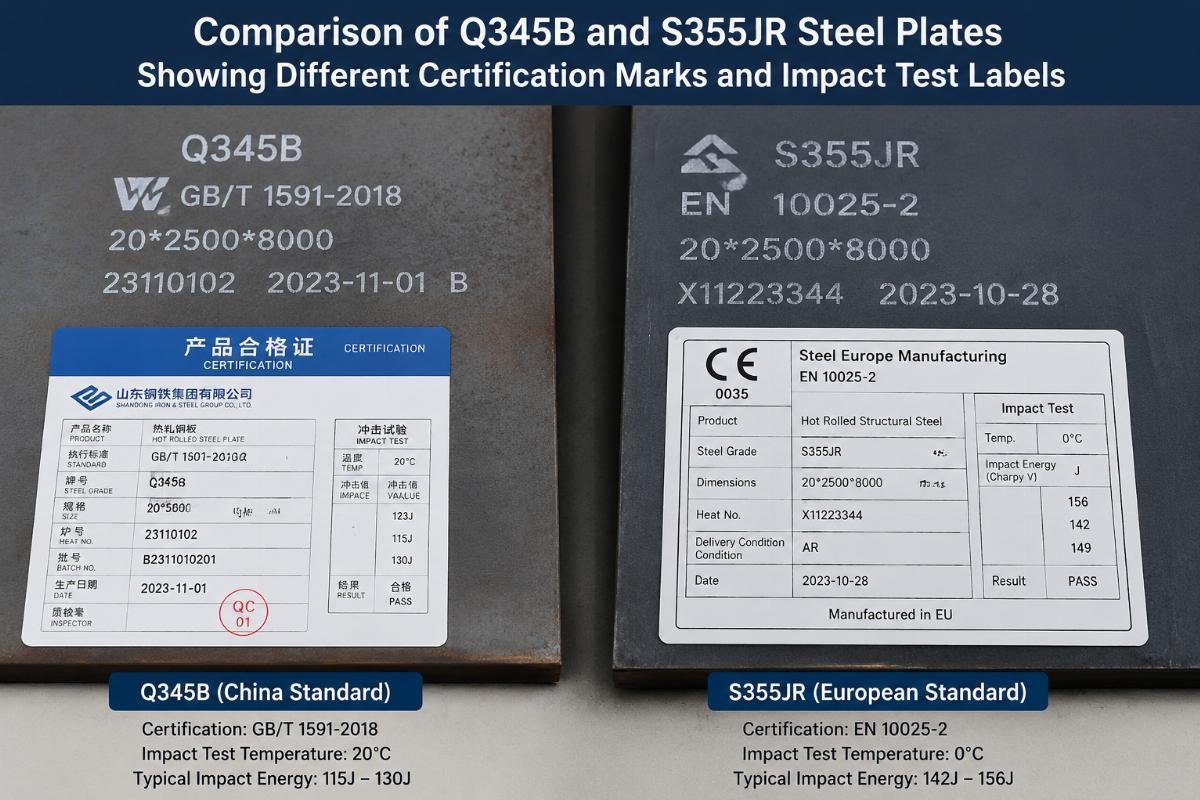
Navigating the technical nuances between Chinese and European structural steel grades requires more than a glance at tensile data. I recall standing on the dock in Ningbo, watching a container of steel plates destined for a Nordic bridge project get held up. The paperwork looked perfect to the untrained eye, but the customs broker flagged the standard code immediately. It was a stark reminder that material equivalence is a legal and technical construct, not just a physical one. Understanding these differences prevents costly logistical bottlenecks and ensures structural integrity in critical applications. [NEED_CITE: Differences between GB/T 1591 and EN 10025 standards for structural steel]
Why Are Q345B and S355JR Often Confused?
Similar yield strength masks critical standard differences.
At first glance, Q345B and S355JR appear interchangeable. Both are widely used structural steels with a minimum yield strength of approximately 345-355 MPa. This numerical proximity leads many buyers to assume they are functional duplicates, a misconception that frequently surfaces in initial procurement inquiries. However, the designation systems stem from entirely different regulatory bodies. Q345B follows the Chinese GB/T 1591 standard, while S355JR adheres to the European EN 10025 or EN 10219 standards. [NEED_CITE: Overview of global structural steel grading systems]
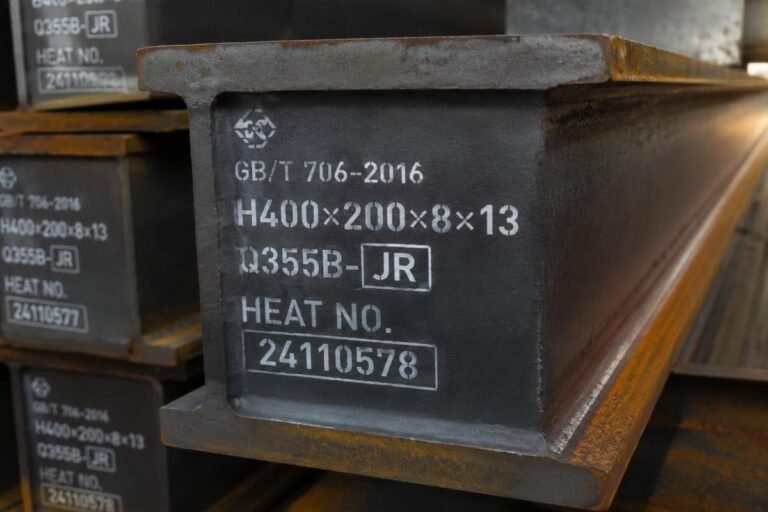
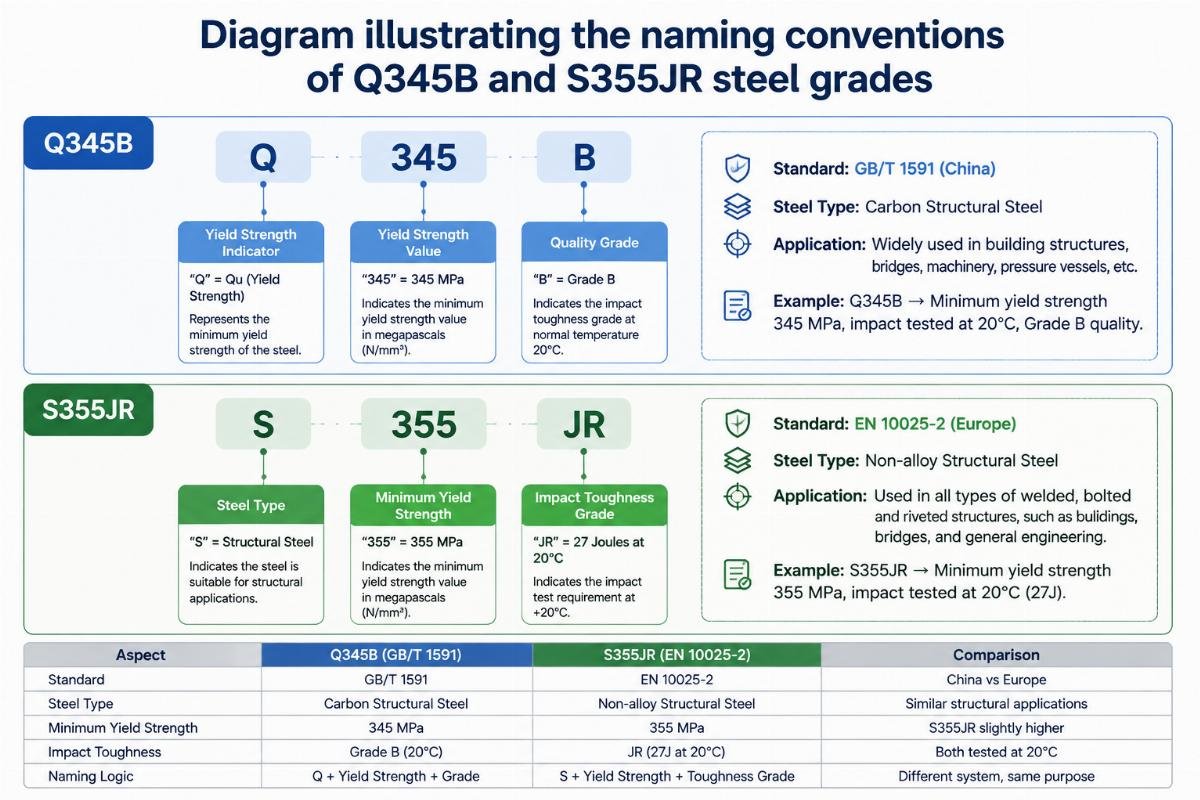
The confusion deepens because both grades are commonly used in general construction, warehouses, and non-critical frameworks. In warm climates with minimal thermal stress, their performance profiles overlap significantly. Yet, this overlap is deceptive. The “Q” in Q345 denotes yield strength in Chinese nomenclature, while “S” in S355 stands for structural steel in European norms. The suffixes “B” and “JR” indicate impact testing conditions, which is where the divergence becomes operationally significant.
I once reviewed a tender document for a Southeast Asian viaduct where the engineer specified S355JR but accepted Q345B bids due to cost advantages. The team assumed the mechanical properties were identical. They overlooked the fact that the impact energy absorption capabilities at lower temperatures were not guaranteed to be the same under the respective testing protocols. This assumption nearly led to a batch rejection when the third-party inspector requested proof of Charpy V-notch tests at specific temperatures mandated by the European design code, which the Chinese standard did not explicitly mirror in the same format. [NEED_CITE: Charpy impact test requirements for structural steel in cold climates]
The key takeaway is that while the base material may perform similarly under static loads, the certification path dictates market access. For a Q345B vs S355JR bridge steel comparison, one must look beyond the yield point to the governing standard’s philosophy on safety margins and verification methods.
What Are the Key Technical Differences?
Impact test temperatures and chemical composition vary significantly.
The most critical technical differentiator between these two grades is the Charpy V-notch impact test requirement. S355JR mandates an impact energy of at least 27 Joules at room temperature (20°C). The “JR” suffix specifically denotes this room-temperature testing condition. In contrast, Q345B also requires impact testing at 20°C, but the acceptance criteria and testing methodologies can differ slightly depending on the thickness of the plate and the specific version of the GB/T standard applied. [NEED_CITE: Technical comparison of Charpy V-notch testing standards]
However, the real risk emerges when projects require sub-zero toughness. If a project specifies S355J2 or S355K2, which require impact testing at -20°C or -40°C respectively, Q345B is not a suitable substitute without additional verification. Q345D or Q345E would be the closer equivalents for low-temperature applications, but even then, the certification must match the project’s legal requirements.
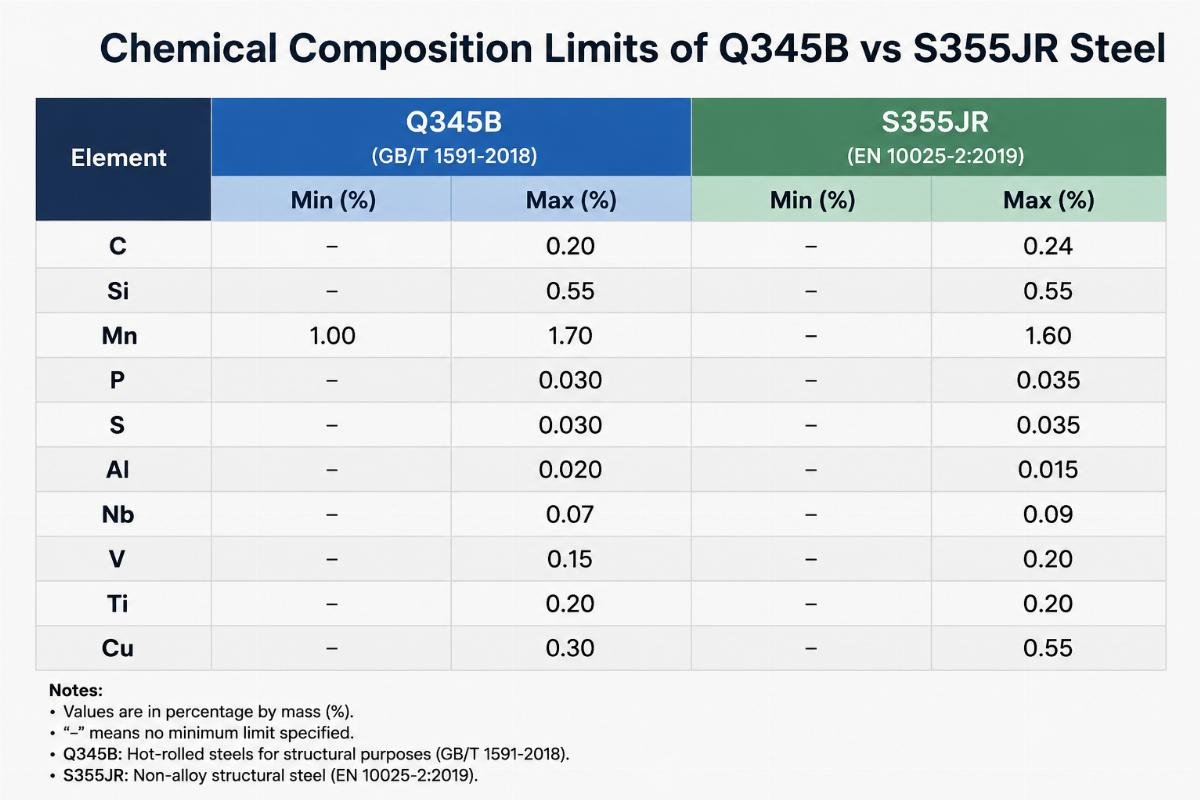
Chemical composition also plays a role. While both grades limit carbon, manganese, and silicon content to ensure weldability and strength, the upper limits for impurities like sulfur and phosphorus may vary. European standards often have stricter controls on these elements to enhance ductility and fracture resistance. A side-by-side analysis reveals that while the main alloying elements are similar, the tolerance bands for trace elements can affect the steel’s behavior during heavy fabrication or in corrosive environments.
| Feature | Q345B (GB/T 1591) | S355JR (EN 10025/10219) |
|---|---|---|
| Standard Origin | China | Europe |
| Min Yield Strength | 345 MPa | 355 MPa |
| Impact Test Temp | 20°C | 20°C |
| Impact Energy | ≥ 34 J (typical) | ≥ 27 J |
| Certification Type | Mill Test Certificate (GB) | CE Marking / Declaration of Performance |
| Low Temp Grade Equivalent | Q345D/E | S355J2/K2 |
This table highlights that while the yield strengths are comparable, the certification and impact energy values are distinct. A buyer sourcing Q345B vs S355JR bridge steel must ensure that the specific impact energy value meets the design engineer’s safety factors, not just the pass/fail criterion of the standard.
In a Middle East infrastructure project, we successfully substituted Q345B for a non-critical structural component after clarifying the J2/JR suffixes with the client’s engineer. The key was obtaining prior approval and providing third-party inspection reports that validated the chemical and mechanical properties against the project’s specific technical specifications, rather than relying solely on the standard grade name. This approach resulted in a smooth inspection process and avoided unnecessary re-ordering costs.
How Do Certification Standards Affect Project Acceptance?
GB/T certificates often fail EU customs and supervisory checks.
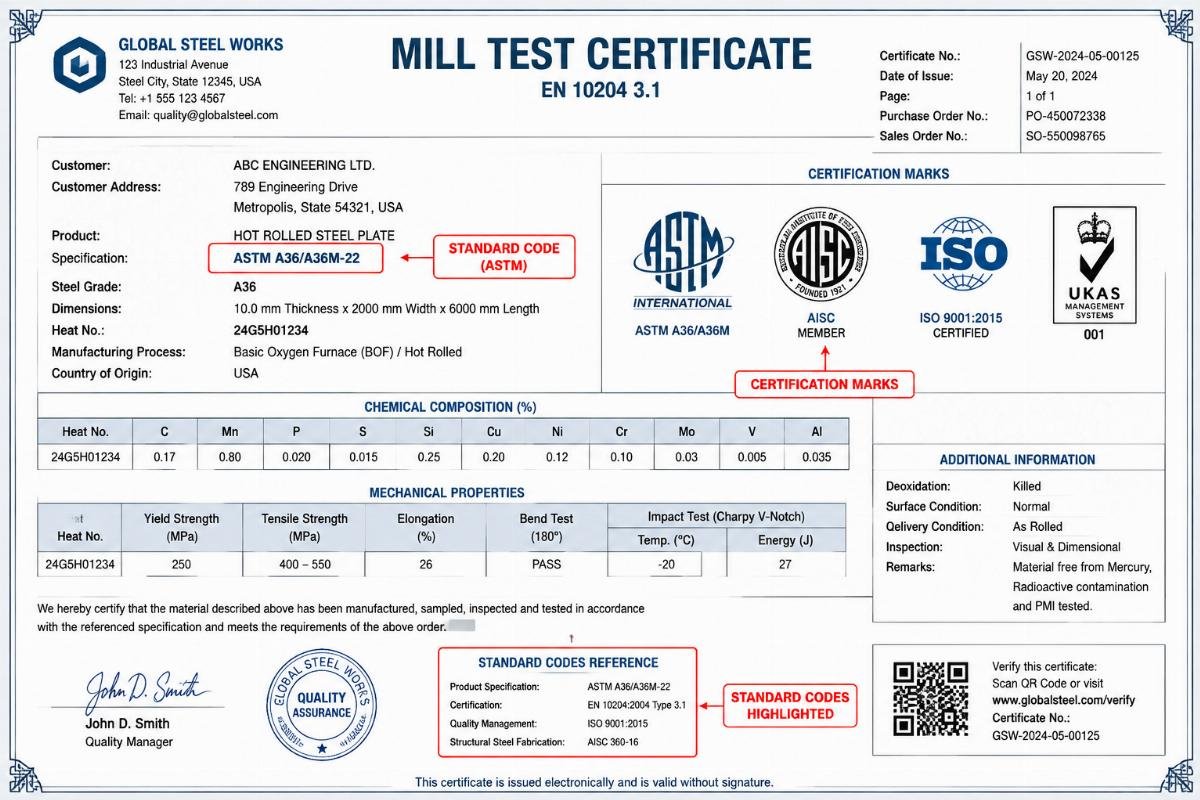
The documentation accompanying the steel is as critical as the metal itself. European projects typically require a Declaration of Performance (DoP) and CE marking for structural components, which signifies compliance with EN standards. A Mill Test Certificate (MTC) issued under GB/T 1591, while valid in China and many other regions, does not automatically confer CE compliance. [NEED_CITE: CE marking requirements for construction products in the EU]
I witnessed a situation where a shipment of steel plates arrived at Rotterdam port. The physical material was high-quality, but the MTC referenced only the Chinese GB standard. The supervising engineer, bound by EU construction product regulations, rejected the documents. The cargo was held in customs for over two months while the buyer scrambled to obtain additional third-party verification to prove equivalence. This delay incurred storage fees and disrupted the construction schedule, costing far more than the initial price difference between the two grades.
For contractors and procurement officers, this means that specifying Q345B vs S355JR bridge steel involves a legal decision as much as a technical one. If the project is in Europe or follows European norms, S355JR is the safer choice to ensure seamless customs clearance and regulatory acceptance. Using Q345B in such contexts requires explicit written approval from the project’s structural engineer and possibly additional testing by an accredited independent laboratory.
The risk is not just administrative. In some jurisdictions, using non-compliant materials can void insurance policies or lead to liability issues if structural failure occurs. Therefore, the certification standard acts as a gatekeeper for market entry. Buyers must verify whether their project accepts alternative standards or strictly mandates EN compliance.
When Can Q345B Safely Replace S355JR?
Only in non-critical, warm-climate structures with prior engineer approval.
Substitution is possible but must be approached with caution. Q345B can safely replace S355JR in applications where:
- The operating environment does not experience sub-zero temperatures.
- The structural design does not rely on the specific ductility margins defined by EN standards.
- The local building codes or the project’s chief engineer explicitly approve the substitution based on verified mechanical property data.
This scenario is common in Southeast Asia, Africa, and parts of the Middle East, where Chinese standards are widely recognized and accepted. In these regions, the cost advantage of Q345B can be realized without compromising safety, provided the supplier provides comprehensive MTCs and, if required, third-party inspection reports from agencies like SGS or Bureau Veritas.
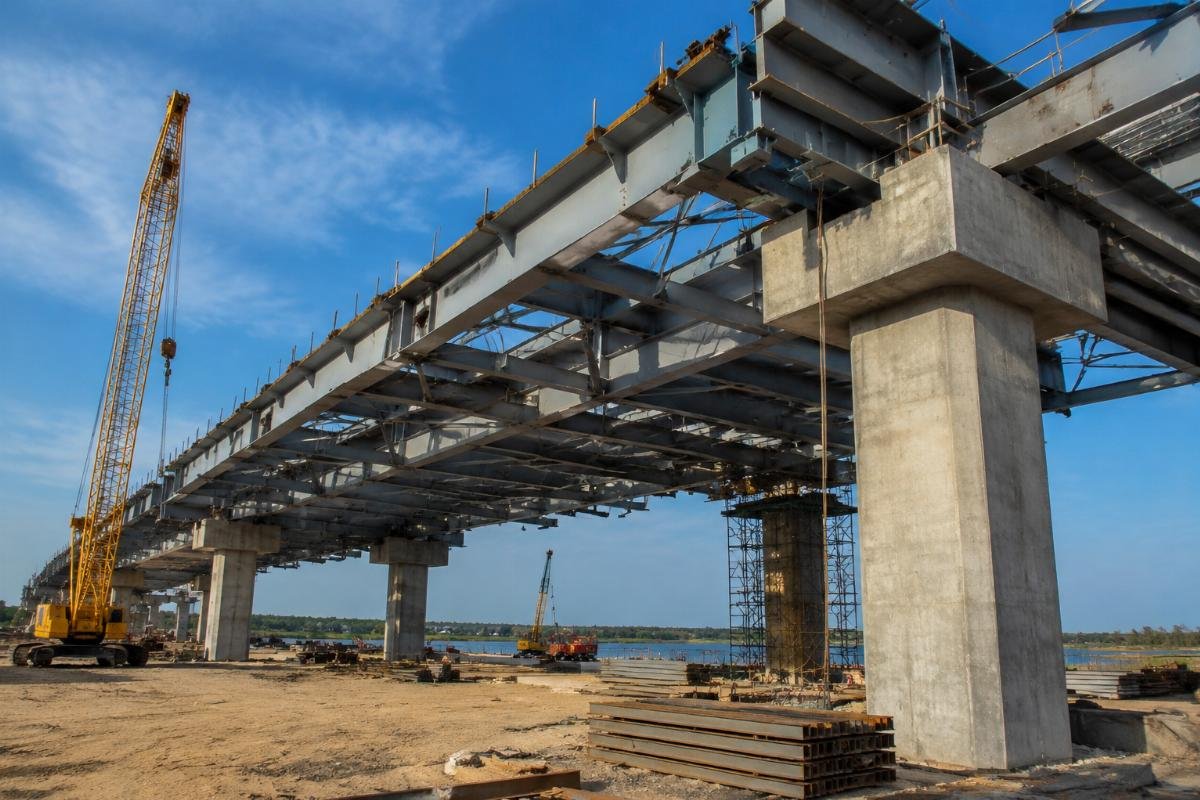
However, for bridge construction, which is subject to dynamic loads and fatigue stresses, the margin for error is smaller. Bridges often require higher toughness to withstand vibration and potential impact from debris or vehicles. In such cases, sticking to the specified grade or using a higher-grade equivalent like Q345D for S355J2 is advisable. [NEED_CITE: Fatigue resistance requirements for bridge steel structures]
A procurement officer once asked if Q345B could be used for a pedestrian bridge in a tropical climate. After reviewing the design loads and environmental conditions, we confirmed it was feasible. We provided detailed test reports showing the actual impact energy values exceeded the S355JR minimums, giving the engineer confidence to approve the material. This proactive transparency prevented potential disputes during the inspection phase.
When evaluating Q345B vs S355JR bridge steel, the decision should be driven by the specific project requirements, local regulations, and risk tolerance. Blind substitution based on yield strength alone is a recipe for logistical and financial trouble.
Conclusion
Certification and impact toughness define usability, not just yield strength.
Q345B and S355JR share similar mechanical properties but operate under different regulatory frameworks. Ignoring the differences in impact test temperatures and certification standards can lead to significant project delays and rejection. Always verify the specific requirements of your project’s location and design codes before selecting a material. For European-standard projects, S355JR remains the compliant choice, while Q345B offers a cost-effective alternative in regions accepting GB standards, provided proper engineering approval is secured.