Description
Factory-direct Q235B plate supply — Every Q235B hot rolled carbon steel plate ships with in-house lab-verified chemistry and original mill test certificates, eliminating middleman markups on your structural procurement.
Technical Specifications
| Parameter | Value |
|---|---|
| Designation | Q235B / ST37 Hot Rolled Carbon Steel Plate |
| Product Type | Steel Plate |
| Steel Grade | Q235B, Q235, ST37 |
| Standard | ASTM, JIS, DIN, BS, GB |
| Thickness | 3–200 mm |
| Technique | Hot Rolled |
| Surface Treatment | Hot Rolled (mill finish), Galvanized |
| Application | Shipbuilding, Structural fabrication, Pressure vessels, Industrial construction |
| Origin | Shandong, China |
Application Suitability
| Industry | Typical Applications |
|---|---|
| EPC Contractors | Base plates, column base connections, industrial platform flooring |
| Shipbuilding | Hull inner structures, deck stiffeners, bulkhead framing |
| Construction Companies | High-rise transfer plates, bridge gusset plates, foundation embedment |
| Machinery Manufacturers | Machine base frames, crane boom side plates, equipment skids |
Why Certification Gaps Stall Your Q235B Hot Rolled Carbon Steel Plate at Customs
Missing or incomplete mill test certificates are the single most common reason steel plates get held at destination ports.
I have seen entire container loads of hot rolled plate sit in a Southeast Asian port for three weeks because the supplier’s MTC listed chemical composition without mechanical test results. The consignee’s engineer could not sign off on structural compliance. Every day of demurrage cost more than the plate itself. When you source a Q235B hot rolled carbon steel plate supplier who provides EN 10204 3.1 format certificates with heat-number traceability, that problem disappears before loading. [NEED_CITE: EN 10204 inspection document types for steel products]
How 3–200mm Thickness Range Covers Your Structural Fabrication Needs
A Q235B hot rolled carbon steel plate supplier offering 3mm through 200mm in a single order eliminates the need to coordinate multiple mills for a single project. Thin-gauge plates at 3–12mm serve as gusset connections and bracing elements, while 20–60mm sections handle primary load-bearing columns and transfer beams. Heavy plates beyond 60mm go into pressure vessel heads and bridge bearing assemblies. Custom non-standard widths and lengths cut to your fabrication drawings reduce on-site waste and welding seams.
Engineering Compliance and Surface Treatment Selection for Q235B Plates
Structural engineers specifying Q235B under GB standards need confidence that the equivalent ST37 under DIN or A36 under ASTM meets the same yield behavior for their load calculations. [NEED_CITE: steel grade equivalence between GB Q235B and EN/DIN/ASTM standards] For outdoor or marine environments, galvanized surface treatment extends service life without field painting, while mill-finish hot rolled plates suit indoor structural frames where appearance is secondary. CE certification under EN 10025 ensures EU market compliance, and third-party SGS or BV inspection before loading gives your project auditor the independent verification they require.
Understanding Q235B Chemistry and Hot Rolling Process
Q235B belongs to the Chinese GB/T 700 carbon structural steel family, where “Q” denotes yield point and “235” indicates the minimum yield strength class. The “B” grade specifies room-temperature impact testing at 20°C, distinguishing it from A-grade material without impact requirements. ST37 under DIN EN 10025-2 covers the same strength envelope for European procurement, making cross-standard substitution straightforward when proper equivalence documentation accompanies the shipment. Hot rolling at temperatures above the recrystallization point produces a mill scale surface that bonds well with primer coatings, while subsequent galvanizing adds a zinc layer for corrosion resistance in humid or salt-exposed service conditions.
The Hidden Cost of Unverified Q235B Hot Rolled Carbon Steel Plate Procurement
Ordering from a trader who cannot produce heat-number-traceable MTCs creates downstream risk that surfaces only during structural inspection. Plates with chemistry outside the Q235B carbon-manganese range may pass visual checks but fail ultrasonic testing or weld procedure qualification. [NEED_CITE: consequences of non-conforming steel plate in structural engineering projects] Customs authorities in the EU and Middle East increasingly reject shipments lacking CE marking or proper certificate of origin, turning a cost-saving purchase into a total loss.
Why Procurement Teams Choose Our Q235B Hot Rolled Carbon Steel Plate Supply
Our in-house physical and chemical laboratory tests every heat before plate release, so the MTC you receive matches the material in your container. With 2,800+ specifications across our production lines, we consolidate plate orders alongside structural sections and pipes in a single shipment, cutting your coordination overhead. We hold CE certification under EN 10210/EN 10219 and ISO 9001:2015 registration, and our export team has shipped to 50+ countries including EU, North America, and Southeast Asia. Factory-direct pricing means no trading company margin sits between your budget and the mill. Custom non-standard sizes cut to your drawings ship with the same documentation rigor as standard stock.
Documentation & Compliance
- Mill test certificate documenting Q235B chemical composition (C, Mn, Si, P, S) and tensile properties per GB/T 700, issued with unique heat number traceability
- CE certificate confirming compliance with EN 10025 for hot rolled structural steel plates destined for EU member states
- ISO 9001:2015 quality management system certificate covering the full production and inspection process
- SGS or BV third-party inspection report available upon request, verifying dimensions, surface quality, and mechanical test results before container sealing
- Material traceability report linking each plate to its heat number, rolling schedule, and test batch for project audit requirements
- Complete customs document package including packing list, bill of lading, and certificate of origin formatted for destination port clearance
Packaging, Loading & Delivery
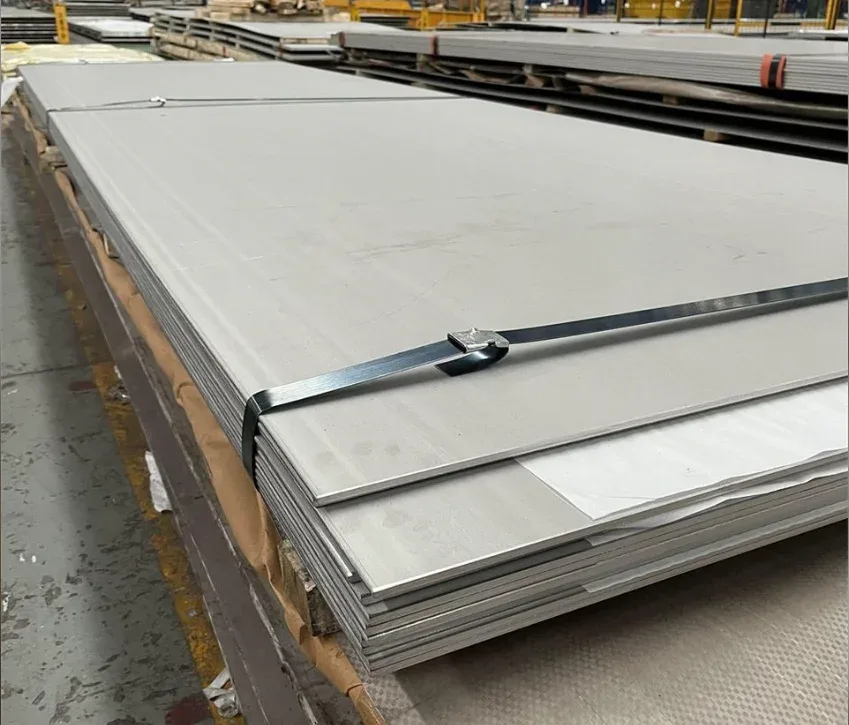
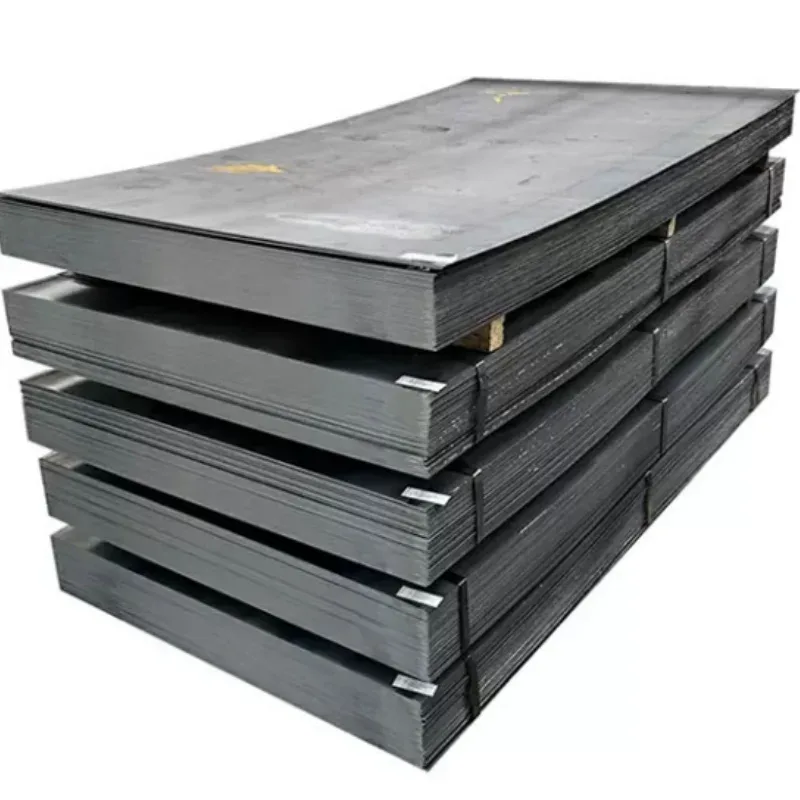
- Hot rolled Q235B plates bundled with galvanized steel straps and edge protectors to prevent coating damage and edge deformation during ocean transit
- Galvanized plates wrapped in waterproof kraft paper with desiccant inserts to preserve zinc coating integrity in humid container environments
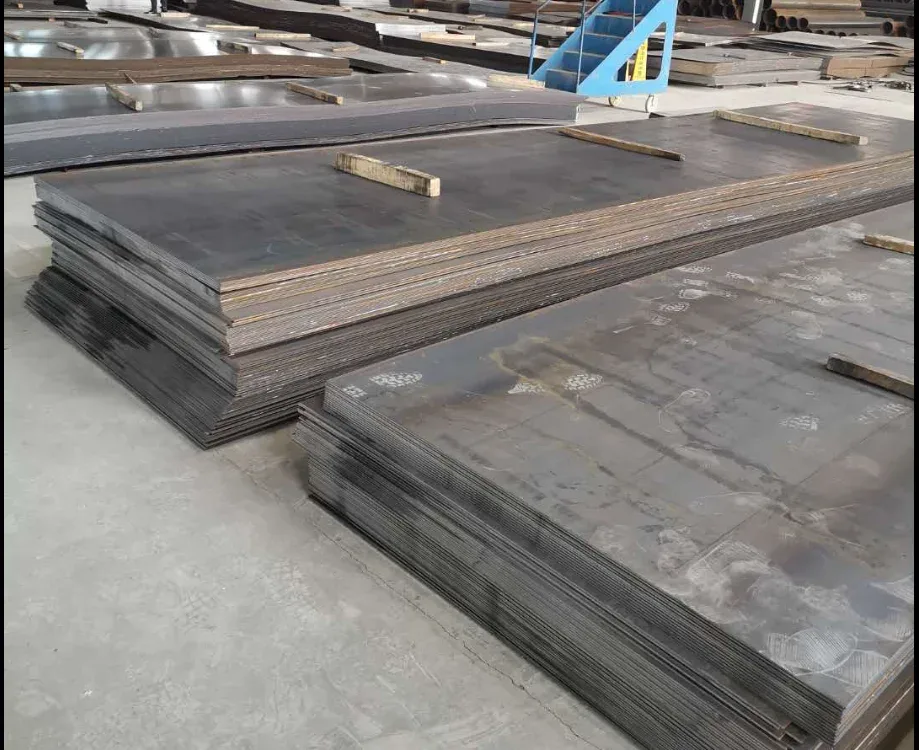
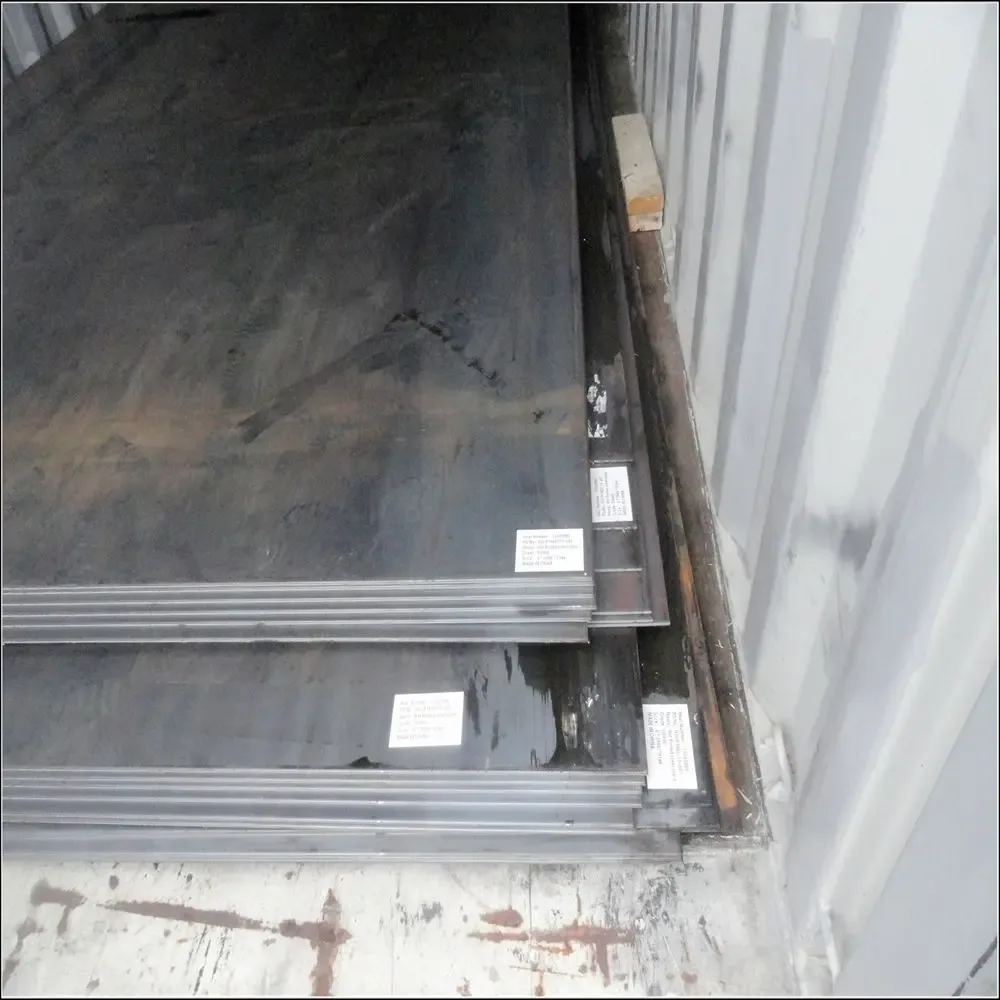
- Container loading plans optimized for 3–20mm thin plates stacked flat and 20–200mm heavy plates secured with timber dunnage to prevent shifting
- Custom cut-to-length service available for plates ordered to specific fabrication dimensions, reducing on-site cutting waste and handling time
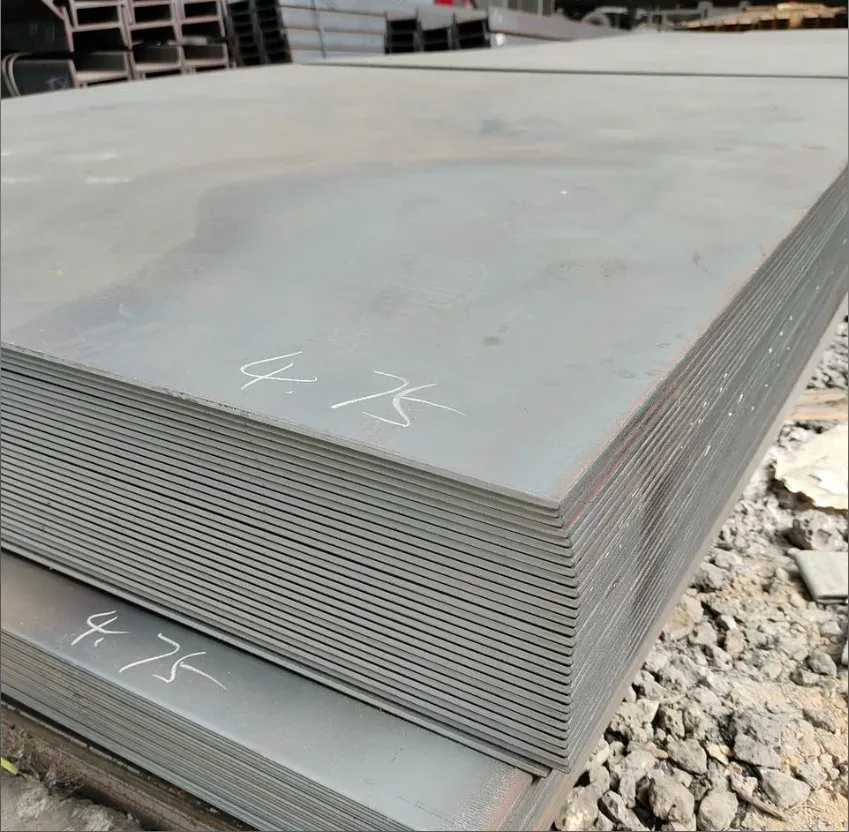
- Each plate marked with heat number, steel grade Q235B, and thickness for site identification and traceability verification
- FOB, CIF, and DDP shipping terms supported with professional heavy-cargo logistics coordination to 50+ countries
Start Your Q235B Hot Rolled Carbon Steel Plate Inquiry
Submit your plate specifications including thickness, width, length, quantity, and destination port to receive a detailed quotation with mill test certificate preview and production timeline. Our engineering team reviews non-standard size requests within 12 hours and confirms certification requirements for your destination market before you commit.
Request Your Q235B Plate Quotation with Mill Test Certificate
Send your specifications and destination details to receive pricing, MTC samples, and delivery confirmation.
Company: Shandong Xin Jiyuan Special Steel Tube Co., Ltd
Website: www.sdxjysteel.com
Tel: +86 531 8573 6315
Mobile/WhatsApp/WeChat: +86 188 5315 7756
Email: admin@sdxjysteel.com
Address: No.11889, Jingshi West Road, Lulian Group, Jinan City, Shandong Province, China
Frequently Asked Questions
Q: What is the difference between Q235B and ST37 for my project specification?
A: Q235B follows the Chinese GB/T 700 standard while ST37 follows DIN EN 10025-2. Both cover the same yield strength class for general structural applications. We provide grade equivalence documentation and mill test certificates referencing both standards so your engineer can approve the substitution.
Q: Can you provide third-party inspection before shipment?
A: Yes. SGS and BV third-party inspection is available upon request. The inspector verifies plate dimensions, surface quality, chemical composition, and mechanical properties against your purchase specification before we seal the container.
Q: What thickness range do you stock for Q235B hot rolled plates?
A: We supply Q235B hot rolled carbon steel plate from 3mm to 200mm thickness. Standard stock widths and lengths are available, and custom non-standard sizes can be cut to your fabrication drawings with typical production lead times.
Q: How do you ensure the galvanized coating meets my project requirements?
A: Every galvanized plate undergoes coating thickness measurement in our in-house laboratory before release. The mill test certificate documents the zinc layer specification, and third-party inspection can verify coating uniformity and adhesion before loading.
Q: What documents do you provide for customs clearance?
A: Each shipment includes the original mill test certificate with heat number traceability, packing list, bill of lading, and certificate of origin. For EU destinations, we include the CE certificate confirming EN 10025 compliance. Additional destination-specific documents are prepared upon request.