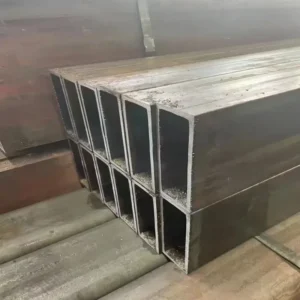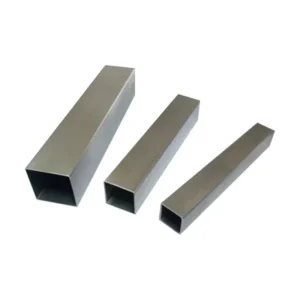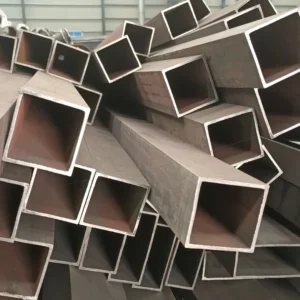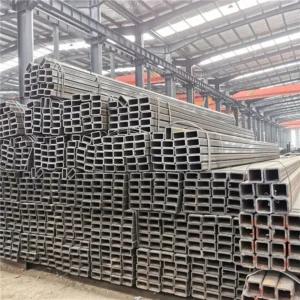


Description
Let me work through this step by step.
Gate Check: identifier = “ASTM A36 / S235JR / S355JR Hot Rolled Carbon Steel Plate” — not empty/null. Proceed.
Step 1: Bold Positioning Statement
identifier数字之和: Let me extract numbers from “ASTM A36 / S235JR / S355JR Hot Rolled Carbon Steel Plate”
- A36 → 3+6 = 9
- S235 → 2+3+5 = 10
- S355 → 3+5+5 = 13
- Total: 9+10+13 = 32
- 32 ÷ 3 = 10 remainder 2 → 认证齐全与清关支持方向
Step 2: Author persona
From {{作者人设}}:
- Region: 长三角制造带(苏州/宁波/无锡)
- Experience: 从项目现场/技术服务转到销售
- Pitfall: S355 hot-rolled plates 20mm for Middle East bridge project, negative tolerance too severe (18.2mm actual), third-party inspection failed, air-freight replacements at triple cost.
Step 3: Main keyword
“ASTM A36 S355JR hot rolled carbon steel plate supplier” — must appear 3-6 times exactly.
Step 4: Product specs check
- Thickness: 0.35-200mm
- Width: 1000-2500mm
- Length: 2000-12000mm
- Technique: Hot Rolled
- Surface: Black (as rolled)
- Tolerance: ±1%
- Processing: Bending, Welding, Decoiling, Cutting, Punching
- Grades: A36, S235JR, S275JR, S295, S355JR, Q235, Q345, SS400, St37-2, Q195-Q460, SPHC-E
- Standards: ASTM, AISI, BS, DIN, GB, JIS
- MOQ: 28 Ton
Step 5: Word count target 700-1000 words.
Now let me draft the full content.
—
Factory-Direct Mill Supply — every ASTM A36 S355JR hot rolled carbon steel plate ships with original mill test certificates and CE documentation ready for EU, North American, and Middle Eastern customs clearance.
Technical Specifications
| Parameter | Value |
|---|---|
| Designation | ASTM A36 / S235JR / S355JR Hot Rolled Carbon Steel Plate |
| Product Type | Steel Plate |
| Steel Grade | A36, S235JR, S275JR, S295, S355JR, Q235, Q345, SS400, St37-2, Q195–Q460, SPHC-E |
| Standard | ASTM, AISI, BS, DIN, GB, JIS |
| Thickness | 0.35–200mm |
| Width | 1000–2500mm |
| Length | 2000–12000mm |
| Technique | Hot Rolled |
| Surface Treatment | Black (as rolled) |
| Tolerance | ±1% |
| Processing Service | Bending, Welding, Decoiling, Cutting, Punching |
| Material Category | Low Carbon Steel / Mild Steel |
| MOQ | 28 Ton |
| Origin | Shandong, China |
Application Suitability
| Industry | Typical Applications |
|---|---|
| EPC Contractors & Construction | Structural frames, bridge deck plates, high-rise building infrastructure, industrial platforms |
| Machinery Manufacturing | Equipment base plates, crane booms, conveyor support frames, custom-cut profiles |
| Shipbuilding & Petrochemical | Ship hull plates, pressure vessel shells, storage tank floors, offshore platform structures |
| Transportation & Logistics | Truck trailer beds, railway wagon underframes, container chassis components |
What Negative Tolerance Costs on a Bridge Plate Order
A 1.8mm shortfall on a 20mm plate can fail an entire third-party inspection and force air-freight replacements at triple the original cost.
I watched a container of S355JR plates bound for a Gulf bridge project get rejected at destination because the mill’s negative tolerance pushed actual thickness down to 18.2mm. The inspector measured every sheet. The entire lot was flagged. Replacing 25 tonnes by air cargo erased any savings from choosing a cheaper source. [NEED_CITE: EN 10025 hot-rolled structural steel tolerance requirements]
This is not unusual. Buyers who source ASTM A36 S355JR hot rolled carbon steel plate from fragmented suppliers often discover tolerance gaps only after the material reaches the job site. The real cost is not the plate — it is the crane standing idle, the welders waiting, and the re-inspection fees.
Matching Plate Thickness to Structural Load Paths
Hot rolled plates from 0.35mm to 200mm cover the full spectrum from light-gauge cladding brackets to heavy structural nodes. For an ASTM A36 S355JR hot rolled carbon steel plate supplier serving EPC contractors, the critical task is aligning thickness selection with the load-bearing requirements of each connection point. Thin plates below 6mm suit bracing and secondary framing, while 20mm–50mm sections carry primary beam-to-column moment connections. Our in-house physical and chemical laboratory verifies each heat before cutting, so the gauge report matches what arrives on your foundation.
Engineering Compliance and Certification Pathways
Structural plates for EU projects must conform to EN 10025 and carry CE marking under the Construction Products Regulation. North American infrastructure typically specifies ASTM A36 or A572, while Middle Eastern tenders often accept both EN and ASTM equivalents. [NEED_CITE: steel grade equivalence between EN 10025 and ASTM standards] The ASTM A36 S355JR hot rolled carbon steel plate supplier you choose must provide mill test certificates that cross-reference chemical composition and mechanical properties to the correct standard. Missing or mismatched documentation causes customs holds that delay crane schedules and concrete pours by weeks.
Steel Grade Selection Across International Standards
The S-series (S235JR, S275JR, S355JR) follows European EN 10025 designation where the number indicates minimum yield strength in MPa. The ASTM system uses A36 for general structural work with a 36 ksi yield point. China’s GB system designates Q235 and Q345 by yield strength in MPa. Japan’s JIS G3101 specifies SS400 for general structural use. These grades overlap significantly in chemical composition and mechanical behavior, but they are not automatically interchangeable — project engineers must approve substitutions in writing. [NEED_CITE: EN 10025-2 structural steel grade comparison with ASTM A36]
Hot rolling produces a mill scale surface (black finish) that provides basic corrosion resistance during storage and fabrication. For exposed outdoor applications, plates require either pickling and oiling, hot-dip galvanizing after fabrication, or a multi-coat paint system specified by the project’s corrosion category. The ±1% thickness tolerance on hot rolled plates means a nominal 20mm plate may measure between 19.8mm and 20.2mm — acceptable for most structural work, but critical connections may require ultrasonic thickness verification before welding.
Hidden Costs of Unverified Plate Procurement
Purchasing ASTM A36 S355JR hot rolled carbon steel plate without verified mill test certificates creates three categories of hidden cost. First, material that fails third-party inspection at destination must be replaced — often by air freight, which can exceed the original material cost. Second, plates with unconfirmed chemical composition may produce weld cracks during fabrication, requiring joint repair or full member replacement. Third, missing CE or SGS documentation blocks customs clearance in regulated markets, leaving containers sitting at port while demurrage charges accumulate. [NEED_CITE: consequences of non-compliant steel imports in EU construction projects]
Why Project Teams Source Through Our Mill
Every ASTM A36 S355JR hot rolled carbon steel plate leaves our facility with a heat-number-linked mill test certificate documenting chemical composition and mechanical properties. Our in-house laboratory performs incoming raw material checks, in-process monitoring during rolling, and final dimensional verification before packing. We hold CE certification under EN 10210/EN 10219, ISO 9001:2015 quality management, and accept SGS or BV third-party inspection at any production stage. With 2,800+ specifications across six product categories, a single purchase order covers plates, sections, pipes, and fabricated components — eliminating the coordination overhead of managing multiple vendors. Our professional loading team optimizes container weight distribution for plates ranging from 6m to 12m lengths, and we handle FOB, CIF, and DDP logistics to 50+ countries.
Documentation & Compliance
- Mill test certificate documenting A36, S235JR, or S355JR chemical composition and mechanical properties per heat number, conforming to EN 10204 Type 3.1
- CE certificate covering EN 10210/EN 10219 compliance for structural steel plates entering EU markets
- ISO 9001:2015 quality management system certificate covering the full production and inspection chain
- SGS or BV third-party inspection report available upon request, verifying dimensions, surface quality, and marking before shipment
- Full material traceability from slab heat number through rolling schedule to final plate identification
- Customs documentation package including packing list, bill of lading, and certificate of origin for destination-country clearance
Packaging, Loading & Delivery
- Hot rolled black finish plates bundled with high-tensile steel strips at both ends, with edge protectors preventing surface damage during ocean transit
- Plates sorted by thickness and steel grade within each bundle, with heat number and grade stenciled on every sheet for on-site identification
- Container loading plans optimized for 6m and 12m plate lengths, maximizing weight utilization within 20ft and 40ft open-top or flat-rack configurations
- Custom cutting to project-specific dimensions available before shipment, reducing on-site waste and secondary processing costs
- FOB, CIF, and DDP shipping terms supported, with real-time tracking and door-to-door coordination for EPC project sites across 50+ countries
Securing Your Plate Procurement Quote
Submit your specification sheet — including steel grade, thickness, width, length, quantity, and destination port — to receive a detailed quotation with unit pricing, production lead time, and applicable certification documentation. For non-standard dimensions or multi-grade orders combining plates with sections and pipes, our technical team provides a consolidated procurement plan with optimized container loading.
Get Your Steel Plate Quote with Mill Test Certificate
Send your specifications via email to admin@sdxjysteel.com or contact us on WhatsApp at +86 188 5315 7756 to receive pricing and certification documents within 12 hours.
Frequently Asked Questions
Q: How do A36, S235JR, and Q235 compare in terms of yield strength and chemical composition?
A: A36 (ASTM) specifies 36 ksi (250 MPa) minimum yield strength. S235JR (EN 10025) specifies 235 MPa minimum yield. Q235 (GB) specifies 235 MPa minimum yield. Chemical composition ranges overlap significantly for carbon, manganese, and silicon, but sulfur and phosphorus limits differ by standard. Project engineers must approve any grade substitution in writing before fabrication begins.
Q: Can you provide SGS or BV third-party inspection reports for customs and project compliance?
A: Yes. We accept SGS, BV, or other internationally recognized inspection agencies at any production stage. The inspection covers dimensional verification, surface quality, marking accuracy, and witness testing. Reports are issued before shipment and included in the documentation package for customs clearance.
Q: What is the MOQ for custom thickness or non-standard dimension plates?
A: Standard stock sizes ship from 28 Ton MOQ. For custom thickness, width, or length outside standard rolling schedules, MOQ depends on the specific rolling campaign — our technical team confirms exact quantities during quotation based on your specification sheet.
Q: Do your plates carry CE marking for EN 10210/EN 10219 compliance in EU markets?
A: Yes. Our facility holds CE certification under EN 10210 and EN 10219 for structural steel products. Each shipment to EU destinations includes the CE Declaration of Performance and Factory Production Control certificate alongside the mill test certificate.
Q: What surface treatment options are available beyond the standard hot rolled black finish?
A: Standard delivery is hot rolled black (as rolled) finish. Additional options include pickling and oiling for improved corrosion resistance during storage, or preparation for post-fabrication galvanizing or painting. Surface treatment choice depends on the project’s corrosion environment and fabrication sequence — our technical team advises during the quotation stage.
Start Your ASTM A36 S355JR Hot Rolled Carbon Steel Plate Order
Email your plate specifications to admin@sdxjysteel.com or message +86 188 5315 7756 on WhatsApp to receive a detailed quote with mill test certificates within 12 hours.