



Description
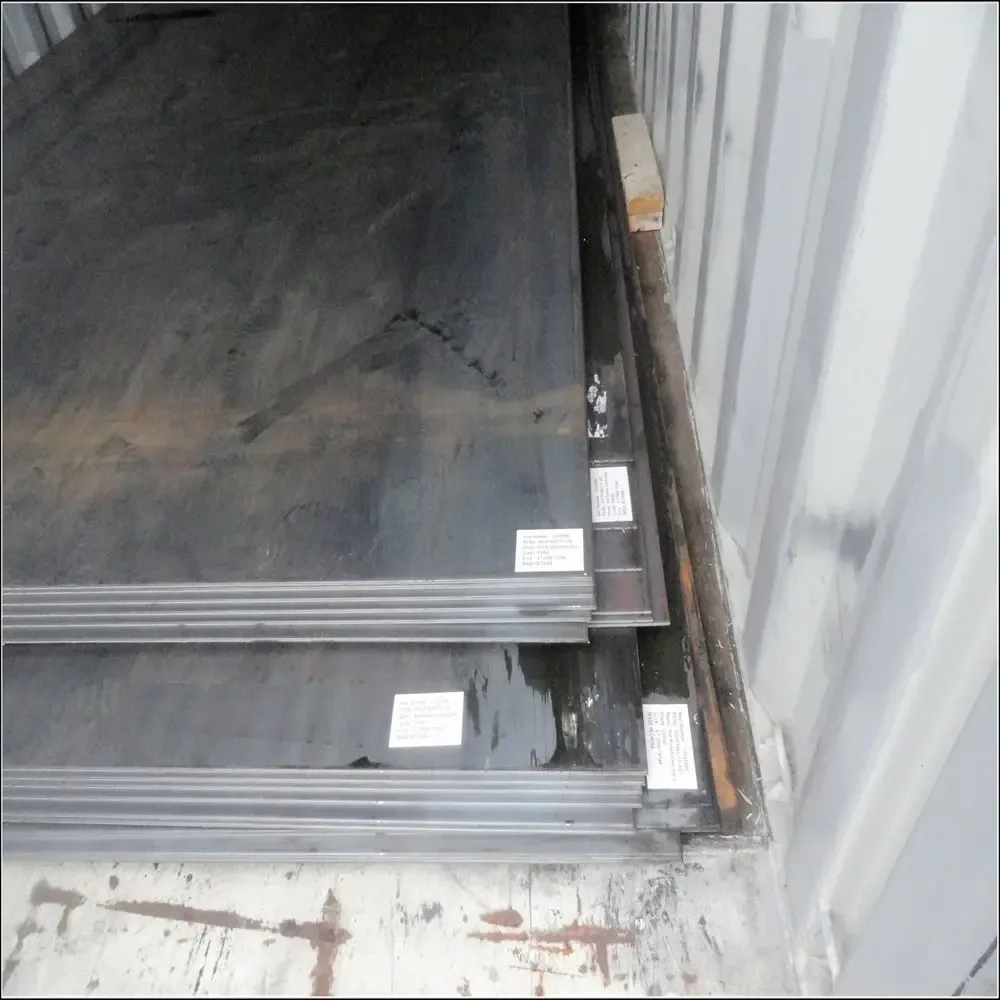
Factory-direct Q235B ST37 hot rolled ship steel plate — Each plate ships with original mill test certificates and SGS third-party inspection reports, eliminating quality uncertainty for marine and structural projects.
Technical Specifications
| Parameter | Value |
|---|---|
| Designation | Q235B / ST37 Hot Rolled Ship Steel Plate |
| Product Type | Steel Plate |
| Steel Grade | Q235B, ST37 |
| Standard | ASTM, JIS, DIN, BS, GB, AISI |
| Section Shape | Plate |
| Thickness | 3–200mm |
| Technique | Hot Rolled |
| Surface Treatment | Galvanized / Welding & Cutting Services Available |
| Application | Shipbuilding, Structural Fabrication, Pressure Vessels, Industrial Construction |
| Origin | Shandong, China |
Application Suitability
| Industry | Typical Applications |
|---|---|
| Shipbuilding | Hull plating, deck structures, bulkhead panels, marine superstructures |
| Structural Fabrication | Column base plates, gusset plates, bracket assemblies for steel frames |
| Pressure Vessels | Tank shells, vessel heads, flange plates for industrial storage systems |
| Industrial Construction | Platform grating supports, mezzanine flooring, equipment foundation plates |
Thickness Tolerance Decides Whether Your Ship Steel Plate Passes Third-Party Inspection
A Q235B ST37 hot rolled ship steel plate that reads within tolerance on the mill floor can still fail at the destination port when actual negative deviation exceeds project specifications.
I have watched an entire container of plates get rejected by a marine surveyor because the measured thickness fell below the allowable negative tolerance. The steel grade was correct, the chemistry was within range, but the physical dimension did not match what the mill certificate claimed. The buyer paid for the steel, paid for the ocean freight, and then paid again to ship replacement plates from China. [NEED_CITE: thickness tolerance requirements for hot rolled steel plates under GB/T 709 and EN 10029]
Global EPC contractors and shipbuilding procurement teams face this exact scenario when sourcing from suppliers who rely on theoretical weight calculations instead of actual measured dimensions. Specification gaps between the ordered thickness and delivered thickness create cascading costs — rework delays, structural recalculation, and customs documentation disputes.
How Q235B and ST37 Plates Match Marine and Structural Engineering Requirements
The Q235B ST37 hot rolled ship steel plate in 3–200mm thickness directly addresses the dimensional and material needs of shipbuilding and structural fabrication projects. Q235B conforms to GB standards commonly specified in Asian and Middle Eastern shipbuilding contracts, while ST37 meets DIN and EN requirements for European marine and industrial projects. The hot rolled process delivers a mill scale surface suitable for further coating or direct welding in dry interior environments, and the available galvanized surface treatment option extends corrosion resistance for plates exposed to marine splash zones or humid storage conditions. Our in-house physical and chemical laboratories test every heat before rolling, ensuring that the chemistry and mechanical behavior match the stated grade before the plate ever reaches the loading bay.
Engineering Compliance and Certification for Global Ship Steel Plate Projects
Ship steel plate procurement for international projects must satisfy both the structural design code and the importing country’s customs documentation requirements. Q235B plates ordered under GB standards require mill test certificates that clearly document chemical composition and mechanical behavior per the Chinese national standard, while ST37 plates destined for EU ports must carry CE marking documentation demonstrating conformity with EN material norms. [NEED_CITE: CE marking requirements for structural steel plates under EN 10025] Pressure vessel applications add another layer of compliance, as the plate must meet impact testing and ultrasonic examination requirements beyond basic tensile and yield specifications. Our production lines maintain full traceability from slab heat number through final inspection, and we coordinate SGS or BV third-party surveys at the mill before container loading to ensure the documentation package satisfies both the project engineer and the port authority.
Steel Grade Equivalence and Hot Rolling Process for Q235B and ST37
Q235B and ST37 represent equivalent yield strength categories across different standard systems — Q235B follows the Chinese GB designation where the “235” indicates the nominal yield point, while ST37 follows the German DIN system where “37” references the tensile strength class. Both grades serve as general-purpose structural and shipbuilding steels with good weldability and formability, making them suitable for hull plating, deck structures, and general fabrication where high-strength low-alloy grades are not specified. The hot rolling process heats the slab above recrystallization temperature and passes it through successive rolling stands to achieve the target thickness, producing a plate with a characteristic mill scale surface. For marine environments where corrosion resistance is critical, the galvanized surface treatment option applies a zinc coating that provides sacrificial protection, extending service life in splash zones and coastal industrial structures. The 3–200mm thickness range covers everything from light gauge deck plating to heavy structural base plates, and our production capability includes custom non-standard dimensions when project drawings call for sizes outside the standard rolling schedule.
Hidden Costs of Procuring Ship Steel Plate Without Verified Tolerance and Certification
Ordering a Q235B ST37 hot rolled ship steel plate based solely on the lowest unit price exposes the buyer to negative tolerance abuse, missing mill certificates, and customs rejection at the destination port.
When a supplier delivers plates with actual thickness below the allowable negative tolerance, the buyer pays for steel that does not exist. The project engineer must either accept reduced structural capacity or order replacement material, and both options carry costs that far exceed the initial price difference. Missing or incomplete mill test certificates cause customs holds that delay project timelines, and the absence of third-party inspection reports forces the buyer to arrange costly surveys at the destination. [NEED_CITE: consequences of non-conforming steel plate dimensions on structural integrity and project acceptance]
Why Global Buyers Source Q235B ST37 Hot Rolled Ship Steel Plate From Xin Jiyuan
We operate three dedicated production lines with in-house physical and chemical laboratories that test every heat before the plate enters the rolling schedule, providing real-time quality control rather than post-production sampling. Our facility holds ISO 9001:2015 certification, Lloyd’s Register EU CE marking, Singapore FPC approval, and verification from both SGS and BV, ensuring that the documentation package satisfies port authorities and classification societies across 50+ export markets. We maintain over 2,800 specifications in stock and produce custom non-standard dimensions to order, eliminating the specification gaps that force buyers to source from multiple suppliers. Our professional loading team optimizes container weight distribution for heavy plate shipments, and we provide door-to-door logistics coordination including FOB, CIF, and DDP terms with real-time tracking. Every plate ships with original mill test certificates, and we arrange third-party inspection at the mill before loading to confirm thickness, surface quality, and dimensional accuracy against the purchase order.
Documentation & Compliance
- Mill test certificate documenting Q235B chemical composition and ST37 mechanical properties per GB/T 709 and DIN EN 10025
- CE certificate confirming conformity with EN 10025 structural steel plate requirements for EU port customs clearance
- ISO 9001:2015 quality management system certificate covering hot rolled plate production and inspection processes
- SGS or BV third-party inspection report verifying actual thickness measurements and surface condition before container loading
- Full material traceability by heat number from slab to finished plate, documented on each mill test certificate
- Complete customs documentation package including packing list, bill of lading, and certificate of origin for destination port clearance
Packaging, Loading & Delivery
- Hot rolled Q235B and ST37 plates bundled with steel strips and edge protectors to prevent surface damage during ocean transit
- Galvanized plates packed with moisture-resistant interleaving and plastic wrapping to preserve zinc coating integrity during container shipping
- Container loading optimized for 3–200mm thickness range with weight distribution plans that maximize payload while maintaining port handling safety
- Custom cutting to project-specified lengths available before shipment, reducing on-site processing waste and labor costs
- Each plate marked with heat number, steel grade, and thickness for immediate identification at the destination yard
- FOB, CIF, and DDP shipping terms available with professional coordination to 50+ countries including EU, North America, and Southeast Asia ports
Start Your Q235B ST37 Hot Rolled Ship Steel Plate Inquiry
Submit your plate specifications including thickness, width, length, quantity, steel grade preference, and destination port to receive a detailed quotation with mill test certificate samples and third-party inspection options. Our engineering team responds within 12 hours with pricing, production lead time, and documentation confirmation tailored to your project’s classification society and customs requirements.
Request Q235B ST37 Hot Rolled Ship Steel Plate Quotation
Send your specifications via email at admin@sdxjysteel.com or contact us at +86 188 5315 7756 (WhatsApp/WeChat) to receive pricing, mill test certificate samples, and third-party inspection confirmation within 12 hours.
Frequently Asked Questions
Q: What is the difference between Q235B and ST37 for ship steel plate applications?
A: Q235B follows Chinese GB standards and is commonly specified in Asian and Middle Eastern shipbuilding contracts, while ST37 follows German DIN and European EN standards for marine and structural projects. Both grades offer equivalent general-purpose structural performance with good weldability, and we provide mill test certificates documenting compliance with the specific standard your project requires.
Q: Can you provide third-party inspection for Q235B ST37 hot rolled ship steel plate before shipment?
A: Yes, we arrange SGS or BV third-party inspection at our mill before container loading to verify actual thickness measurements, surface condition, and dimensional accuracy against your purchase order. The inspection report is included in the documentation package shipped with the material.
Q: What thickness range is available for Q235B ST37 hot rolled ship steel plate?
A: We produce hot rolled plates in thickness from 3mm to 200mm, covering light gauge deck plating through heavy structural base plates. Custom non-standard dimensions are available when project drawings specify sizes outside standard rolling schedules.
Q: Do you offer galvanized surface treatment for ship steel plate?
A: Yes, galvanized surface treatment is available for Q235B and ST37 plates to provide corrosion resistance in marine splash zones and humid coastal environments. The zinc coating is applied after hot rolling and the plates are packed with moisture-resistant protection for ocean transit.
Q: What documentation is provided for customs clearance and project compliance?
A: Each shipment includes original mill test certificates documenting chemical composition and mechanical properties, CE certificates for EU destinations, ISO 9001:2015 quality certificates, third-party inspection reports when requested, and complete customs documentation including packing list, bill of lading, and certificate of origin.