

Description
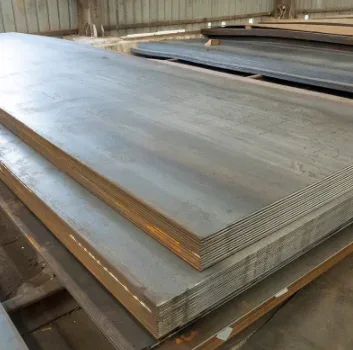
Factory-direct Q235 S275JR carbon steel plate supplier — hot rolled plates from 0.35mm to 200mm thickness, produced on dedicated lines with in-house physical and chemical laboratory testing before every shipment.
Technical Specifications
| Parameter | Value |
|---|---|
| Designation | Q235 / S275JR Structural Carbon Steel Plate |
| Product Type | Steel Plate |
| Steel Grade | Q235, Q345, S235JR, S275JR, S355JR, St37-2, A36, SS400, Q195 |
| Standard | AISI, ASTM, BS, DIN, GB, JIS |
| Section Shape | Flat plate |
| Size Range | Thickness 0.35–200mm, Width 1000–2500mm, Length 2000–12000mm |
| Technique | Hot Rolled |
| Surface Treatment | Black |
| Tolerance | ±1% |
| Processing Service | Bending, Welding, Decoiling, Cutting, Punching |
| Application | Construction, Shipbuilding, Petrochemical, Machinery Manufacturing, Transportation, Structural Fabrication |
| MOQ | 10 Tons |
| Origin | Shandong, China |
Application Suitability
| Industry | Typical Applications |
|---|---|
| EPC Contractors | Structural base plates, column base connections, industrial platform flooring |
| Construction Companies | High-rise building frames, bridge gusset plates, foundation anchor plates |
| Shipbuilding | Hull structural plates, deck stiffeners, bulkhead panels |
| Machinery Manufacturing | Machine base plates, crane boom sections, conveyor frame gussets |
| Petrochemical | Pressure vessel support rings, pipe rack structural plates, tank foundation plates |
| Transportation | Railway wagon underframes, trailer chassis cross members |
Where Thickness Tolerance Decides Whether Your Entire Shipment Clears Customs
A 0.6mm negative tolerance deviation on S275JR plates is enough to fail third-party inspection at destination port.
Global steel buyers consistently report that inconsistent material properties and unclear grade traceability create the highest project risk. When a container of hot rolled plates arrives at Jebel Ali or Lagos with thickness readings outside the ±1% tolerance band, the entire lot gets held — regardless of whether the steel grade itself is correct. Missing or incomplete mill test certificates compound the problem, turning a routine delivery into weeks of customs limbo. As a Q235 S275JR carbon steel plate supplier, we run every batch through our in-house physical and chemical laboratory before release, issuing dual certificates that match heat numbers to dimensional inspection reports. [NEED_CITE: EN 10025 hot rolled structural steel product tolerance requirements]
Matching Plate Thickness and Grade to Structural Load Paths
Hot rolled carbon steel plates in Q235 through S355JR grades serve fundamentally different structural roles depending on thickness. Thin plates below 6mm typically function as gusset connections, bracing clips, and non-load-bearing cladding supports, where formability and weldability matter more than yield capacity. Mid-range plates from 6mm to 20mm carry primary frame loads in building columns, bridge connections, and machinery bases — the zone where S275JR and Q345 dominate global procurement. Heavy plates above 20mm handle concentrated point loads in crane runways, pressure vessel supports, and offshore structure nodes. Our Q235 S275JR carbon steel plate supplier capability covers this full range from 0.35mm to 200mm on a single order, eliminating the need to coordinate multiple mills for a single EPC project.
Engineering Compliance and Certification Requirements
Structural steel plate procurement for international projects must satisfy both the governing design code and the destination country’s import regulations. European projects specify EN 10025 grades like S235JR, S275JR, and S355JR, requiring CE marking under EN 10210/10219 and mill test certificates conforming to EN 10204 Type 3.1 or 3.2. North American tenders call for ASTM A36 or equivalent, where documentation must reference ASTM testing methods. The black surface finish on hot rolled plates is standard for structural applications where subsequent painting, galvanizing, or fireproofing will be applied on site. For shipbuilding applications, classification society approval becomes an additional layer — plates must carry heat numbers traceable to the original slab casting. [NEED_CITE: EN 10204 inspection document types for steel products]
Steel Grade Selection Across International Standards
The Q-series, S-series, and ASTM grade systems represent three parallel specification frameworks that global buyers must navigate. Chinese Q235 and Q345 follow GB/T 700 and GB/T 1591, with Q designating yield strength in MPa. European S235JR, S275JR, and S355JR follow EN 10025-2, where the JR suffix indicates 27J Charpy impact energy at room temperature — critical for welded structures in moderate climate zones. ASTM A36 serves the North American market with a minimum yield of 250 MPa. While these grades share similar carbon and manganese ranges, they are not automatically interchangeable without engineering approval. Hot rolling produces a mill scale surface that provides baseline corrosion resistance during storage and transit but requires removal or coating for long-term exposure. The ±1% thickness tolerance on our plates reflects standard hot rolled mill practice — tighter tolerances require cold rolling or precision leveling at additional cost. Negative tolerance within this band means actual weight may fall slightly below theoretical weight calculations, a factor procurement teams must account for in cost-per-ton comparisons. [NEED_CITE: steel grade equivalence between GB EN and ASTM standards]
Hidden Costs of Procuring Without Verified Mill Documentation
Ordering structural plates without confirmed mill test certificates creates a cascade of downstream failures. Material that does not match the specified grade on paper will fail ultrasonic testing or tensile coupon verification at the fabrication shop — by which point cutting and welding may already be underway. Plates with uncontrolled negative tolerance beyond the ±1% band reduce load-bearing cross-section, potentially triggering structural engineer rejection even if the chemistry is correct. Certification gaps cause customs holds that incur demurrage charges exceeding the original material cost. A Q235 S275JR carbon steel plate supplier that provides verified documentation with every shipment eliminates these risks before they reach the job site. [NEED_CITE: consequences of non-compliant steel documentation in international construction projects]
Why Engineering Procurement Teams Source From Xin Jiyuan
We operate three dedicated production lines for flat rolled products with in-house physical and chemical laboratories that test every heat before plate release — no batch ships without verified chemistry and mechanical property data. Our catalog covers over 2,800 specifications across square and rectangular tubes, round pipes, plates, coils, and section steel, meaning a single purchase order for a mixed structural package sources from one mill rather than five different vendors. We hold CE certification under EN 10210/10219 for European market compliance, ISO 9001:2015 for quality management, and accept third-party inspection through SGS and BV at buyer’s request. Custom non-standard dimensions and cut-to-length processing are available for orders that fall outside standard mill rolling schedules. Professional loading plans optimize container weight distribution for heavy plate shipments, and we handle FOB, CIF, and DDP terms to 50+ countries with real-time tracking. Our technical team participated in drafting China’s cold-formed steel industry standards in 2018, and we hold 41 invention patents covering proprietary production technologies.
Documentation & Compliance
- Mill test certificate documenting Q235, S275JR, or S355JR chemical composition and mechanical properties per EN 10025-2 or GB/T 700, with heat number traceability
- CE certificate under EN 10210/10219 for structural steel plate exports to European Union member states
- ISO 9001:2015 quality management certificate covering hot rolled plate production processes
- SGS or BV third-party inspection report available upon request for dimensional verification and surface quality assessment
- Material traceability documentation linking each plate to original slab heat number, rolling schedule, and test coupon results
- Customs clearance package including packing list, bill of lading, and certificate of origin formatted for destination port requirements
Packaging, Loading & Delivery
- Hot rolled black finish plates bundled with steel strips and edge protectors to prevent mill scale damage and edge deformation during ocean transit
- Surface protection through anti-rust oil coating for plates destined for high-humidity climates or extended storage before fabrication
- Container loading optimization for plates in the 2000–6000mm length range, maximizing 20ft and 40ft container payload within road weight limits at destination
- Cut-to-length processing available for plates ordered in the 6000–12000mm range, reducing on-site cutting waste and handling time
- Heat number and steel grade markings stenciled on each plate bundle for site identification and inspection traceability
- FOB, CIF, and DDP shipping terms available with professional loading plans for heavy plate cargo to ports across the Middle East, Southeast Asia, Africa, and South America
Requesting a Quotation for Your Structural Plate Requirement
Submit your plate specifications including steel grade, thickness, width, length, quantity, and destination port to receive a detailed quotation with unit pricing, production lead time, and applicable certification documentation. Our team responds within 12 hours with mill test certificate samples and loading plan options for your review. Non-standard dimensions and custom cutting requirements are quoted separately with confirmed processing lead times.
Get Your Q235 S275JR Carbon Steel Plate Quote With Mill Test Certificate
Send your specifications and destination details to receive pricing, certification documentation, and loading plan confirmation.
Company: Shandong Xin Jiyuan Special Steel Tube Co., Ltd
Website: www.sdxjysteel.com
Tel: +86 531 8573 6315
Mobile/WhatsApp/WeChat: +86 188 5315 7756
Email: admin@sdxjysteel.com
Address: No.11889, Jingshi West Road, Lulian Group, Jinan City, Shandong Province, China
Frequently Asked Questions
Q: What is the difference between Q235, S275JR, and A36 steel grades for structural plate applications?
A: Q235 follows Chinese GB/T 700 standard, S275JR follows European EN 10025-2 with 27J Charpy impact energy at room temperature, and A36 follows ASTM standards for the North American market. All three are carbon structural steels with similar weldability, but they are not automatically interchangeable without engineering approval. Our Q235 S275JR carbon steel plate supplier capability covers all three grade systems with full mill test documentation for each.
Q: How do you verify material quality and ensure thickness tolerance compliance?
A: Every production batch passes through our in-house physical and chemical laboratory for chemistry analysis, tensile testing, and dimensional inspection before release. Mill test certificates document results per heat number. Third-party inspection through SGS or BV is available for buyers who require independent verification. Thickness tolerance is maintained at ±1% per hot rolled standard practice.
Q: Can you provide custom cut-to-length plates and what is the minimum order quantity?
A: We offer cutting, bending, welding, decoiling, and punching processing services for hot rolled plates. Standard minimum order quantity is 10 tons. Custom non-standard dimensions outside the 1000–2500mm width and 2000–12000mm length range are quoted based on specific requirements with confirmed processing lead times.
Q: What certification documents are provided for European market customs clearance?
A: Shipments to EU markets include CE certificate under EN 10210/10219, mill test certificates conforming to EN 10204 Type 3.1, ISO 9001:2015 quality certificate, and complete customs documentation including packing list, bill of lading, and certificate of origin. Third-party inspection reports from SGS or BV are available upon request.
Q: How does negative tolerance affect theoretical weight and project costing?
A: Hot rolled plates are produced within ±1% thickness tolerance. Negative tolerance within this band means actual weight may fall slightly below theoretical weight calculations based on nominal dimensions. Procurement teams should account for this in cost-per-ton comparisons and structural weight calculations. Our mill test certificates document actual measured dimensions for each batch.