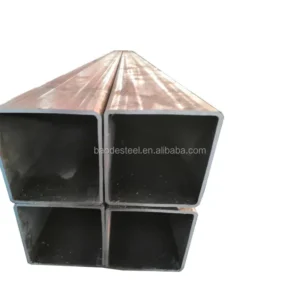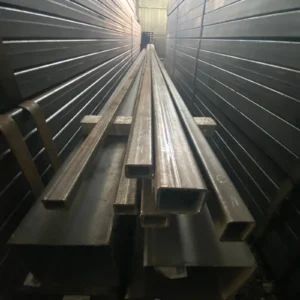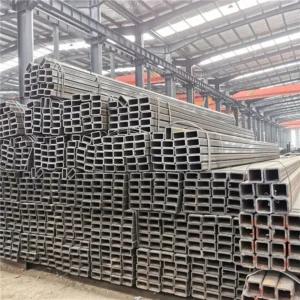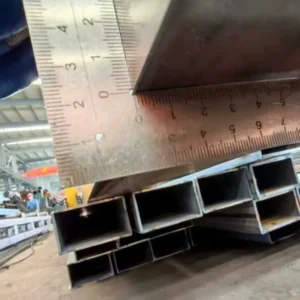


Description
Factory-direct laser cut steel pipe — every tube is cut in-house with PMI-tested material traceability before it reaches your site.
Technical Specifications
| Parameter | Value |
|---|---|
| Designation | Laser Cut Steel Pipe |
| Product Type | Machined Steel Product (Laser Cutting for Pipes) |
| Steel Grade | Q195–Q690, ASTM A500, EN 10219/10210, JIS G3466, AS1163 |
| Standard | EN 10219, EN 10210, ASTM A500, JIS G3466, AS1163 |
| Technique | Laser Cutting |
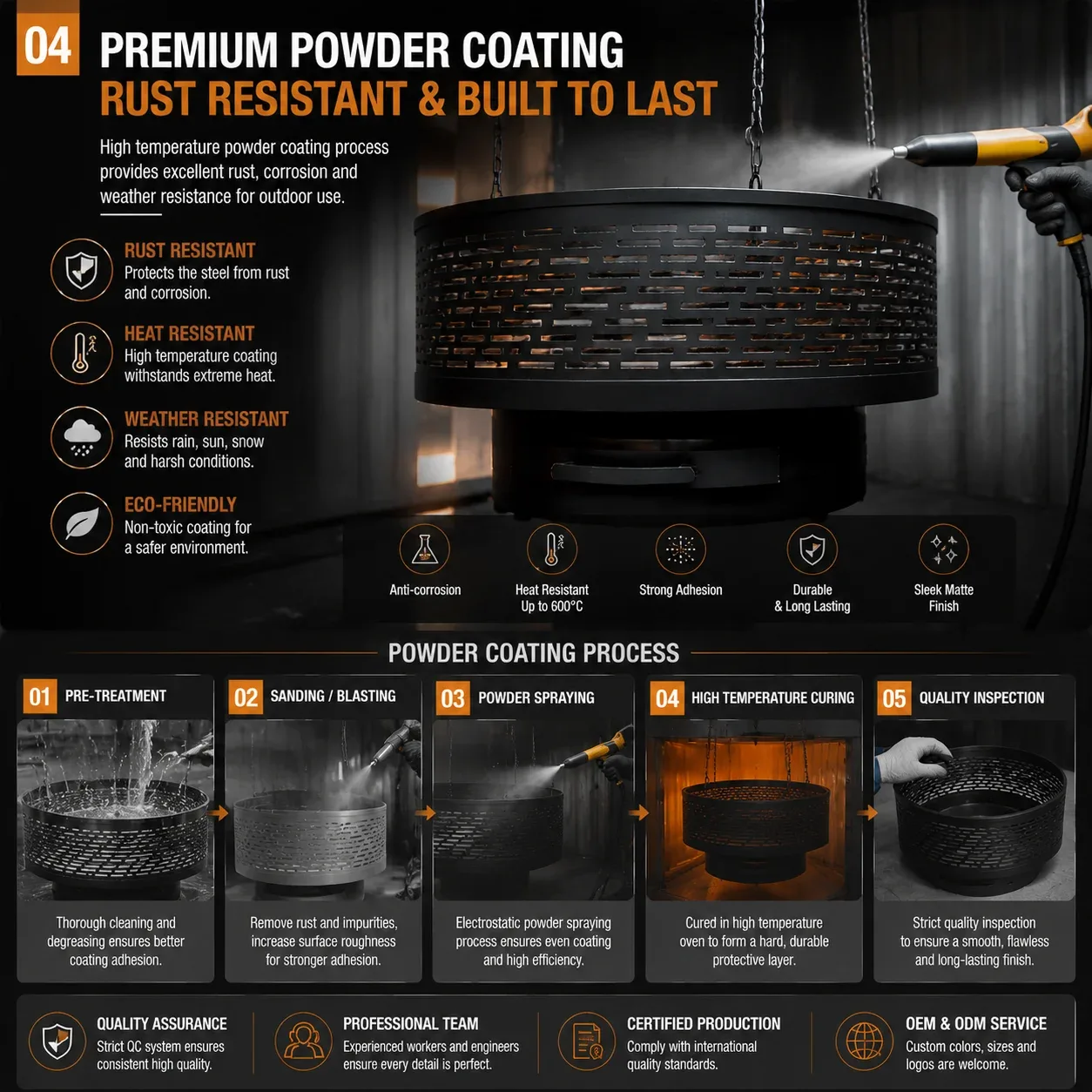
| Surface Treatment | Hot Rolled / Galvanized / Painted / Oiled |
| Tolerance | High-precision laser cutting tolerance |
| Application | Steel structures / Construction frames / Machinery / Conveyor systems / Automation systems / Industrial fabrication |
| Origin | Shandong, China |
Application Suitability
| Industry | Typical Applications |
|---|---|
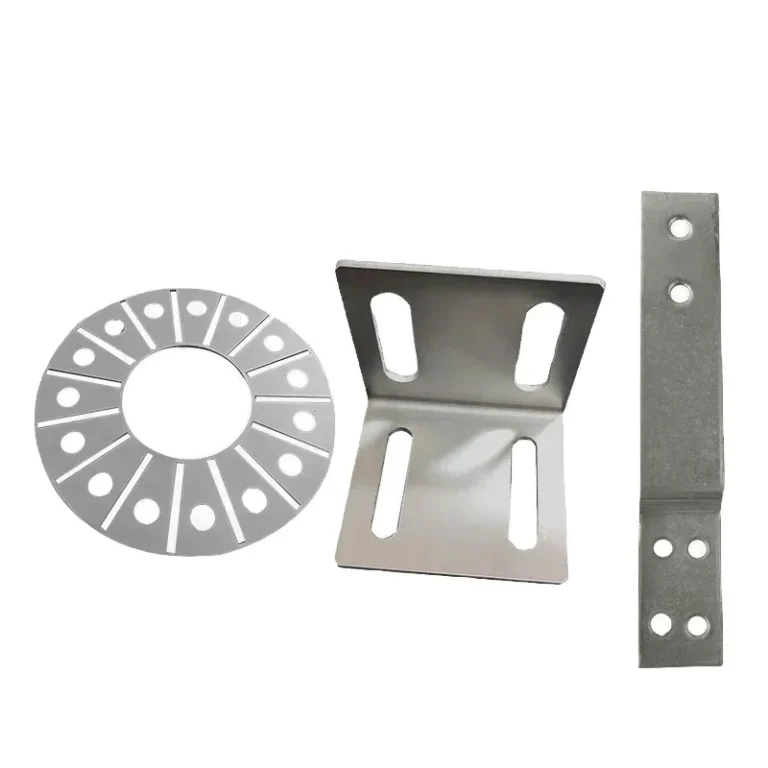
| EPC Contractors | Structural node plates and connection brackets for industrial plants and infrastructure projects |
| Machinery Manufacturers | Precision-cut tube sections for conveyor rollers and automation line frames |
| Construction Companies | Custom pipe profiles for steel frame buildings, canopy structures, and bridge railings |
| System Integrators | Laser-cut pipe joints and adapters for material handling and sorting systems |
What Buried Tolerance Costs on a Conveyor Frame Order
A fraction of a millimeter in laser cut steel pipe determines whether your conveyor frame bolts together on-site or goes back for rework.
When procurement teams source cut pipes from multiple vendors — tubes from one, plates from another, fabrication from a third — tolerance stacks compound. A pipe cut to ±1mm might seem acceptable alone, but when it meets a bracket cut elsewhere at a different datum, the misalignment forces field welding, grinding, and schedule delays. We have seen entire automation frames rejected at final assembly because cumulative cutting errors exceeded the design envelope. The root cause is never the design; it is fragmented sourcing with no single point of accountability for dimensional accuracy. [NEED_CITE: tolerance stacking in fabricated steel assemblies]
Matching Laser-Cut Profiles to Structural and Mechanical Applications
Laser cut steel pipe serves applications where conventional saw-cutting or torch-cutting cannot achieve the required edge quality or geometric complexity. For conveyor systems and automation frames, the clean, oxide-free kerf produced by laser cutting means components slide into jigs without secondary deburring and are immediately ready for robotic welding. For structural steel nodes in EPC projects, complex intersecting profiles — saddle cuts, miters, and fish-mouth joints — are produced directly from 3D models, eliminating template fabrication. Our in-house cutting floor handles the full range of Q195–Q690 and ASTM A500 grades across wall thicknesses up to 40mm, so a single laser cut steel pipe order can cover both light-gauge conveyor tubes and heavy structural hollow sections without splitting the purchase across suppliers.
Engineering Compliance and Certification Requirements
Structural applications governed by EN 1993 or AISC demand documented material traceability back to the heat number. Every laser cut steel pipe we produce carries its original mill test certificate, and the cutting process does not alter the certified chemical composition or mechanical properties of the base material. For EU projects, CE certification under EN 10210 and EN 10219 confirms that the parent tube meets European hollow section standards before any machining occurs. For North American specifiers, ASTM A500 Grade B and C compliance is verified through independent third-party inspection by SGS or BV. Wall thickness selection directly affects load-bearing capacity — and because our laser cutting tolerance holds tight across the full 40mm range, engineers can specify thinner walls with confidence that the cut profile will not compromise the design assumption. [NEED_CITE: EN 10219 cold-formed structural hollow section dimensional tolerances]
Steel Grade Selection and Laser Cutting Process
The Q-series grades (Q195 through Q690) follow the Chinese yield-strength naming convention, where the number indicates minimum yield strength in MPa. Q195 and Q235 suit light structural and non-load-bearing frames; Q355 and above serve primary structural members. These grades map closely to the EN S-series — Q235 corresponds roughly to S235JR, Q355 to S355JR — though equivalence should always be confirmed against the specific project specification rather than assumed. ASTM A500 Grades B and C cover the North American market with similar yield tiers. Laser cutting handles all of these grades cleanly because the process is non-contact: there is no tool wear, no mechanical deformation of the tube wall, and no heat-affected zone large enough to alter material properties at the cut edge. Surface treatment choice — hot rolled for indoor structural work, galvanized for outdoor or corrosive environments, painted or oiled for temporary protection during transit — is applied either before or after cutting depending on the coating type and the project’s corrosion exposure classification.
The Hidden Cost of Unverified Material in Cut Pipe Orders
Ordering laser cut steel pipe without verified material traceability creates risks that surface long after the invoice is paid. A pipe that tests as Q235 in the mill but ships as a lower-grade substitute will pass visual inspection and dimensional checks — until the structure is loaded. Welds may crack under stress because the actual carbon equivalent differs from what the weld procedure specification assumed. Customs authorities in the EU and Middle East increasingly reject shipments lacking proper EN or ASTM certification documentation, regardless of the physical quality of the steel. And when material substitution is discovered during final inspection, the cost is not just the replacement pipe — it is demolition of already-assembled sections, remobilization of crews, and project delay penalties. [NEED_CITE: material substitution risks in structural steel procurement]
Why Procurement Teams Consolidate Laser Cutting with Tube Supply
Buying laser cut steel pipe from a manufacturer that also produces the parent tubes eliminates the most common failure point in fabricated steel procurement: the gap between the tube mill and the cutting shop. Our facility operates three dedicated production lines covering 2,800+ specifications, so the tube that enters the laser cutting cell is the same tube we manufactured, tested, and certified — not a commercial grade purchased on the spot market. Our in-house physical and chemical laboratory performs real-time quality control at every stage, and every laser cut steel pipe order ships with a mill test certificate tied to the original heat number. For projects requiring 41 patented technologies worth of expertise — including proprietary sharp-corner rectangular tube geometry — the cutting floor already knows how each profile behaves under the laser, because we designed and manufactured the tube in the first place. We hold CE certification under EN 10210/10219, ISO 9001:2015, Singapore FPC, and verification from both SGS and BV, covering every major import market. And because we export to 50+ countries with a professional logistics team, the same team that cuts your pipes also plans the container loading, optimizes the weight distribution, and coordinates door-to-door delivery.
Documentation & Compliance
- Mill test certificate documenting Q195–Q690 chemical composition and mechanical properties per the applicable EN 10219 or ASTM A500 standard, tied to the original heat number
- CE certificate confirming compliance with EN 10210 and EN 10219 for European structural hollow section projects
- ISO 9001:2015 quality management system certificate covering the full laser cutting and tube manufacturing process
- SGS or BV third-party inspection report available for projects requiring independent verification of material grade and cutting tolerance
- Full material traceability from laser cut steel pipe back to the parent tube heat number and mill test record
- Customs documentation package including packing list, bill of lading, and certificate of origin for smooth clearance in EU, North America, Middle East, and Southeast Asian ports
Packaging, Loading & Delivery
- Laser cut steel pipe bundled with steel strips and edge protectors to prevent surface damage to galvanized or painted coatings during ocean transit
- Surface protection matched to treatment type: oiled tubes wrapped in waterproof paper, galvanized sections separated by rubber spacers to preserve the zinc layer
- Container loading plans optimized for mixed-diameter pipe bundles, maximizing weight utilization within the 40mm wall thickness range across 20ft and 40ft containers
- Custom-length cutting available to project specifications, reducing on-site waste and secondary cutting for conveyor and structural frame applications
- Heat number and steel grade stenciled on each bundle for immediate site identification and traceability verification
- FOB, CIF, and DDP shipping options with real-time tracking, coordinated by our export team experienced in heavy cargo logistics to 50+ countries
Getting Your Laser Cut Steel Pipe Quote Moving
Submit your cutting drawings or specifications — including steel grade, wall thickness, profile geometry, quantity, and destination port — and our team responds within 12 hours with pricing, lead time, and the applicable certification package. For non-standard profiles or complex intersecting cuts, we provide a detailed fabrication review before production begins, confirming that the laser cut steel pipe will meet your dimensional and structural requirements.
Start Your Laser Cut Steel Pipe Order
Send your specifications, steel grade, and destination to receive a detailed quotation with mill test certificate and certification documentation.
Shandong Xin Jiyuan Special Steel Tube Co., Ltd
Tel: +86 531 8573 6315
Mobile/WhatsApp/WeChat: +86 188 5315 7756
Email: admin@sdxjysteel.com
Website: www.sdxjysteel.com
Frequently Asked Questions
Q: What steel grades are compatible with laser cutting services?
A: We laser cut all major structural and mechanical steel grades including Q195–Q690, ASTM A500 Grades B and C, EN 10219/10210 S-series grades, and JIS G3466 specifications. The non-contact laser process handles the full range from mild steel to high-strength low-alloy grades without altering base material properties.
Q: Can you provide custom non-standard shapes and sizes?
A: Yes. Our laser cutting floor produces complex profiles — saddle cuts, miters, fish-mouth joints, and multi-axis intersections — directly from 3D CAD models. We support wall thicknesses up to 40mm across 2,800+ tube specifications, including non-standard dimensions manufactured in-house.
Q: What certifications are available for EU and international markets?
A: We provide CE certification under EN 10210 and EN 10219 for European projects, ISO 9001:2015 quality certification, Singapore FPC, and third-party inspection reports from SGS and BV. Mill test certificates accompany every shipment with full heat number traceability.
Q: How do you ensure quality and material traceability?
A: Every laser cut steel pipe is traced back to the parent tube’s original heat number and mill test certificate. Our in-house physical and chemical laboratory performs incoming, in-process, and final inspections. Third-party inspection by SGS or BV is available for projects requiring independent verification.
Q: What is the typical lead time for custom laser-cut pipe orders?
A: Lead time depends on order complexity, steel grade availability, and quantity. Standard cuts from stocked tube specifications ship faster; complex custom profiles from non-standard sizes follow typical production lead times confirmed at the quotation stage.