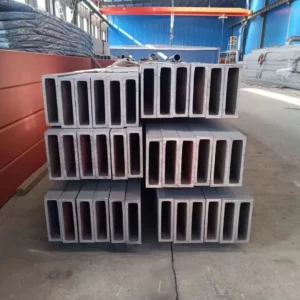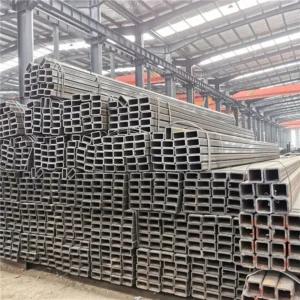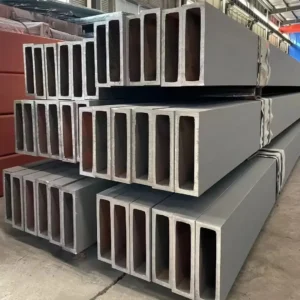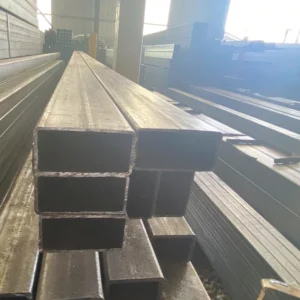
Description
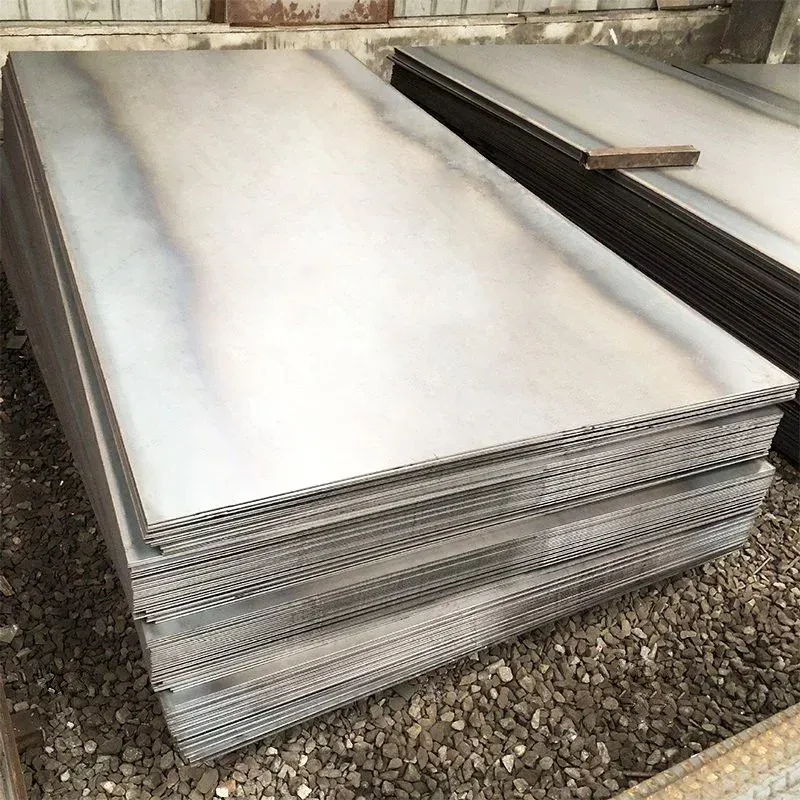
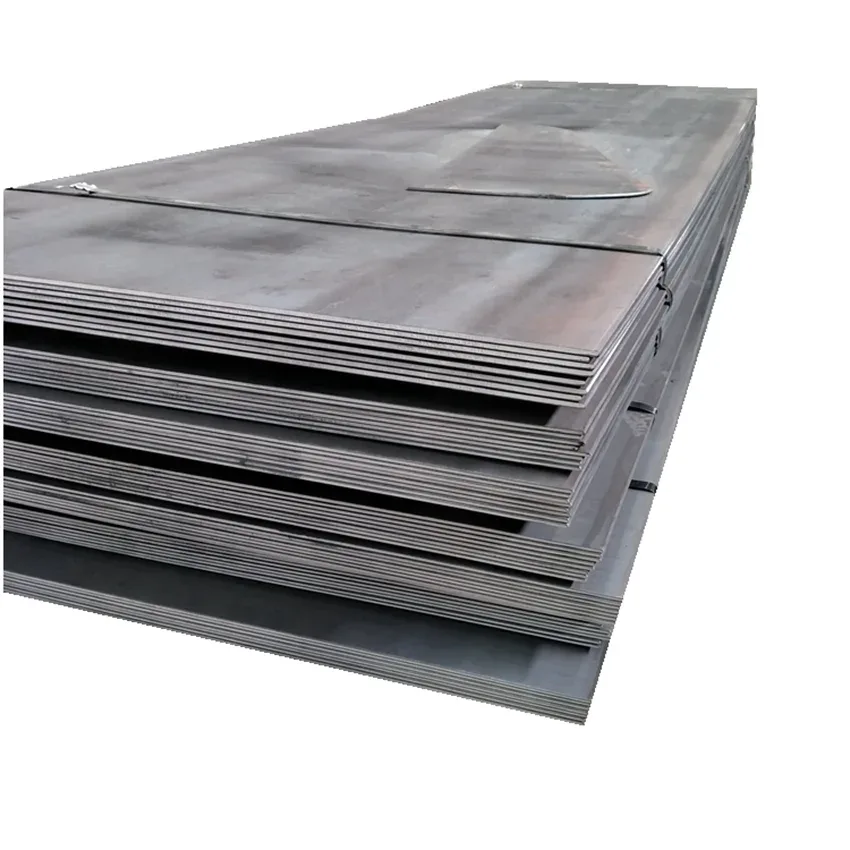
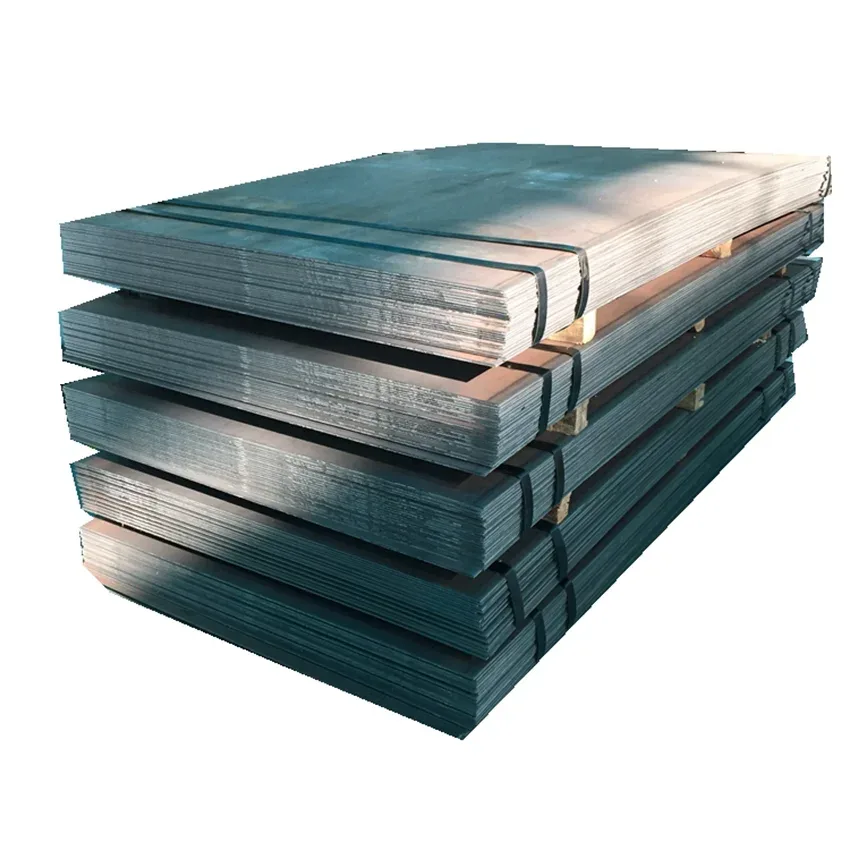
Factory-direct hot rolled plates — ASTM A36, Q235, and SS400 grades processed and shipped from our own mill with full mill test certificates and third-party inspection support.
Technical Specifications
| Parameter | Value |
|---|---|
| Designation | ASTM A36 / Q235 / SS400 Hot Rolled Steel Plate |
| Product Type | Steel Plate |
| Steel Grade | ASTM A36, Q235, SS400 |
| Standard | ASTM, JIS, EN, GB |
| Section Shape | Flat plate |
| Size Range | Width 1000mm–3000mm × Length 2000mm–12000mm |
| Thickness | 1.5mm–200mm |
| Technique | Hot Rolled |
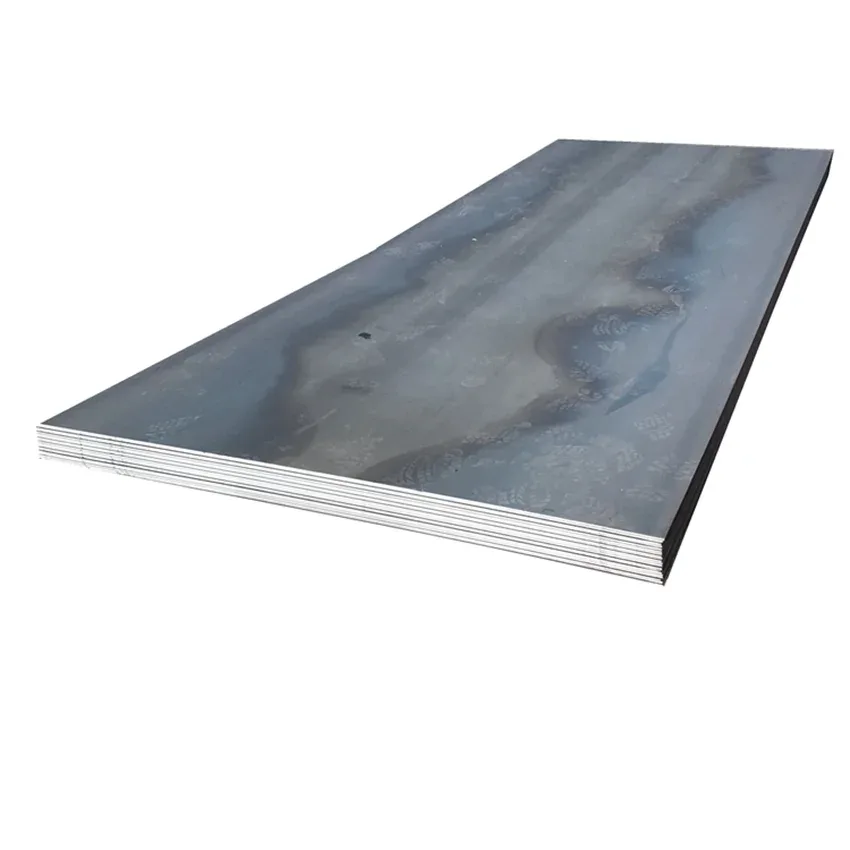
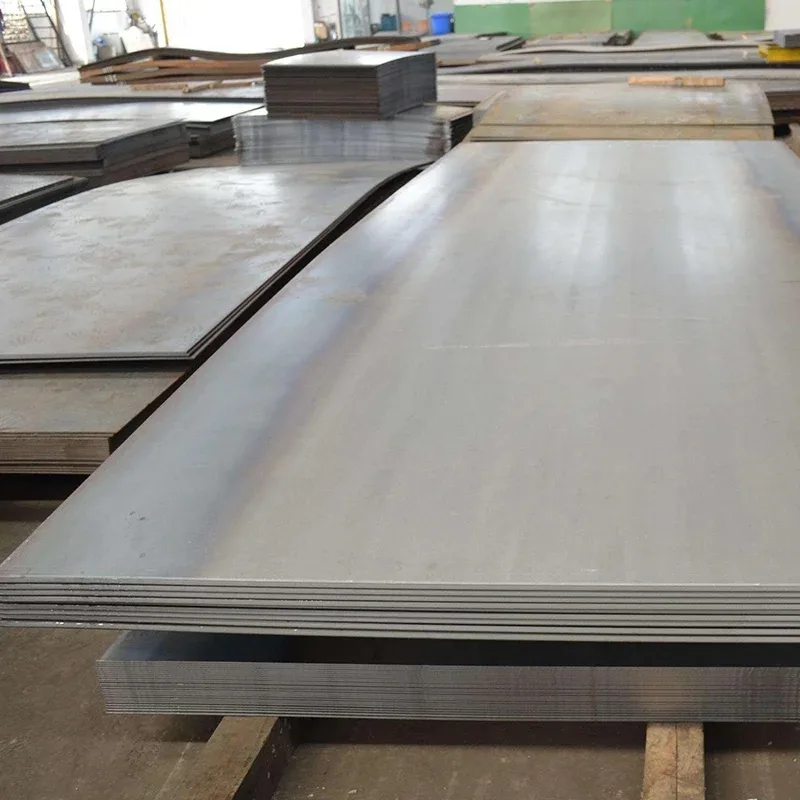
| Surface Treatment | Black / Galvanized / Painted / Customized Coating |
| Tolerance | ±1% |
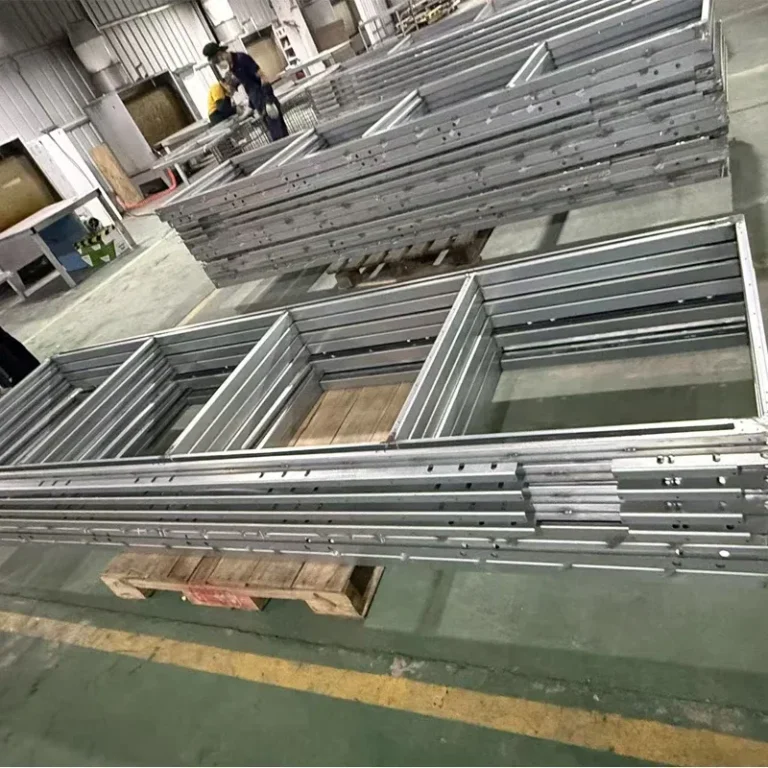
| Processing Service | Bending, Cutting, Decoiling, Punching, Welding |
| Special Use | High-Strength Steel Plate |
| Application | Construction / Machinery / Structural Engineering / Industrial Manufacturing / Fabrication / Cutting and Bending Projects |
| Origin | Shandong, China |
Application Suitability
| Industry | Typical Applications |
|---|---|
| EPC Contractors & Construction | Structural base plates, column base connections, bridge gusset plates, building frame splice plates |
| Machinery Manufacturers | Equipment mounting plates, crane boom side plates, conveyor frame gussets, press bed plates |
| Industrial Distributors | Stock and resell hot rolled plates for regional fabrication shops and welding workshops |
| Structural Engineering | Welded built-up beam flanges, stiffener plates, bracket plates for steel structure assemblies |
What Fragmented Plate Procurement Costs on a Fabrication Project
Buying plates from one supplier and sending them out for cutting and bending elsewhere adds coordination delays, tolerance stacking errors, and double freight charges.
When project teams source raw plates from a trader, then subcontract laser cutting at a local workshop, and finally outsource bending to a third party, every handoff introduces a new tolerance chain. A 1.5mm drift at the cutting stage compounds at the bending die, and by the time pieces reach the assembly jig, bolt holes no longer align. We have seen entire batches of 12mm Q235B plates rejected at the welding station because the cut edges were not square enough for full-penetration groove welds — and nobody in the supply chain owned that defect.
An ASTM A36 Q235 SS400 hot rolled steel plate supplier that handles cutting, bending, and punching in-house collapses that chain into a single quality loop. The same laboratory that verified the base plate chemistry checks the cut-edge squareness and bend-angle accuracy before the pieces ever leave the factory gate. [NEED_CITE: tolerance stacking in multi-vendor steel fabrication supply chains]
Matching Plate Thickness and Grade to Structural Load Paths
Hot rolled plates in ASTM A36, Q235, and SS400 serve as the primary load-transfer interface in bolted and welded steel structures. For column base connections, engineers typically specify 20mm–40mm thickness to distribute concentrated loads into the concrete foundation without exceeding bearing stress limits. Thinner plates in the 6mm–12mm range work well as gussets and stiffeners where the load path is secondary and weight matters. The ASTM A36 Q235 SS400 hot rolled steel plate supplier must hold tight thickness tolerance — a ±1% guarantee means a 20mm plate never drops below 19.8mm, which keeps bearing calculations valid and avoids surprise re-engineering at the site.
Engineering Compliance and Surface Protection Choices
Structural plates destined for EU projects must carry CE marking under EN 10210 or EN 10219 frameworks, while North American specifiers reference ASTM A36 directly. Hot rolled black finish suits indoor structural frames where painting or fireproofing will follow on-site. Galvanized plates go directly into outdoor conveyor supports and solar mounting structures where corrosion resistance matters more than weld appearance. Painted or custom-coated plates ship ready for coastal or chemical-plant environments. Each surface choice changes the packing protocol — galvanized plates need non-metallic separators to prevent zinc scratching during ocean transit. [NEED_CITE: surface preparation requirements for hot rolled structural steel plates]
Steel Grade Equivalence and Process Implications
ASTM A36, Q235, and SS400 occupy roughly the same yield strength tier across American, Chinese, and Japanese standard systems. ASTM A36 remains the default for general structural work in North America and Latin America. Q235 dominates domestic Chinese projects and Belt & Road infrastructure contracts where GB-specified material is required. SS400 serves Japanese-spec machinery and Southeast Asian fabrication shops. All three grades weld readily with common SMAW, GMAW, and FCAW processes. Hot rolling produces a mill scale surface that must be removed by shot blasting before any coating adhesion test. The ±1% thickness tolerance on these grades ensures that theoretical weight calculations match actual delivered weight closely enough to avoid budget overruns on tonnage-based contracts.
Hidden Costs of Unverified Plate Procurement
Plates that arrive without mill test certificates force project managers into a choice: pay for independent chemical analysis at the destination port, or risk welding material of unknown composition. Unverified chemistry means unknown carbon equivalent — and unknown weldability. A plate that cracks along a full-penetration weld because its carbon content exceeded the grade limit does not just cost the replacement material; it halts the entire erection sequence, triggers re-inspection of every weld on that joint, and delays the project handover. Certification gaps also cause customs holds — EU importers without proper CE documentation watch containers sit at Rotterdam for weeks while compliance officers request missing paperwork. [NEED_CITE: consequences of missing mill test certificates in international steel trade]
Why Project Teams Source ASTM A36 Q235 SS400 Hot Rolled Steel Plate from Our Mill
We run three dedicated plate processing lines with in-house physical and chemical laboratories that test every heat before the plate ever reaches the cutting table. Our mill holds ISO 9001:2015 certification and CE marking, with SGS and BV third-party inspection available on every shipment. The factory maintains over 2,800 specification combinations across plates, tubes, and sections — meaning a project team can source base plates, stiffener plates, and structural tubes from a single purchase order instead of managing three separate supplier relationships. We hold 41 invention patents including proprietary sharp-corner rectangular tube technology, and our export team has shipped to 50+ countries including EU, North America, India, Southeast Asia, and the Middle East. Every container is loaded under our direct supervision with professional stowage plans that prevent plate edge damage during ocean transit.
Documentation & Compliance
- Mill test certificate documenting ASTM A36 chemical composition and mechanical properties per heat number, provided before shipment
- CE certificate covering hot rolled structural plates under EN 10210/EN 10219 frameworks for EU project compliance
- ISO 9001:2015 quality management system certificate covering the full plate production and processing workflow
- SGS or BV third-party inspection report available upon request for Q235 and SS400 grade plates
- Full material traceability from heat number through rolling, cutting, and final inspection records
- Customs document package including packing list, bill of lading, and certificate of origin for destination-port clearance
Packaging, Loading & Delivery
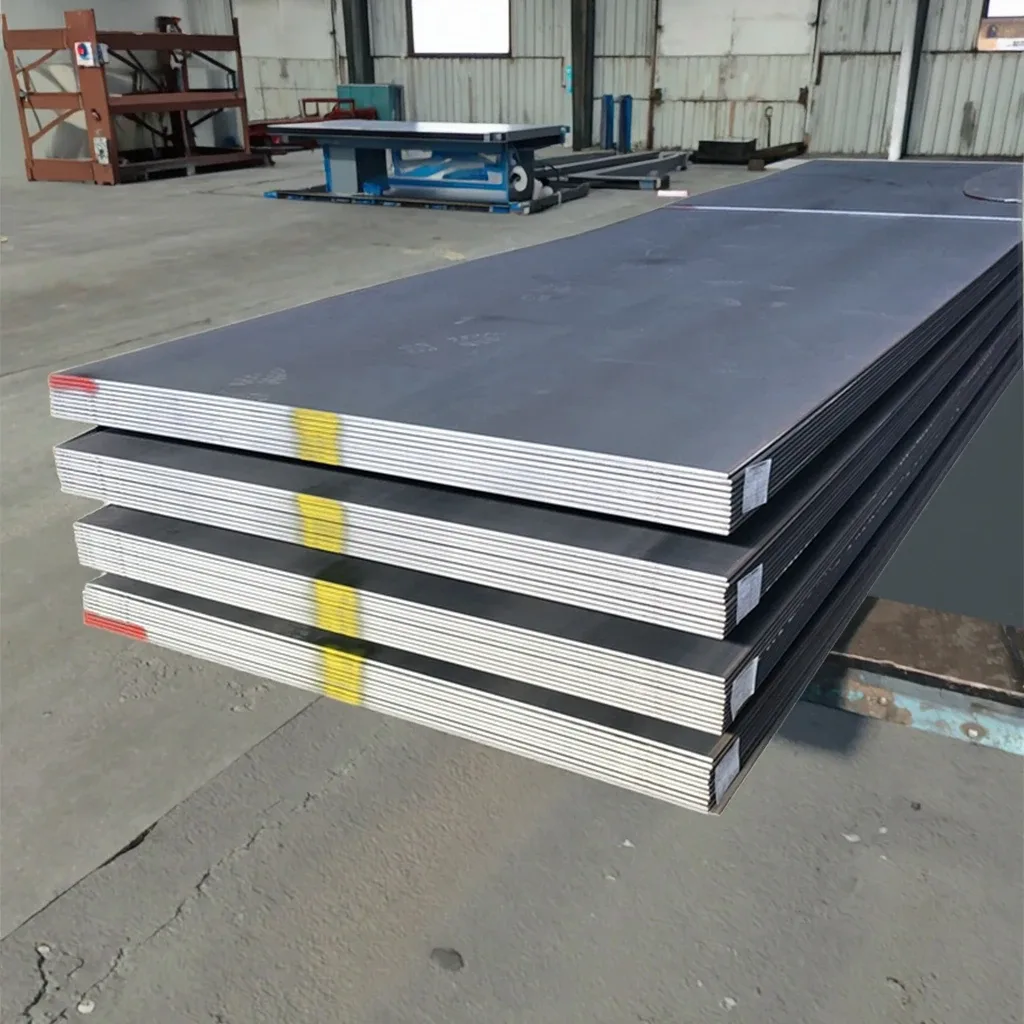
- Hot rolled black plates bundled with steel strips and separated by timber dunnage to prevent edge-to-edge contact damage during ocean transit
- Galvanized plates packed with non-metallic edge protectors and moisture-resistant wrapping to preserve zinc coating integrity
- Custom-cut plates stacked by project tag with heat number and grade stenciled on each bundle for site identification
- Container loading optimized for plates in the 2000mm–6000mm length range to maximize 20ft and 40ft open-top or flat-rack utilization
- Plates exceeding 6000mm shipped on breakbulk or flat-rack with professional lashing plans to prevent shifting in heavy seas
- FOB, CIF, and DDP terms available with door-to-door logistics coordination to 50+ countries
Ready to Lock in Your Plate Specification and Delivery Window
Submit your plate dimensions, steel grade preference, quantity, and destination port to receive a detailed quotation with processing options and mill test certificate confirmation. Our team responds within 12 hours with pricing, lead time, and certification documentation — so your procurement cycle stays on schedule.
Request Your ASTM A36 Q235 SS400 Hot Rolled Steel Plate Quotation
Send your specifications via email or WhatsApp to receive factory-direct pricing with full processing and certification support.
Company: Shandong Xin Jiyuan Special Steel Tube Co., Ltd
Website: www.sdxjysteel.com
Tel: +86 531 8573 6315
Mobile/WhatsApp/WeChat: +86 188 5315 7756
Email: admin@sdxjysteel.com
Frequently Asked Questions
Q: How do ASTM A36, Q235, and SS400 compare across standard systems?
A: These three grades occupy the same general-purpose structural steel tier in their respective national standards — ASTM for North America, GB for China, and JIS for Japan. They offer comparable weldability and formability, making them interchangeable for most structural and fabrication applications when the project specification allows cross-reference.
Q: Can you provide mill test certificates and arrange third-party inspection?
A: Yes. Every shipment includes an original mill test certificate documenting chemical composition and mechanical properties by heat number. SGS and BV third-party inspections are available upon request before shipment.
Q: What custom sizes and processing services are available beyond standard catalog dimensions?
A: We provide cutting, bending, decoiling, punching, and welding services on plates from 1.5mm to 200mm thickness. Non-standard widths, lengths, and cut-to-shape pieces are available based on your fabrication drawings.
Q: When should I choose hot rolled black versus galvanized versus painted surface treatment?
A: Hot rolled black finish suits indoor structural frames where on-site painting or fireproofing will follow. Galvanized plates serve outdoor applications requiring corrosion resistance such as solar structures and conveyor supports. Painted or custom-coated plates ship ready for harsh environments including coastal and industrial chemical settings.
Q: What certifications do your steel plates carry for EU and international project compliance?
A: Our plates are produced under ISO 9001:2015 quality management and carry CE certification under EN 10210/EN 10219 frameworks for EU market access. SGS and BV third-party inspection reports are available for additional compliance requirements.