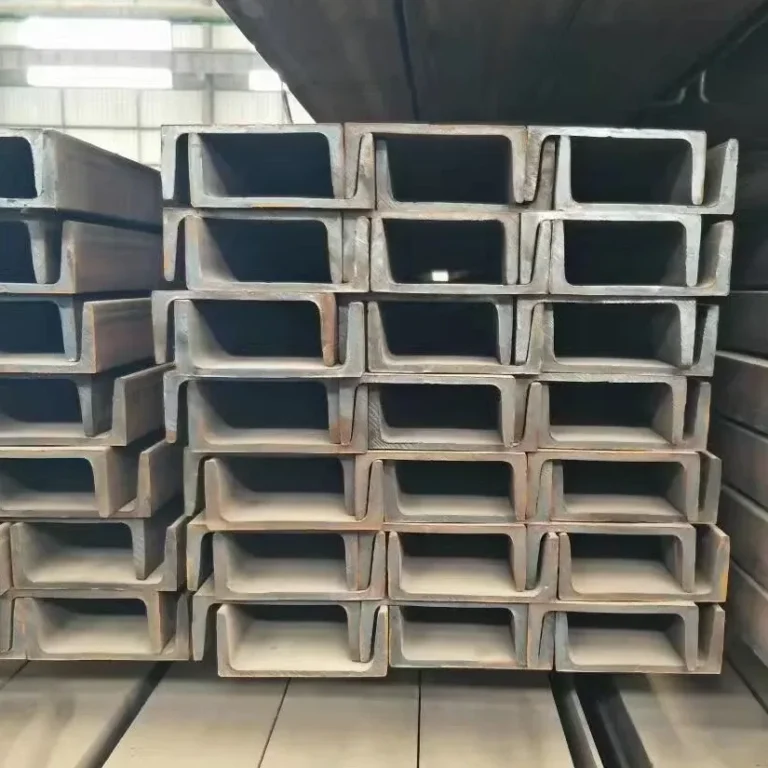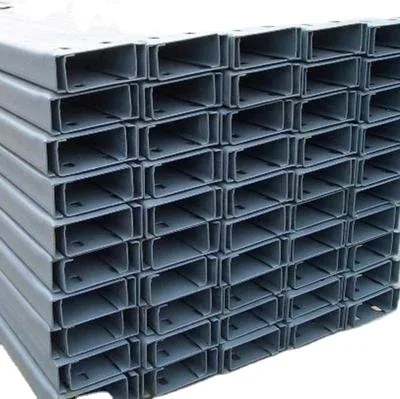

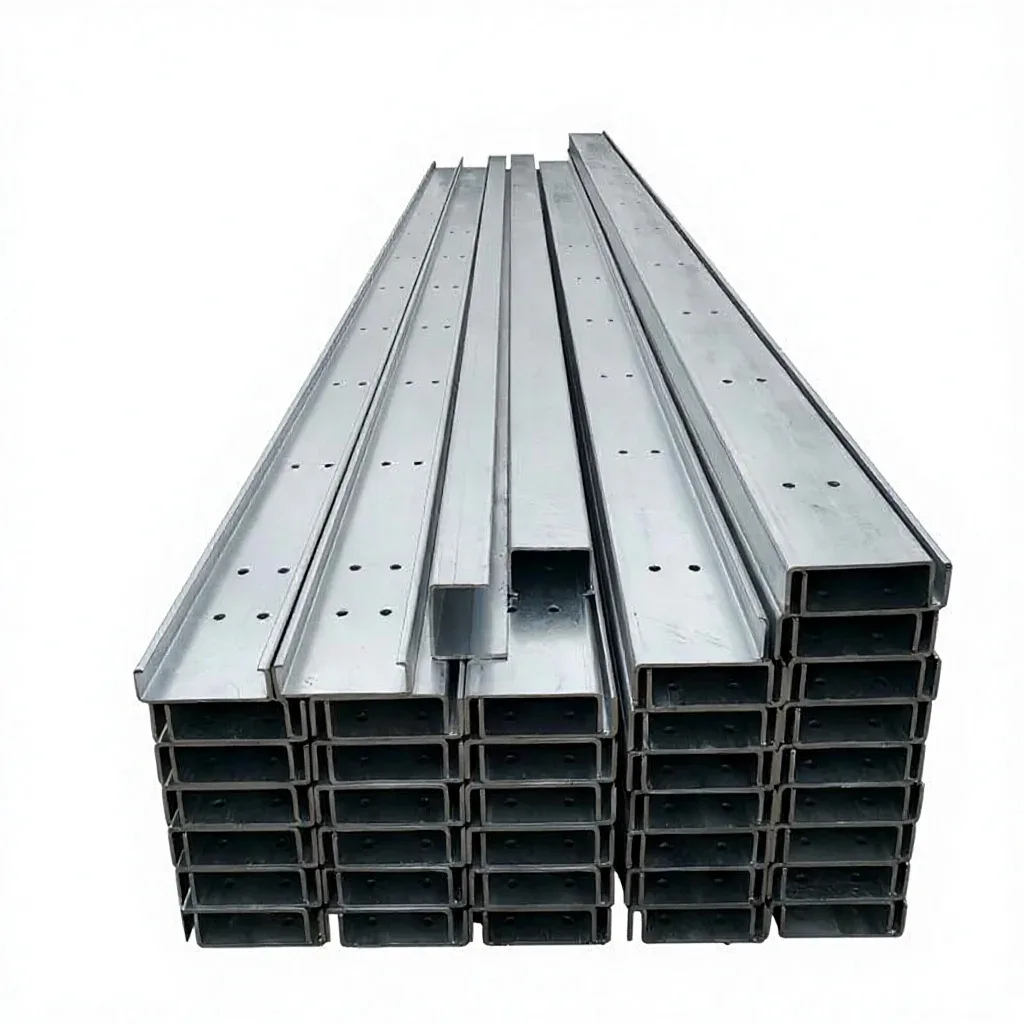
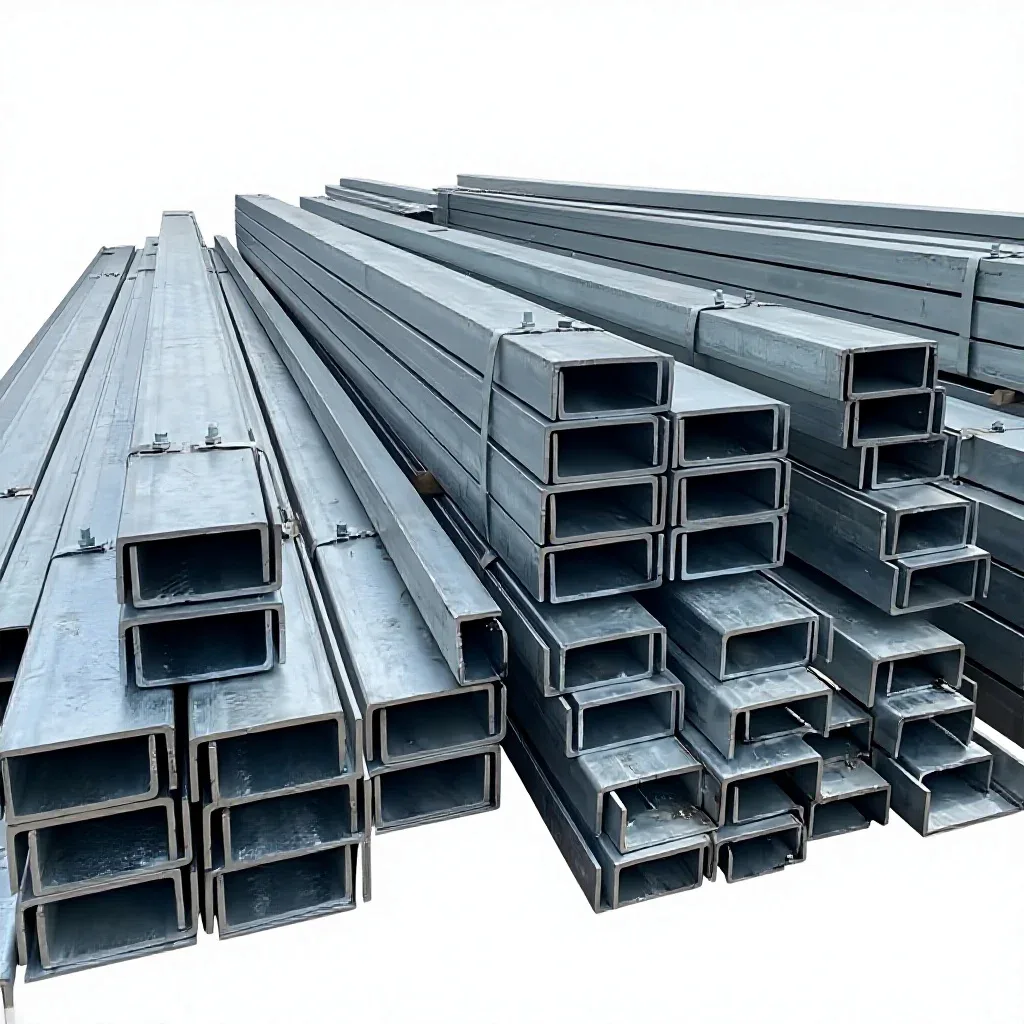
Description
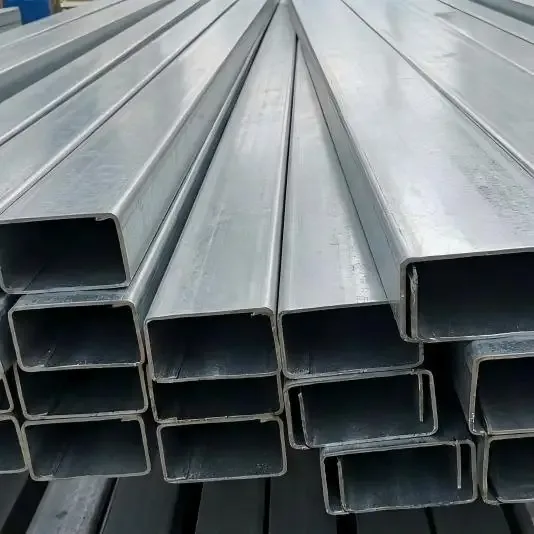
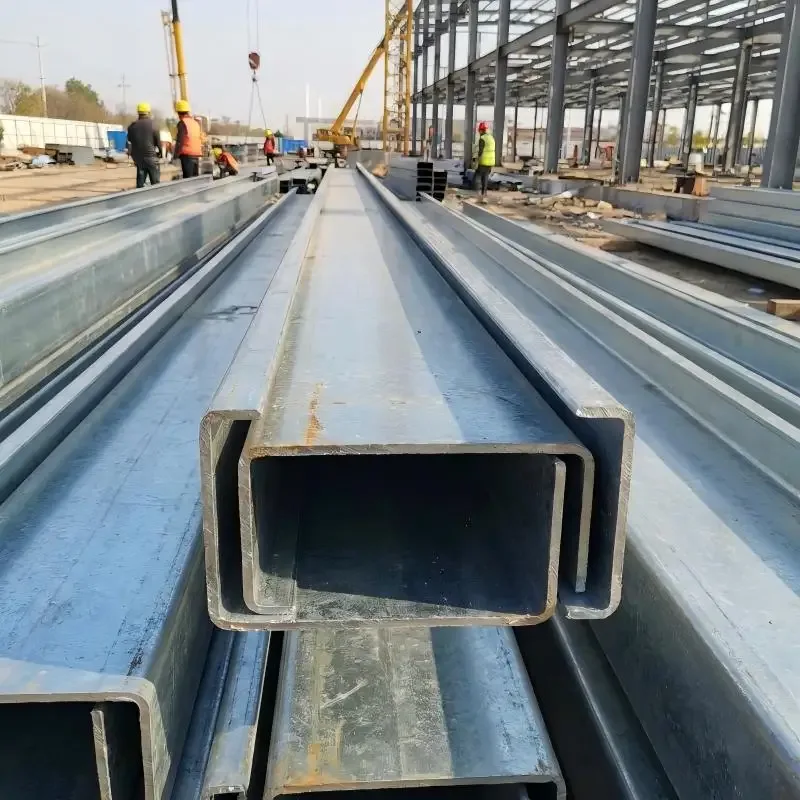
Factory-Direct C Channel Steel — verified mill certificates shipped with every container from Jinan
Technical Specifications
| Parameter | Value |
|---|---|
| Designation | Q235B/Q355B C Channel Steel |
| Product Type | C Channel |
| Steel Grade | Q235B, Q355B, Stainless Steel, Aluminum Alloy |
| Standard | GB |
| Section Shape | C Channel |
| Size Range | C100 / C120 / C140 / C160 and others (customizable) |
| Tolerance | ±1% |
| Technique | Cold-formed / High-frequency welded / Hot-rolled |
| Surface Treatment | Hot-dip galvanized / Anti-corrosion paint |
| Processing Service | Welding, Cutting |
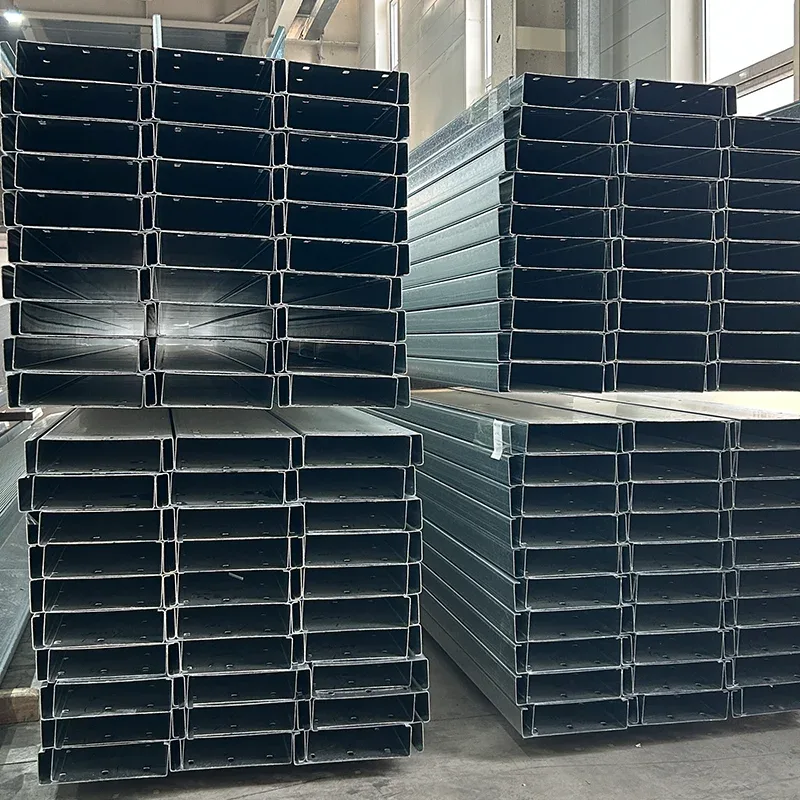
| Perforated | Yes (perforated option available) |
| Length | Customizable |
| Application | Steel structure / Warehouse / Workshop / Hangar / Garage / Building purlins / Coastal infrastructure / Chemical plants |
Application Suitability
| Industry | Typical Applications |
|---|---|
| EPC Contractors | Warehouse roof purlin systems, workshop wall girts, hangar secondary frames |
| Construction Companies | Garage portal frames, building purlins, steel structure supports |
| Machinery Manufacturers | Conveyor support channels, equipment base frames, solar mounting structures |
| Industrial Fabricators | Coastal infrastructure bracing, chemical plant pipe racks, platform walkways |
What Zinc Coating Thickness Costs When the Inspector Shows Up at Port
A 20-micron shortfall on a galvanized C channel can hold an entire container at customs for weeks.
I watched a full container of galvanized C purlins sit in Veracruz port because the zinc coating measured 40 microns against a 60-micron spec. The re-plating argument lasted longer than the ocean transit. For buyers sourcing Q235B Q355B galvanized C channel steel supplier products across borders, the real risk is not the unit price — it is the mill test certificate that either matches the physical coating or does not. In-house lab verification before loading eliminates that argument entirely. [NEED_CITE: hot-dip galvanized coating thickness standards for structural steel]
How Cold-Formed C Channels Match Structural Purlin Requirements
Cold-formed C channels in Q235B and Q355B grades serve as primary purlin and girt members in light steel structures. The ±1% dimensional tolerance ensures consistent bearing contact when bolted to rafters, while the cold-forming process preserves the base metal strength along the profile. For warehouse and workshop frames, C100 through C160 sections cover most span requirements without secondary reinforcement. Hot-dip galvanizing extends service life in coastal and industrial corrosion zones where painted finishes degrade within a few seasons.
Engineering Compliance and Certification Pathways
Structural C channels used as load-bearing purlins must conform to project-specified material standards. Q235B Q355B galvanized C channel steel supplier shipments to European markets require CE certification under EN 10219 for cold-formed welded structural hollow sections, or equivalent mill documentation for open sections. [NEED_CITE: CE marking requirements for structural steel components in EU construction] For projects in Southeast Asia and the Middle East, SGS or BV third-party inspection provides independent verification that chemical composition and mechanical properties match the purchase order. Custom non-standard lengths and perforated patterns can be produced to match site-specific connection details, reducing field cutting waste.
Steel Grade Selection and Cold-Forming Process Explained
Q235B offers adequate strength for standard warehouse purlin systems where dead loads and wind loads remain within moderate ranges. Q355B provides higher yield strength for long-span hangars and heavy-duty workshop frames where deflection limits are tighter. The cold-forming process bends coil stock through a series of roller dies at ambient temperature, producing sharp profile corners and consistent wall thickness without the thermal distortion associated with hot-rolling. High-frequency welding closes the seam on certain profiles, while hot-rolled options serve applications requiring thicker sections beyond cold-forming capacity. Hot-dip galvanizing immerses the formed channel in molten zinc, creating a metallurgical bond that resists chipping during transport and installation — a critical advantage over painted finishes for projects shipped overseas. [NEED_CITE: cold-formed steel member design principles for purlin applications]
Hidden Costs of Specifying the Wrong Grade or Missing Certification
Ordering Q235B when the structural engineer specified Q355B means the purlins deflect beyond allowable limits under design loads — discovered only after the roof sheeting is installed. Missing CE documentation on a Q235B Q355B galvanized C channel steel supplier shipment to Rotterdam triggers customs holds that delay the entire project schedule. Coating thickness below specification forces on-site re-plating or full batch rejection at destination port. These failures trace back to accepting supplier declarations without independent mill test certificate verification. [NEED_CITE: consequences of non-compliant structural steel in construction projects]
Why Procurement Teams Choose Our Mill for C Channel Orders
Every Q235B Q355B galvanized C channel steel supplier order ships with original mill test certificates generated from our in-house physical and chemical laboratory — not forwarded documents from a trading desk. Our three dedicated production lines cover over 2,800 specifications including custom non-standard C channel profiles that standard catalogs do not list. As a national high-tech enterprise that participated in drafting China’s cold-formed steel industry standards in 2018, we hold 41 invention patents including proprietary sharp-corner forming technology. Lloyd’s Register EU CE certification, ISO 9001:2015 quality management, and SGS/BV third-party inspection capabilities ensure your shipment clears customs without documentation disputes. Professional container loading plans optimize weight distribution for 20-foot and 40-foot shipments to 50+ countries, reducing per-ton freight costs.
Documentation & Compliance
- Mill test certificate documenting Q235B/Q355B chemical composition and mechanical properties per GB standard
- Lloyd’s Register EU CE certificate for cold-formed structural steel products under EN 10219
- ISO 9001:2015 quality management system certificate covering production and inspection processes
- SGS or BV third-party inspection report available for independent coating thickness and dimensional verification
- Material traceability by heat number linking each bundle to its original coil test results
- Complete customs document package including packing list, bill of lading, and certificate of origin
Packaging, Loading & Delivery
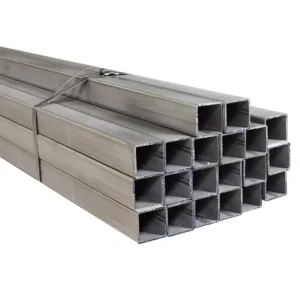
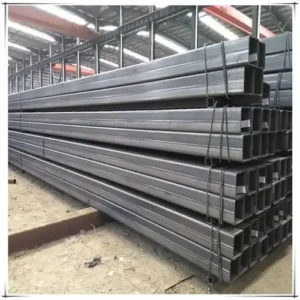
- Galvanized C channels bundled with steel strips and edge protectors to preserve zinc coating during ocean transit
- Anti-corrosion painted surfaces wrapped in waterproof paper before bundling to prevent moisture damage
- Custom length C100-C160 profiles loaded with interlocking nesting to maximize 40-foot container payload
- Heat number and steel grade stenciled on each bundle for site identification and traceability
- FOB, CIF, and DDP shipping terms available with real-time tracking to ports across EU, North America, and Southeast Asia
- Pre-shipment loading photos and weight certificates provided before vessel departure
Request Your Quote with Mill Test Certificate Preview
Submit your C channel specifications including section size, steel grade, surface treatment, quantity, and destination port. We respond within 12 hours with unit pricing, production lead time, and a sample mill test certificate showing the exact test parameters for your order. Non-standard profiles and perforated patterns are quoted separately with dimensional drawings for your approval before production begins.
Frequently Asked Questions
Q: What steel grade should I choose for my C channel application — Q235B vs Q355B?
A: Q235B suits standard warehouse and workshop purlin systems with moderate load requirements. Q355B provides higher yield strength for long-span hangars and heavy-duty frames where deflection control is critical. Your structural engineer’s specification should determine the final selection.
Q: Can you provide custom non-standard C channel sizes beyond C100-C160?
A: Yes. Our production lines cover over 2,800 specifications including custom profiles. Send your dimensional drawing or sample, and we provide a quote with tooling requirements if a new die is needed.
Q: What is the difference between hot-dip galvanized and painted surface treatment for corrosion protection?
A: Hot-dip galvanizing creates a metallurgical zinc bond that resists chipping and provides cathodic protection for decades in coastal and industrial environments. Painted finishes offer lower initial cost but require maintenance recoating and are vulnerable to damage during transport and installation.
Q: Do your C channel products come with CE certification for EU import and customs clearance?
A: Yes. Our Lloyd’s Register EU CE certification covers cold-formed structural steel products under EN 10219. Each shipment includes the CE declaration of performance and factory production control documentation required for European construction projects.
Q: What documentation package is included with shipment?
A: Every order ships with original mill test certificates, packing list, bill of lading, certificate of origin, and CE documentation where applicable. Third-party inspection reports from SGS or BV are available upon request before shipment.
[Get Factory-Direct Pricing with Full Mill Documentation]
Email your specifications to admin@sdxjysteel.com or message +86 188 5315 7756 on WhatsApp for a quote within 12 hours including sample mill test certificates and container loading plans.