
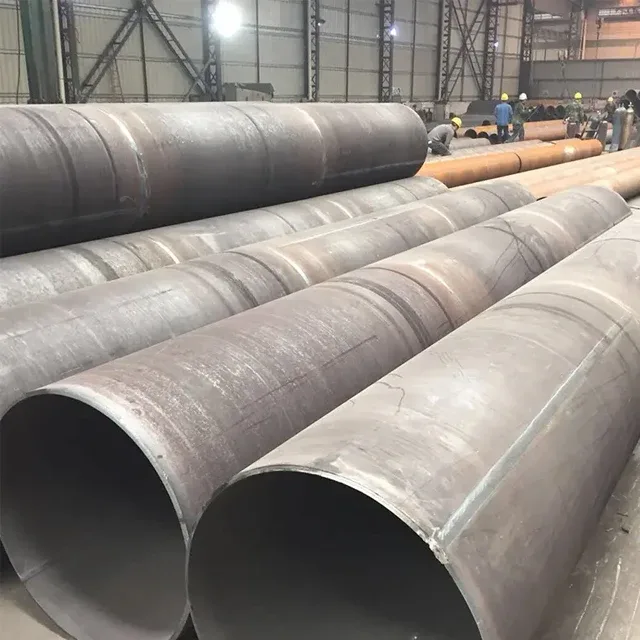


Description
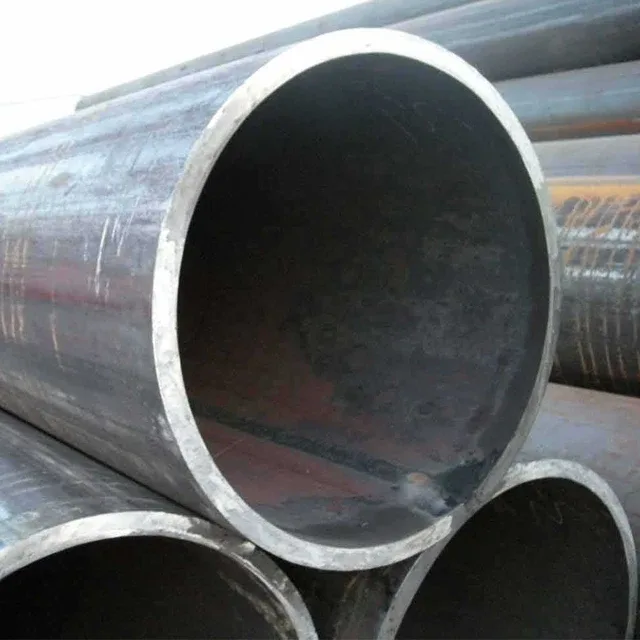
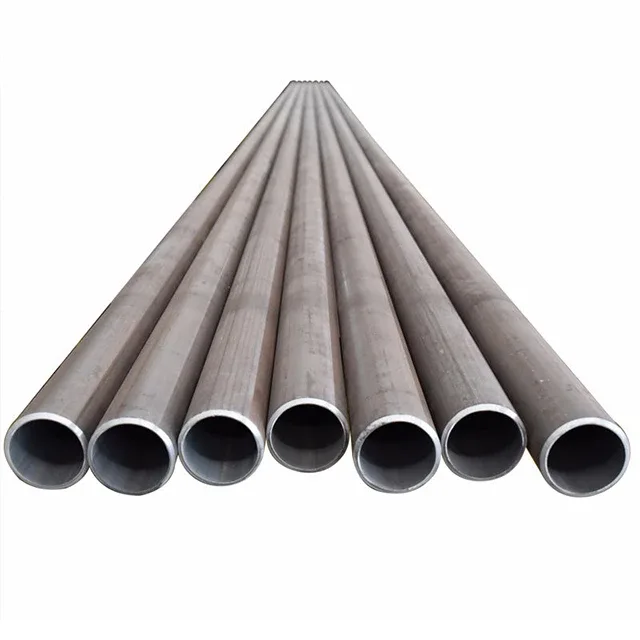
Factory-Direct ERW Pipes — Every batch of Q235 Q345 A36 ERW welded steel pipe undergoes wall-thickness verification in our in-house laboratory before release, with data recorded on the Mill Test Certificate.
Technical Specifications
| Parameter | Value |
|---|---|
| Designation | Q235 Q345 A36 ERW Welded Steel Pipe |
| Product Type | ERW Welded Steel Pipe |
| Steel Grade | Q235, Q345, A36, S355, 20#, 45#, 16Mn |
| Standard | ASTM A53, ASTM A500, API 5L, GB/T 3091, GB/T 13793, GB/T 9711, EN 10219, BS 1387 |
| Section Shape | Round |
| Size Range | Outer Diameter 32mm–1219mm |
| Wall Thickness | Cold rolled 1–4.0mm / Hot rolled 4–20mm |
| Length | 1–12m |
| Technique | ERW (Electric Resistance Welded) |
| Surface Treatment | Slightly Oiled / Hot Rolled |
| Tolerance | ±1% |
| Ends | Plain / Beveled (as required) |
| Application | Water supply pipelines / Fluid transport / Building construction / Industrial machinery / Oil and gas pipelines / Structural applications |
| MOQ | 5 Tons |
| Origin | Shandong, China |
Application Suitability
| Industry | Typical Applications |
|---|---|
| Municipal Infrastructure | Water supply mains, drainage networks, irrigation pipelines |
| Building Construction | Structural columns, scaffolding tubes, purlin supports |
| Oil & Gas | Low-pressure fluid transport lines, gathering pipelines |
| Industrial Machinery | Conveyor frames, equipment supports, hydraulic cylinder sleeves |
| EPC Projects | Process piping, utility racks, pipe rack structures |
What Negative Wall Tolerance Does to a Pipeline Budget
A pipe that measures under spec on thickness will fail hydrostatic acceptance — and the replacement cost lands on the buyer, not the mill.
I once inspected a batch of 609mm welded pipes at an Indonesian water project site. The contract specified 8mm wall thickness. Caliper readings came back at 6.8mm across multiple samples. The supplier had pushed negative tolerance to the edge, and the entire lot was rejected at acceptance testing. Re-ordering meant weeks of delay and double freight. Since that job, I have watched every wall-thickness measurement personally before any Q235 Q345 A36 ERW welded steel pipe leaves our facility. [NEED_CITE: dimensional tolerance requirements for welded steel pipes per ASTM A53]
Fragmented sourcing from multiple traders makes this worse — each lot carries different mill practices, and without a unified inspection protocol, negative tolerance compounds across a project.
Matching ERW Pipe Grades to Pipeline Engineering Demands
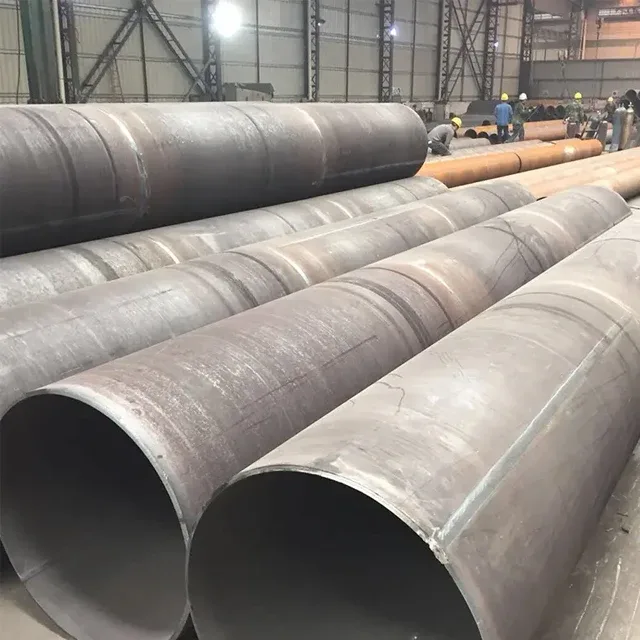
Round ERW pipes in the 32mm to 1219mm outer diameter range serve both pressure-containing and structural roles. For water supply and fluid transport, Q235 and A36 grades provide adequate strength at lower cost, while Q345 and S355 are selected when higher yield strength is needed for structural frames or deeper burial loads. The ±1% dimensional tolerance ensures that beveled-end preparations for welding remain consistent across joints, reducing field rework on Q235 Q345 A36 ERW welded steel pipe installations. Our production lines cover cold-rolled thin-wall (1–4.0mm) and hot-rolled medium-wall (4–20mm) in a single procurement cycle, so EPC contractors avoid splitting orders across suppliers.
Engineering Compliance and Certification Pathways
Structural applications in the European market require CE certification under EN 10219 for cold-formed welded hollow sections, while North American projects typically specify ASTM A53 or ASTM A500 compliance. Our Q235 Q345 A36 ERW welded steel pipe is produced to meet multiple standard frameworks simultaneously, and the in-house physical and chemical laboratory generates Mill Test Certificates that document heat-level chemical composition and mechanical test results. For projects subject to third-party verification, SGS and BV inspection reports are arranged prior to shipment. [NEED_CITE: CE marking requirements for structural steel hollow sections under EN 10219] Steel grade equivalence between Chinese GB, European EN, and American ASTM systems must be confirmed at the specification stage to avoid customs holds or engineering rejections.
Steel Grade Selection and ERW Welding Process
The Q-series (Q235, Q345, 16Mn) follows the Chinese GB standard system where the number indicates minimum yield strength in MPa. A36 follows the ASTM system used across North America, while S355 is the European EN equivalent for higher-strength structural work. Selecting the correct grade depends on design load, burial depth, and the engineering code governing the project. ERW (Electric Resistance Welded) welding produces a longitudinal seam through resistive heating without filler metal, making it cost-effective for medium-pressure fluid transport and structural applications in the 32mm–1219mm OD range. The slightly oiled surface treatment provides short-term corrosion protection during storage and transit, while hot-rolled finish is specified when further coating or galvanizing will be applied downstream. Wall thickness tolerance of ±1% is maintained through in-process gauging on the production line, with final verification in the laboratory before the Q235 Q345 A36 ERW welded steel pipe is cleared for shipment. [NEED_CITE: ERW welding process characteristics and seam quality inspection methods]
Hidden Costs of Procuring Without Verified Tolerance
When wall thickness falls below the specified minimum, the pipe may pass visual inspection but fail hydrostatic testing or structural load calculations at the project site. Rejection at acceptance means the buyer absorbs return freight, replacement production time, and project delay penalties — costs that far exceed the initial price difference between a verified supplier and an unverified trader. Missing or incomplete Mill Test Certificates cause customs clearance failures in markets with strict import documentation requirements, particularly the EU and Middle East. [NEED_CITE: consequences of non-compliant steel pipe documentation in international trade] Material traceability by heat number is not optional for engineered projects — it is the basis for structural liability and insurance compliance.
Why Engineering Buyers Source ERW Pipes from Xin Jiyuan
Our factory operates three dedicated ERW production lines covering over 2,800 specifications in round, square, and rectangular sections, meaning a single purchase order for Q235 Q345 A36 ERW welded steel pipe can be fulfilled without splitting across multiple suppliers. Every heat of steel is tested in our on-site physical and chemical laboratory — chemical composition, tensile strength, flattening tests, and hydrostatic pressure — before the material is released. We hold CE certification under EN 10210/EN 10219 for European market compliance, ISO 9001:2015 for quality management, and accommodate SGS or BV third-party inspection at the buyer’s request. Custom non-standard sizes and定尺 lengths are produced in-house rather than sourced from traders, and our logistics team prepares professional loading plans to optimize container utilization for the 1–12m length range. With exports to 50+ countries across the EU, North America, Southeast Asia, the Middle East, and Africa, we understand the documentation and certification requirements of each destination market.
Documentation & Compliance
- Mill Test Certificate documenting Q235, Q345, or A36 chemical composition and mechanical properties per GB/T 3091 or ASTM A53, issued per heat number
- CE certificate under EN 10219 for cold-formed welded structural hollow sections, required for European Union customs clearance
- ISO 9001:2015 quality management system certificate covering the full ERW welded pipe production process
- SGS or BV third-party inspection report available upon request, covering dimensional verification, visual inspection, and witness testing
- Material traceability documentation linking each pipe to its heat number, chemical analysis, and mechanical test results
- Customs document package including packing list, Bill of Lading, and Certificate of Origin formatted for the destination country
Packaging, Loading & Delivery
- ERW welded steel pipes bundled with steel strips in seaworthy packaging, with edge protectors to preserve the slightly oiled surface during ocean transit
- Hot-rolled finish pipes separated by grade and size markings to prevent mixed-heat loading on multi-specification orders
- Container loading plans optimized for 1–12m lengths to maximize 20ft and 40ft GP utilization, with wooden cradles for pipes above 609mm OD
- Custom cut-to-length service available for project-specific requirements, with cut ends deburred and protected
- Heat number and steel grade stenciled on each pipe bundle for site identification and traceability verification
- FOB, CIF, and DDP delivery terms available, with door-to-door logistics coordination to 50+ countries
Getting Your ERW Pipe Quote Started
Submit your specification sheet including outer diameter, wall thickness, steel grade, total quantity, and destination port — we respond within 12 hours with unit pricing, production lead time, and applicable certification details. For non-standard sizes or project-specific length requirements, our engineering team will confirm feasibility and provide a custom production plan. All quotations include Mill Test Certificate and customs documentation scope so there are no surprises at the port.
Request Your ERW Welded Steel Pipe Quotation
Send your specifications via email or WhatsApp to receive pricing, Mill Test Certificate samples, and delivery terms within 12 hours.
Shandong Xin Jiyuan Special Steel Tube Co., Ltd
Tel: +86 531 8573 6315
Mobile/WhatsApp/WeChat: +86 188 5315 7756
Email: admin@sdxjysteel.com
Website: www.sdxjysteel.com
Frequently Asked Questions
Q: What is the difference between Q235, Q345, and A36 steel grades, and which should I choose for my project?
A: Q235 and A36 are comparable carbon structural steels with similar yield strength levels, commonly used for water supply pipelines and general structural applications. Q345 offers higher yield strength and is selected when the design requires greater load-bearing capacity, such as structural columns or deeper burial conditions. The choice depends on your engineering specifications and the applicable design code — we can advise on grade equivalence if your project draws from multiple standard systems.
Q: Can you provide third-party inspection reports and Mill Test Certificates for customs clearance?
A: Yes. Every shipment of Q235 Q345 A36 ERW welded steel pipe is accompanied by an original Mill Test Certificate documenting chemical composition and mechanical properties per heat number. SGS and BV third-party inspection reports can be arranged prior to shipment upon request. We also provide CE certificates under EN 10219 for European destinations and full customs document packages including packing list, Bill of Lading, and Certificate of Origin.
Q: What is the minimum order quantity for custom sizes and non-standard specifications?
A: The standard MOQ is 5 Tons. For non-standard outer diameters or wall thicknesses outside the 32mm–1219mm range, our engineering team will review the specification and confirm production feasibility. Custom lengths within the 1–12m range are accommodated on standard orders without additional minimum requirements.
Q: How do you ensure weld seam quality in ERW pipes, and what inspection processes are in place?
A: Our ERW production lines include in-process monitoring of welding parameters, followed by flattening tests, hydrostatic pressure testing, and visual inspection of the weld seam. The in-house physical and chemical laboratory conducts incoming material inspection, in-process checks, and final verification before release. All test results are recorded on the Mill Test Certificate for full traceability.
Q: What are the delivery terms and typical lead times for bulk orders?
A: We offer FOB, CIF, and DDP delivery terms depending on your destination port and logistics preference. Typical production lead times are confirmed at the quotation stage based on order volume and specification complexity. Professional loading plans are prepared to optimize container utilization, and real-time shipment tracking is provided after dispatch.